Air Purifier and Humidifier Together: Can You Use Both?
This post contains affiliate links. As an Amazon Associate, we earn from qualifying purchases.
Yes, you can use an air purifier and humidifier together. The key is matching three things: room size, device placement, and humidity level. Keep them at least six feet apart, aim for 30-50% relative humidity, and use distilled water in the humidifier to protect the air purifier’s filter.
Most people jam both machines on the same nightstand or dresser. The humidifier’s mist drifts straight into the air purifier’s intake. Within a week, the HEPA filter feels damp, the airflow drops by half, and a musty smell creeps into the room. You’ve created a mold incubator inside your $300 purifier.
This guide walks through the correct setup, from choosing the right spot to the weekly cleaning ritual that keeps both devices working instead of fighting each other. You’ll get the combined benefit, clean, moisturized air, without the common failures that wreck filters and spread minerals.
Key Takeaways
- Placement kills or cures the setup. Keep the humidifier and air purifier on opposite sides of the room, at least 6-8 feet apart. Point the mist away from the purifier’s intake.
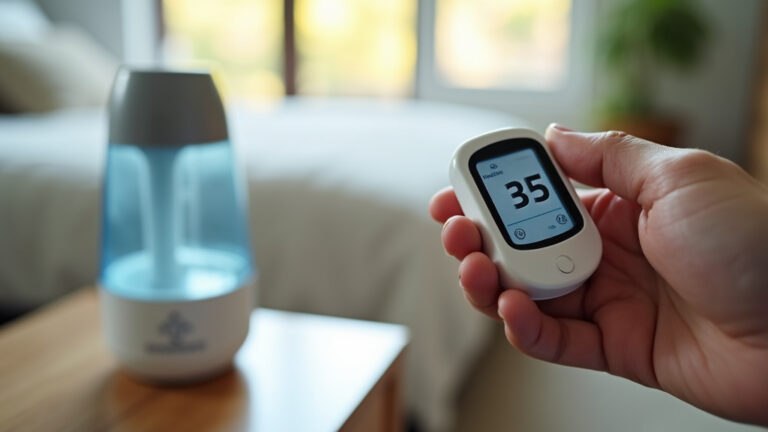
- Humidity above 50% breeds mold. Use a $15 digital hygrometer to monitor the room. Keep relative humidity between 30% and 50%, the sweet spot for comfort and filter safety.
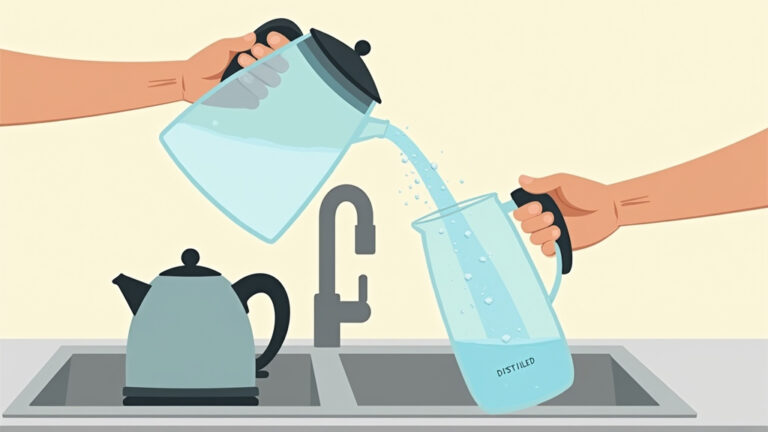
- Tap water wrecks the system. Hard water in ultrasonic humidifiers creates “white dust” that clogs HEPA filters. Use distilled or demineralized water only.
- Weekly cleaning is non-negotiable. A dirty humidifier tank pumps bacteria and mineral particles into the air. Your purifier then has to capture what you just created.
- Match the machine to the room. An oversized humidifier in a small bedroom will oversaturate the air before the purifier can clean it. Check the square-footage rating on both devices.
Why This Combo Works (And Why It Fails)
An air purifier and a humidifier solve different problems. The purifier captures physical particles: dust, pollen, pet dander, and mold spores. The humidifier adds water vapor to dry air. They don’t conflict on a functional level.
Common mistake: Placing the humidifier next to the air purifier, the direct mist saturates the HEPA filter within days, collapsing the paper pleats and cutting airflow by 40-60%. Mold growth inside the filter starts within two weeks in a room above 50% humidity.
The failure is mechanical, not magical. HEPA filter media is a dense mat of glass fibers. It traps particles through a combination of sieving, interception, and diffusion. Add liquid water, and those fibers mat down. The air resistance skyrockets, the fan motor strains, and the damp organic material becomes a food source for mold spores that were already in the air.
Your nose will tell you first. The room develops a faint, sweet-rotten smell that isn’t coming from the humidifier’s tank. It’s the filter itself.
TL;DR: They work together if you keep the humidifier’s output away from the purifier’s intake. They fail together if you let the filter get wet.
The 50-50 Rule for Placement
Distance and direction decide everything. You need enough space for the humidifier’s mist to disperse into the room’s general air volume before the purifier pulls it in.
A HEPA filter is designed to operate across a wide humidity range, typically 30-80% RH, as long as liquid water does not contact the media. Direct mist from an ultrasonic humidifier delivers localized humidity near 100% at the point of emission, which exceeds the filter’s dry-operating specification. (Intellipure engineering bulletin)
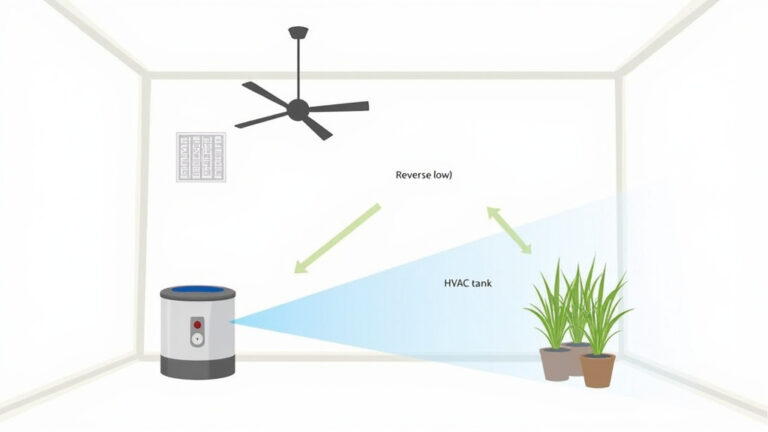
Place the humidifier and air purifier at least six feet apart, on opposite sides of the room. Eight feet is better for larger bedrooms. Point the humidifier’s mist nozzle toward an open wall, not toward the center of the room or the purifier.
Elevation matters. Place the humidifier on a nightstand or table. Keep the air purifier on the floor or a low shelf, its intake is usually near the base. This vertical separation helps the mist rise and diffuse before reaching the purifier’s intake zone.
Where Not to Put Them
Avoid corners, closets, or spaces behind furniture. Both devices need clear airflow.
– Don’t place the humidifier directly under an air conditioning vent. The cold air will condense the mist and drip water.
– Don’t put the air purifier behind a curtain or in a bookshelf cubby. Restricted intake makes the fan work harder and cleans less air.
If your room layout forces a closer setup, use a fan on low speed to push the mist away from the purifier. It’s a band-aid, not a solution.
TL;DR: Opposite sides of the room, six feet minimum, mist pointed at a wall.
The Three-Step Setup Check
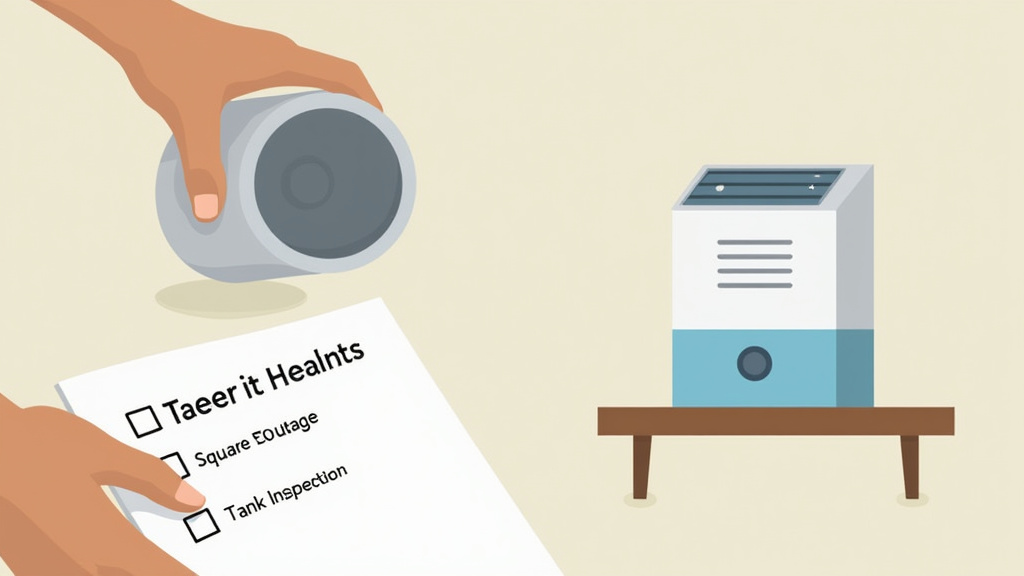
Before you plug anything in, run this diagnostic. It takes five minutes and prevents the three most common setup errors.
- Check the square footage ratings. Your air purifier’s Clean Air Delivery Rate (CADR) and your humidifier’s output (gallons per day) should match the room size. A humidifier rated for 500 square feet in a 200-square-foot bedroom will oversaturate the air before the purifier can cycle it. An undersized purifier won’t clean the added moisture load.
- Inspect the humidifier tank. It should be spotless. Any pink film (Serratia marcescens bacteria) or white crust (mineral scale) means you need to clean it with vinegar or a manufacturer-approved cleaner before filling. Skip this, and you’re aerosolizing contaminants for the purifier to catch.
- Verify outlet capacity. An air purifier draws about 50-100 watts; a humidifier draws 30-150 watts. Together, they’re less than a lamp. But if you’re using a power strip with other electronics, ensure it’s rated for the total load. A tripped breaker mid-night is a rude awakening.
Before you start: Unplug both devices before cleaning or moving them. Spilled water near a live outlet is a shock hazard. Never fill a humidifier while it’s plugged in, a slip can send water into the electrical base.
Once these three boxes are checked, you can position them with confidence.
Humidity Control: Your New Essential Gadget
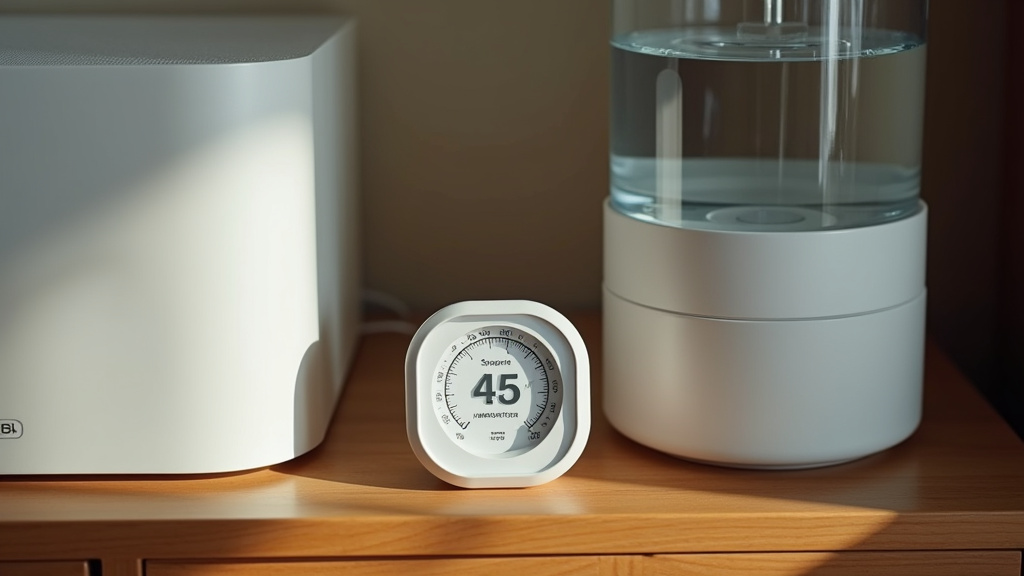
You cannot manage what you do not measure. Guessing humidity leads to two bad outcomes: a dry room that defeats the humidifier’s purpose, or a damp room that grows mold and strains the purifier.
Buy a digital hygrometer. The analog dial types are often off by 10-15%. A basic digital model costs between $12 and $25 and lasts for years. Place it between your two devices, at roughly breathing height (about three feet off the floor).
The target is 30% to 50% relative humidity (RH).
– Below 30%: Air feels dry, skin and throat get irritated. Static electricity increases.
– Above 50%: Dust mites thrive, mold growth accelerates on surfaces and inside damp filters.
– Above 60%: The risk of structural mold and microbial growth increases significantly.
Your humidifier likely has a built-in humidistat. Do not trust it alone. They are often inaccurate, sensing humidity right at the machine, not in the room center. Use your standalone hygrometer as the truth-teller and adjust the humidifier’s output dial accordingly.
If you’re using a smart humidifier with app control, set it to maintain 45% RH as a middle-ground target. Then verify with your hygrometer.
The Two Humidifier Types and Their Quirks
Your choice of humidifier changes the maintenance routine.
| Humidifier Type | How It Works | Biggest Risk to Purifier | Mitigation |
|---|---|---|---|
| Ultrasonic | High-frequency vibrations create a cool mist. | “White dust” from minerals in tap water. This fine powder clogs HEPA filters fast. | Use distilled or demineralized water only. No exceptions. |
| Evaporative | A fan blows air through a wet wick filter. | The wick can grow mold if not dried between uses. Spores then blow into the air. | Replace the wick every 1-2 months. Let it dry completely for 24 hours after each use. |
Warm-mist humidifiers (vaporizers) boil water, killing microbes. They produce a clear vapor, not a mist, so there’s no white dust. But they consume more energy and pose a burn risk. They’re fine with purifiers if placed with the same distance rule.
TL;DR: A $15 hygrometer is mandatory. Aim for 30-50% RH. Use distilled water in ultrasonic models.
The Maintenance Schedule That Actually Works
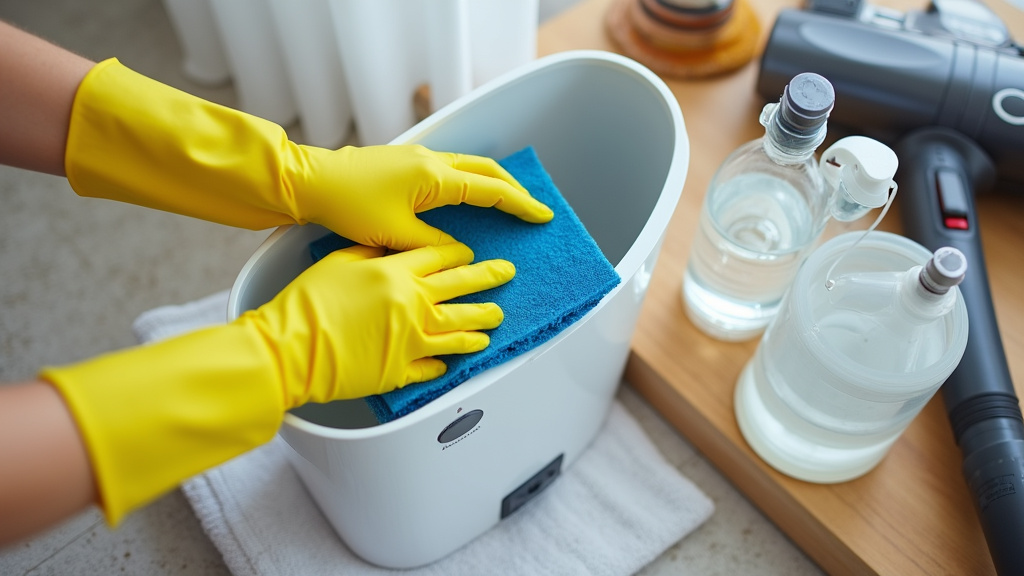
A clean humidifier is a safe humidifier. A dirty one turns your air purifier into a busy, overwhelmed bouncer.
Here’s the weekly drill. It takes ten minutes.
- Daily: Empty any leftover water from the humidifier tank. Refill with fresh distilled water. Stagnant water grows biofilm.
- Weekly: Unplug the humidifier. Disassemble it. Wash the tank, base, and any removable parts with mild dish soap and warm water. For mineral deposits, use a 1:1 white vinegar and water solution, soak for 20 minutes, then scrub. Rinse thoroughly.
- Monthly: Check the air purifier’s filter indicator. Even if the light isn’t on, inspect the pre-filter (the outer mesh) for dust buildup. Vacuum it gently. For humidifier wicks (evaporative models), replace them per manufacturer schedule, usually every 30-60 days of use.
- Seasonally: When you stop using the humidifier for the season (e.g., summer), give it a final deep clean. Dry all parts completely before storage. Run the air purifier on its highest setting for an hour without the humidifier to dry out its internal components.
I used tap water in my ultrasonic humidifier for one winter in a house with very hard water. After three months, a fine white powder coated every surface near the machine. The air purifier’s filter monitor went red two months early. I opened it, the HEPA filter was gray and crusty at the intake side. It was capturing the calcium and magnesium I was pumping into the air. Now I buy distilled water by the gallon. The filters last their full twelve-month lifespan.
Neglect this schedule, and you’ll hear the difference. A humidifier with a slimy tank makes a faint gurgling or rattling sound as the pump struggles. An overloaded air purifier fan whines at higher pitches.
TL;DR: Weekly cleaning with soap and water, monthly filter checks, distilled water only.
Separate Units vs. All-in-One Machines
The market offers combo units that house both a humidifier and an air purifier in one cabinet. Brands like Blueair and others have models like the “HealthProtect” series with integrated humidification.
| Aspect | Two Separate Devices | All-in-One Combo Unit |
|---|---|---|
| Placement Control | Full control. Can place at optimal distance. | Fixed internal layout. Moisture passes through the filter by design. |
| Maintenance | Can clean or replace one device without touching the other. | Single maintenance routine. Filter changes may be more complex. |
| Cost | Higher upfront (buying two devices). | Single purchase price, often premium. |
| Effectiveness | Potentially higher if placed correctly. | Engineered to work together; no placement mistakes possible. |
| Noise | Two fan systems. Can be noisier. | One fan system, usually quieter. |
Combo units solve the placement problem by engineering the moisture path. The humidifier section adds vapor to the air after it has passed through the purification stage, or in a carefully controlled mixed chamber. This protects the filter from direct wetting.
The trade-off is flexibility. If the humidifier function breaks, you might lose the whole unit for service. With separate devices, one can fail while the other keeps working.
For most people, separate units offer more control and easier troubleshooting. The combo unit is a good fit for someone who wants a single, set-and-forget appliance and is willing to pay the premium.
TL;DR: Separates give you control. Combos eliminate placement error but cost more and are harder to fix.
Troubleshooting the Dual Setup
Things can go wrong even with careful placement. Here’s how to diagnose the common issues.
Problem: The air purifier filter indicator turns red too soon.
- Likely Cause: White dust from an ultrasonic humidifier using tap water.
- Fix: Switch to distilled water immediately. Replace the clogged filter. The damage is done.
- Timeline: Clogging can happen in as little as two weeks with very hard water.
Problem: A musty smell develops in the room.
- Likely Cause 1: Mold growth on a damp HEPA filter due to direct mist exposure.
- Action: Check placement. Move the humidifier further away. Replace the air purifier filter.
- Likely Cause, less obvious: A dirty humidifier tank is broadcasting mold spores. The purifier captures some, but the smell persists.
- Action: Perform a deep clean of the humidifier with vinegar. Scrub all surfaces.
Problem: Humidity won’t rise above 35% even with the humidifier on high.
- Likely Cause: The air purifier is moving too much air, drying out the room as fast as the humidifier adds moisture. This is rare but happens in very small, sealed rooms with a powerful purifier.
- Fix: Turn the air purifier to a lower fan speed. This reduces air exchange and lets humidity build. Or, get a larger-capacity humidifier.
Problem: The humidifier runs out of water extremely fast.
- Check: Is the air purifier intake pointed directly at the humidifier’s mist stream? The purifier might be literally sucking the moisture out of the air before it disperses.
- Fix: Re-angle the humidifier output. Increase the distance between devices.
Common mistake: Using a humidifier without a hygrometer, you’ll overshoot 50% RH within a few hours on a high setting in a bedroom. The room feels clammy, and the air purifier works against hidden mold growth instead of just dust.
When in doubt, separate the devices further. Distance fixes most problems.
Frequently Asked Questions
Does a humidifier make an air purifier work harder?
No, not if the humidity stays in the 30-50% range. The purifier is capturing particles, not water vapor. However, a dirty humidifier releases mineral dust or microbes, creating new particles for the purifier to capture. That’s unnecessary work you can prevent with clean water and tank maintenance.
Can humidity damage a HEPA filter?
Liquid water damages a HEPA filter. Water vapor (humidity) within the standard operating range does not. The filter media can handle humid air. Direct mist from a humidifier is liquid water, not vapor. Keep the mist away from the intake.
What’s the best water to use in a humidifier with an air purifier?
Distilled or demineralized water. It contains no minerals, so it produces no “white dust” that clogs your air purifier’s filter. Tap water, especially hard water, will shorten your filter’s life by months and coat your room in a fine powder.
How far apart should they be?
minimum of six feet, on opposite sides of the room. Eight feet is better for larger spaces. This gives the mist time to evaporate into the air volume before the purifier’s fan pulls it in.
Can I use them in a small room, like a home office?
Yes, but you must be vigilant about humidity levels. A small room saturates faster. Use a hygrometer and choose a humidifier with adjustable output or a lower gallon-per-day rating. Consider running the air purifier on a medium setting instead of high to allow humidity to stabilize.
Do I need to change the air purifier filter more often when using a humidifier?
Only if you make mistakes. If you use distilled water, keep humidity under 50%, and maintain distance, the filter should last its rated lifespan. If you use tap water or allow direct mist exposure, you may need to change it two to three times more frequently.
Before You Go
Running an air purifier and humidifier together is not just possible, it’s a powerful way to tackle dry, polluted air. The payoff is real: easier breathing, better sleep, and less dust.
The system fails on placement and water quality. Keep them across the room from each other. Use distilled water. Watch the hygrometer.
That’s it. Those two rules prevent 90% of the problems.
Choose separate devices for control and easier repair. Choose a combo unit for simplicity if your budget allows. Just remember that even a combo unit needs its tank cleaned and its filters changed.
Your air will be cleaner and more comfortable. You just have to set it up the right way the first time.