Whole House Humidifier: The Essential Pros, Cons, and Costs
This post contains affiliate links. As an Amazon Associate, we earn from qualifying purchases.
A whole-house humidifier is a permanent appliance installed on your home’s HVAC ductwork that adds moisture to air circulated by your furnace. The core pros are whole-home comfort, protection for wood and instruments, potential heating cost savings, and improved air quality. The cons are a high upfront installation cost, mandatory ongoing maintenance, unsuitability for humid climates, and the risk of mold if mismanaged.
Most people think the biggest hurdle is the price tag. It is, but not for the reason they expect. The real cost isn’t the $400 to $1,200 install. It’s the annual ritual of forgetting to change the water panel until you smell wet cardboard in your vents every November. That smell is the evaporator pad rotting inside its sleeve, and it costs you a service call plus a new pad to fix.
This guide breaks down the hard numbers, the maintenance you can’t skip, and the specific home situations where this upgrade pays for itself in comfort. We’ll also cover when you should walk away.
Key Takeaways
- Whole-house humidifiers only make financial sense in dry climates or homes with forced-air heat that drops indoor humidity below 35%. In a humid southern state, it’s a mold accelerator.
- Professional installation is non-negotiable. A DIY job on the ductwork or water line leads to leaks inside your walls within two seasons.
- The Aprilaire 600M bypass model and the Aprilaire 800 steam unit are industry standards; the choice boils down to your water quality and how much humidity you need.
- Annual maintenance costs $50–$100 for parts and takes 30 minutes. Skip it, and you’ll pay $300+ for an HVAC tech to descale and disinfect the unit.
- The return is comfort and preservation, not cash. You won’t recoup the install cost at resale, but your hardwood floors won’t gap and your sinus headaches might vanish.
What Is a Whole-House Humidifier?
This isn’t a portable unit you fill and forget in a bedroom. A whole-house humidifier is a permanent fixture, typically a metal box mounted on the supply or return duct of your forced-air furnace. A water line feeds it, and a drain line carries away excess. When the furnace blower runs, air is pulled through a moistened evaporator pad (in a bypass model) or past a steam injection point, picking up moisture that is then distributed through every duct in your home.
A whole-house humidifier integrates directly with a home’s HVAC system, using the existing ductwork to distribute moisture. Common types include bypass (or fan-powered) models, which use furnace airflow to evaporate water from a replaceable pad, and steam models, which boil water to create vapor. A wall-mounted humidistat controls the device, activating it when indoor relative humidity falls below a set point, typically between 35% and 50%.
The control is a humidistat on your wall, not a dial on the unit. You set it and the system manages the rest, attempting to maintain a consistent humidity level throughout the entire living space. That’s the theory. The practice depends on your duct layout, how leaky your house is, and which of the two main types you install.
The Real Pros: More Than Just Comfort
The benefits go beyond stopping static shocks from your sweater. Proper humidity changes how your home feels and functions.
Health and Respiratory Relief. Dry air parches mucous membranes. This isn’t just about chapped lips. It’s your body’s first defense against airborne viruses and allergens becoming compromised. Adding moisture back can reduce the frequency of nosebleeds, scratchy throats, and that persistent winter cough. For anyone with allergies or asthma, this is often the most immediate and noticeable pro.
Preservation of Your Home and Belongings. Wood is hygroscopic. It gains and loses moisture with the air around it. In low humidity, wood floors shrink and gap, trim develops cracks, and expensive musical instruments like pianos and guitars can suffer soundboard damage. Maintaining a stable 40–45% relative humidity acts as a preventative measure, saving you thousands in future repairs or restoration.
Potential Energy Savings. Moist air feels warmer than dry air at the same temperature. The EPA notes that proper humidity can allow you to set your thermostat lower in the winter while maintaining the same comfort level. You might dial it back 2–3 degrees. For a typical household, that can shave 3–5% off your heating bill. It’s not a fortune, but it offsets some of the unit’s operating cost.
Whole-Home, Set-and-Forget Convenience. Once installed and set, the system works automatically. No lugging jugs of water to refill a portable. No listening to a noisy fan in your bedroom. The humidity is even and consistent, room to room, which portable units simply cannot achieve.
TL;DR: The pros are systemic relief for your health, your house, and your wallet, delivered automatically to every room.
The Cons and Costs Nobody Likes to Talk About
The sales brochures are quiet about these parts. They shouldn’t be.
Substantial Upfront Investment. The unit itself might be $200–$600. The professional installation is where the cost lands. An HVAC technician needs to cut into your ductwork, install the unit, run a dedicated water line from a nearby pipe, and install a drain. Labor for this typically runs $250–$500. Your total bill will often land between $400 and $1,200. In a home with difficult duct access or an older furnace, it can push toward $2,000.
Mandatory, Non-Negotiable Maintenance. This is the biggest con for most homeowners. A whole-house humidifier is not maintenance-free.
- Annual Pad Replacement: The evaporator pad or steam canister must be replaced every season. Cost: $20–$60.
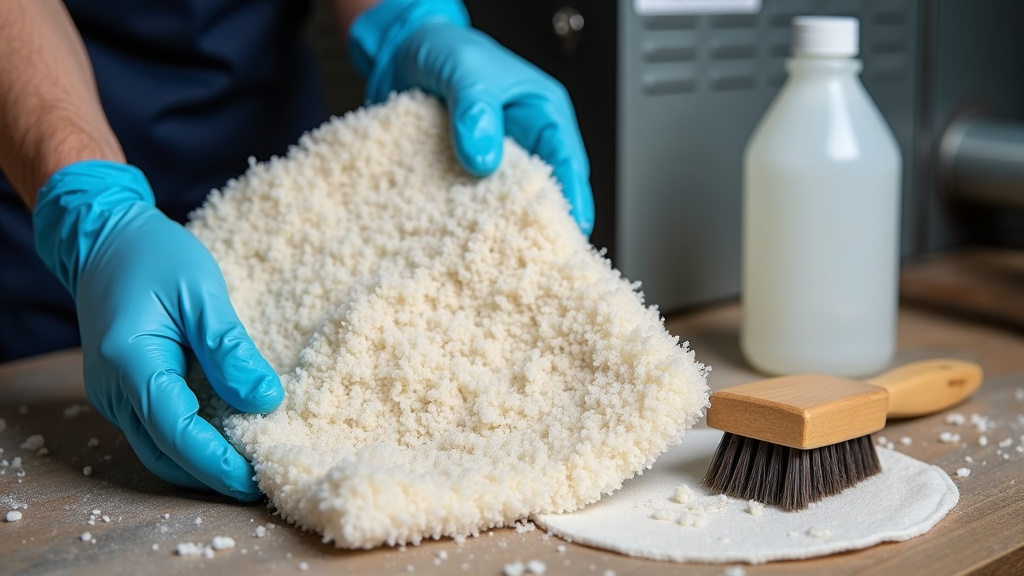
- Seasonal Cleaning: Mineral scale (white, crusty buildup) and microbial slime accumulate inside the unit. It must be cleaned with a descaling solution at season’s start and end.
- Professional Servicing: Every 2–3 years, having an HVAC tech inspect the solenoid valve, drain line, and humidistat is wise. Cost: $100–$150.
Common mistake: Installing a humidifier and ignoring it for years — mineral scale eventually blocks the water panel and overflows into the ductwork, leading to water damage and mold in the insulation within 18–24 months.
Not Suitable for All Climates. This is critical. If you live in the southeastern U.S. or any region with high ambient humidity, adding more moisture to your home is asking for trouble. It promotes mold growth in walls, condensation on windows, and dust mite populations. A whole-house dehumidifier is what you need.
Risk of Over-Humidification and Mold. A malfunctioning humidistat or an oversized unit can pump too much moisture into your home. Humidity above 60% creates ideal conditions for mold and mildew growth, particularly in cooler exterior walls and crawl spaces. This risk makes professional sizing and a reliable humidistat mandatory.
Limited Return on Investment at Resale. Unlike a kitchen remodel, a whole-house humidifier doesn’t significantly boost your home’s market value. Buyers see it as a nice bonus, not a premium feature. The ROI is almost entirely in your personal comfort and home preservation, not in your sale price.
TL;DR: The cons are a four-figure install, yearly cleaning chores, climate restrictions, and a real mold risk if you get lazy.
Bypass vs. Steam: Which Type Is Right for Your House?
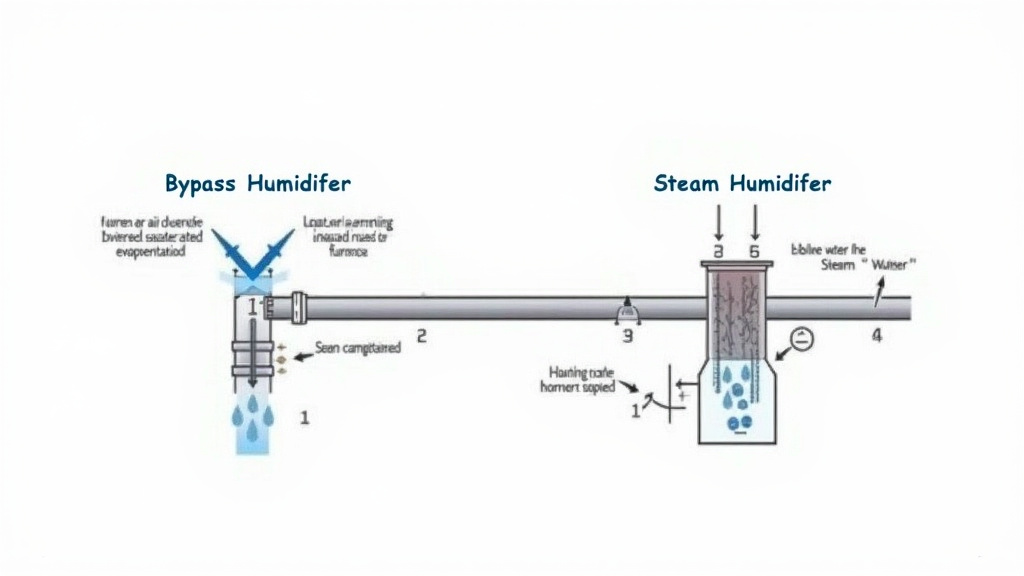
The two main types operate on completely different principles. Your choice dictates your ongoing costs and capability.
| Feature | Bypass / Fan-Powered Humidifier | Steam Humidifier |
|---|---|---|
| How It Works | Furnace air is diverted over a wet evaporator pad; water evaporates. | Heats water to boiling, injects pure steam into the ductwork. |
| Best For | Moderate humidity needs, average-sized homes, tighter budgets. | Large homes, very dry climates (desert), homes with poor water quality. |
| Upfront Cost | Lower ($150–$400 for unit). | Higher ($500–$1,000+ for unit, may require 240V electrical circuit). |
| Operating Cost | Uses more water, minimal electricity. | Uses more electricity, less water. |
| Maintenance | Replace evaporator pad annually. | Replace steam canister annually; canister is more expensive. |
| Key Limitation | Only works when the furnace fan is running. | Can operate independently of the furnace, year-round. |
I installed a bypass Aprilaire 600M in my first home, a 1,800 sq ft ranch in the Midwest. The water was hard. By the second season, the pad was a brick of calcium carbonate and the unit was dribbling water down the duct. I switched to a steam Aprilaire 800 in my current home. The upfront hurt, but the steam generator tolerates the hard water, and I can run it in the shoulder seasons when the heat isn’t on. The right choice depends on your water and your winter.
Bypass Humidifiers are the workhorses. They’re affordable and effective for most situations. Their weakness is water quality. Hard water clogs the pad fast. They also rely on your furnace blower running to move air, so they can’t add humidity on a mild day when the heat isn’t cycling.
Steam Humidifiers are the power tools. They can inject far more moisture and work anytime. They’re the solution for a large, drafty home in a dry climate or if your water is so hard it destroys bypass pads in months. The trade-off is higher purchase price and the electricity cost of boiling water.
Maintenance and Hidden Costs: The 5-Year Reality
Let’s move past the sticker price. The real cost of ownership is what you pay and do over five years. Here’s a realistic breakdown for a bypass humidifier in a region with hard water:
| Year | Task | DIY Cost (Parts) | Professional Service Cost | Consequence of Skipping |
|---|---|---|---|---|
| 1 | Install unit | N/A | $400–$1,200 | Improper installation voids warranty and risks water damage. |
| 1 | End-of-season clean & pad replace | $25 | $125 | Mineral scale begins to bond to the tray, making future cleaning difficult. |
| 2 | Pad replace | $25 | $125 | Reduced evaporation efficiency; unit runs longer, wastes water. |
| 3 | Pad replace + full service | $25 | $200 | Solenoid valve may stick; drain line likely has biofilm growth. |
| 4 | Pad replace | $25 | $125 | Overflow risk increases as scale narrows drainage channels. |
| 5 | Pad replace + potential parts | $25–$100 | $250+ | Scale buildup may require tray or solenoid replacement; mold risk in duct is now high. |
Total 5-Year DIY Cost (Parts Only): ~$125–$200
Total 5-Year Professional Service Cost: ~$1,200–$2,100+
The hidden cost is your time. The annual clean takes 30–45 minutes of messy work. You’re disassembling the unit, scrubbing off scale, and soaking parts in vinegar. If that sounds unappealing, budget for the professional service.
Water quality dictates your pain level. If you have soft water, maintenance is trivial. With hard water, it’s a battle. Installing a whole-house water softener upstream can nearly eliminate scale and extend pad life, but that’s another major appliance investment.
TL;DR: Over five years, expect to spend at least $125 on parts and several hours of labor, or over $1,000 to have someone else do it. Hard water triples the hassle.
Is a Whole-House Humidifier Worth It? The Decision Matrix
Use this table to gut-check your situation. Be honest with your answers.
| Your Situation | Worth It? | Why |
|---|---|---|
| Live in a dry climate (e.g., AZ, NV, CO, inland CA) | Yes | Heating systems create desert-like indoor air. The comfort and health benefits are substantial. |
| Live in a humid climate (e.g., FL, GA, Gulf Coast) | No | You likely already fight excess moisture. Adding more is counterproductive and risky. |
| Have chronic dry skin, sinus issues, or nosebleeds | Likely | The health relief can be dramatic and improve daily quality of life. |
| Own antique wood furniture or fine musical instruments | Yes | The cost of the humidifier is less than repairing a cracked piano soundboard or veneer. |
| Have a modern, tightly-sealed, energy-efficient home | Maybe | Your home may already hold humidity well. First, measure with a hygrometer before assuming you need it. |
| Have a drafty, older home with forced-air heat | Strong Maybe | The heat will dry the air, but the home may leak too much to hold humidity. An energy audit helps. |
| Plan to sell your home in the next 2–3 years | Probably Not | You are unlikely to recoup the installation cost in the sale price. |
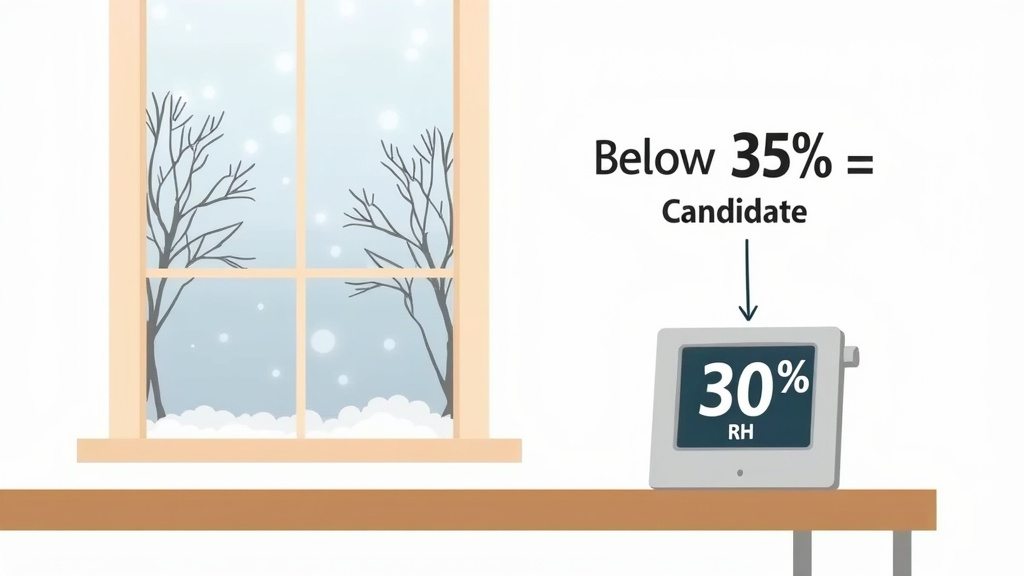
The final step is measurement. Buy a $15 digital hygrometer. Place it in your living room and bedroom for a week during winter. If the reading consistently stays below 35%, you’re a candidate. If it’s between 35% and 50%, you’re in the comfort zone. Above 50%, you don’t need a humidifier.
Frequently Asked Questions
Do whole-house humidifiers cause mold?
They can, but only if mismanaged. The primary causes are over-humidification (setting the humidistat too high) or neglect leading to a dirty, standing-water reservoir inside the unit itself. Keeping humidity below 50% and performing annual cleaning prevents mold growth related to the humidifier.
How much does it cost to run a whole-house humidifier?
Operating costs are low. A bypass model uses a few extra gallons of water per day and negligible electricity for the solenoid valve. A steam model uses more electricity to boil water—roughly $5–$15 per month in winter for an average home. The larger cost is the annual replacement part ($20–$60).
Can I install a whole-house humidifier myself?
It is not recommended. The installation requires cutting into sheet metal ductwork, splicing a water line with a saddle valve or proper tee-fitting, and ensuring correct drainage. A mistake can lead to water damage inside your walls or an improperly functioning unit. Professional installation protects your warranty and your home.
What’s the ideal humidity level for a house in winter?
The Consumer Reports humidifier buying guide and most HVAC professionals recommend maintaining indoor relative humidity between 35% and 45% during the heating season. This range maximizes comfort, minimizes health issues, and stays below the 50% threshold where mold growth becomes a significant risk.
How long do whole-house humidifiers last?
With proper maintenance, the cabinet and internal components of a quality unit like an Aprilaire or Honeywell can last 10–15 years. The evaporator pads or steam canisters are annual replacement items, and the solenoid valve may need replacement every 5–10 years.
Before You Go
Deciding on a whole-house humidifier isn’t about finding a gadget. It’s about diagnosing a condition in your home. If your winter air is consistently below 35% humidity, your skin itches, your floorboards creak, and you dread the shock from every doorknob, the system offers a real fix. The price of admission is the install fee and a calendar reminder every fall to change the pad.
But if your humidity readings are already fine, or you live where the air is thick by default, this is a solution chasing a problem you don’t have. Save your money. Buy a large room humidifier for the bedroom if you need localized relief, and put the grand you saved toward something that makes your home uniquely yours. Comfort has a price. Make sure you’re actually buying it.