Fog Cannon Security Price: Uncover the Real Cost & Factors
This post contains affiliate links. As an Amazon Associate, we earn from qualifying purchases.
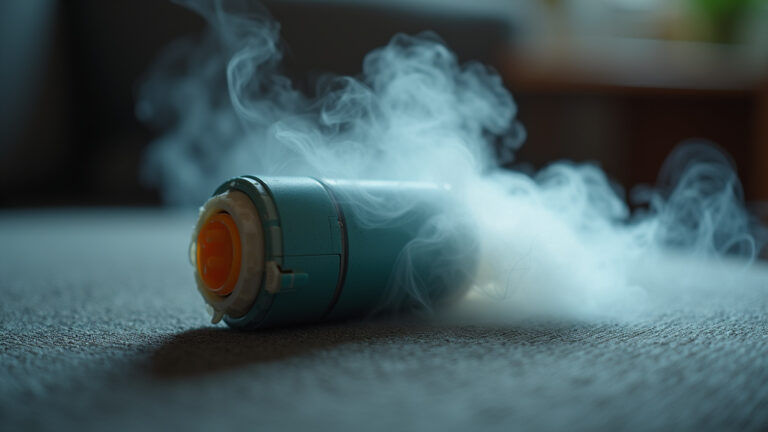
A complete fog cannon security system costs between $500 and $4,000. The final price depends on three non-negotiable factors: the physical size of your space, the speed at which the cannon must fill it, and whether you need professional installation or remote activation features. Government subsidies in places like New Zealand can cover the entire $4,000 cost for eligible small retailers.
Most people look at the sticker price and think they’ve found the answer. They haven’t. The real cost isn’t the box you buy; it’s the system that works when someone kicks your door in at 3 a.m. A cheap unit that fills a room in 60 seconds gives a thief a full minute to grab your most expensive stock. A $3,500 model that does it in 10 seconds might seem steep until you price out replacing stolen laptops or smashed display cases.
This guide breaks down where every dollar goes. You’ll see the price brackets, understand which features actually matter, learn how to navigate subsidy programs, and get the real long-term math on refills and maintenance.
Key Takeaways
- The core unit price ranges from $500 for basic, smaller models to over $4,000 for commercial-grade systems with rapid deployment and advanced integrations.
- Government subsidies, like the $4,000 grant for small retailers in New Zealand, can reduce your out-of-pocket cost to zero if you qualify and choose an approved system.
- Total cost of ownership includes the refill canister, which needs replacement every 18-24 months at a cost of $100 to $300, plus potential professional installation fees of $200-$500.
- The two most critical performance specs are fog output speed (aim for under 30 seconds for a standard retail space) and coverage area (measured in cubic feet or meters).
- Always verify that the fog fluid is non-toxic and food-safe (like the Foggyou system’s fluid) if the cannon will be used near consumables or in food service environments.
What is the Real Price Range for a Fog Cannon?
Forget the single number. The market splits into three clear tiers, and picking the wrong one is the most expensive mistake you can make.
The entry-level tier starts around $500 to $1,200. This gets you a basic, manually-activated cannon designed for smaller, enclosed spaces like a back office or a small storage room. These are often direct-from-manufacturer online purchases. The Foggyou cannon kit sits in this range, emphasizing DIY installation and cost-effectiveness. It’s a capable unit, but it’s built for a specific job: fast, simple protection for a defined area.
A basic security fog cannon in the $500–$1,200 range typically covers up to 150 cubic meters (5,300 cubic feet), activates via a simple wired trigger or button, and uses a standard non-toxic fog fluid. It meets essential safety standards like CE certification but may lack battery backup or advanced remote connectivity.
The professional tier runs from $1,500 to $2,500. Here you find systems like the PROTECT 1100i™ or 2200i™. The price jump buys you measurable performance: faster fog output, larger coverage capacity, and critical features like battery backup for power-outage protection. These models are designed for integration. They have hardwired inputs for your existing burglar alarm panel and outputs to trigger strobe lights or lockdown procedures. This is the sweet spot for most retail stores and small businesses.
The commercial-grade tier pushes from $2,500 to $4,000 and above. The PROTECT FOQUS™ model is a prime example. You pay for maximum speed, reliability, and redundancy. These units fill massive spaces in seconds, feature robust anti-tamper casings, and offer cloud-connected remote management. They’re built for banks, high-value warehouses, and chain stores where downtime is unacceptable.
TL;DR: Budget $500–$1,200 for a basic room, $1,500–$2,500 for a full shop with alarm integration, and $2,500+ for high-security, large-scale, or multi-site commercial protection.
The 3 Things That Actually Change the Fog Cannon Price
The listed price is a starting point. Three variables swing the final number by hundreds, sometimes thousands, of dollars.
1. Installation: DIY vs. Pro. Some systems, like Foggyou, are engineered for self-installation. You mount a bracket, plug in the unit, and connect a trigger wire. It takes 20 minutes. Others, especially those integrating with complex alarm panels, require a certified technician. That service call adds $200 to $500 to your total. Skipping professional installation on an integrable system voids the warranty and likely breaks the alarm link.
2. Activation Method. A simple wall-mounted button is cheap. A wireless remote fob adds cost. A fully integrated module that listens to your alarm system’s signal and auto-triggers adds more. Each step up in convenience and automation increases the unit price. Remote activation is non-negotiable if the trigger point isn’t near the cannon—like a panic button under the counter for a cannon mounted near the ceiling.
3. Fog Output Speed and Density. This is the engineering heart of the system. A cheaper unit might use a smaller pump and heating element to produce fog. It works, but it’s slower. High-speed models like the FOQUS use more powerful components to achieve a 10-second fill time. That speed costs money in materials and design. You’re paying for the thief’ disorientation to begin before they’ve taken three steps into your space.
| Cost Driver | Low-Cost Option | Higher-Cost Option | Impact on Price |
|---|---|---|---|
| Installation | DIY wall bracket | Professional integration with alarm panel | +$200 to $500 |
| Activation | Wired push-button | Wireless remote + alarm panel integration | +$100 to $300 |
| Fog Speed | 30–60 second fill | 10–20 second fill | +$500 to $1,500 |
| Coverage | 150 cubic meters | 300+ cubic meters (or linked units) | +$400 to $1,200 |
Common mistake: Buying the cheapest unit for a large, open-plan store — the fog dissipates before reaching the corners, creating safe zones for a thief. The system fails even though it “worked.”
The first time I set up a demo unit in a 2,000 sq. ft. empty retail space, I used a mid-tier model. The fog billowed out impressively from the cannon mounted at the front. It looked great. Then I walked to the back corner. The air was clear enough to read a poster. A thief could have waited there, untouched. I now measure the farthest corner, not the center of the room, when specifying coverage.
How Government Subsidies Slash the Cost to Zero
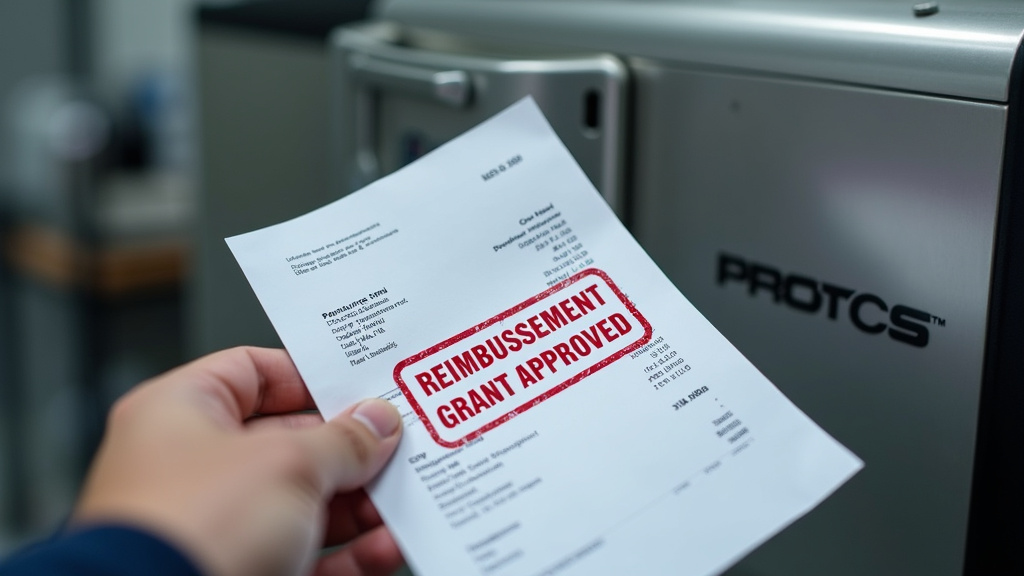
In several regions, police and business groups fund fog cannons as a crime-deterrent tool. The most cited example is New Zealand’s scheme, which offers up to $4,000 for eligible small retail businesses.
The subsidy isn’t a coupon. It’s a reimbursement grant for a pre-approved system installed by an accredited provider. You must apply, often through a police-sponsored business security program, and prove eligibility (e.g., being in a high-theft retail category, having a storefront in a targeted area). If approved, you purchase and install the system from a listed supplier, submit the invoice, and receive the funds.
This is why some systems are priced right at the $4,000 subsidy cap. For the shop owner, the net cost is zero. It makes a commercial-grade PROTECT FOQUS™ suddenly the most logical choice. Always check with your local crime prevention officer or small business association before you buy. A thirty-minute phone call could save you the entire budget.
TL;DR: Contact local police or business groups first. A $4,000 subsidy can cover 100% of a top-tier system, but you must use an approved installer and model.
Fog Cannon Features: What’s Worth the Upgrade?
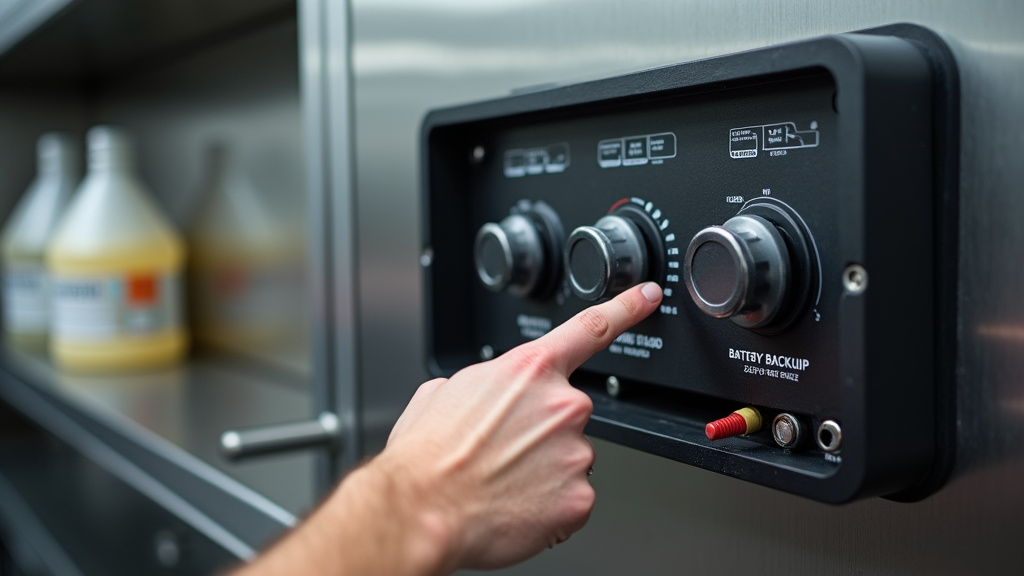
Not all upgrades are equal. Some are marketing; others are insurance.
Battery Backup. Worth every penny. If a burglar cuts your power, a standard fog cannon is a paperweight. A model with a 24-hour standby battery keeps you protected. This feature alone can bump a system from the professional to the commercial tier.
Remote Management & Alerts. For multi-site businesses, this is essential. Cloud connectivity lets you see system status, receive low-fluid alerts, and even trigger tests from your phone. For a single shop, it’s a nice-to-have that adds complexity and a monthly subscription fee.
Food-Safe / Food-Grade Fog Fluid. This is a critical, non-negotiable spec for cafes, restaurants, grocery stores, or any place with open food. Standard fog fluid is non-toxic but isn’t certified for incidental contact with consumables. Brands like Foggyou explicitly use a food-compliant fluid. The upgrade cost is minimal, but the liability protection is massive.
Pulse Function. Some advanced models can release a sustaining “pulse” of fog after the initial blast to maintain density for up to an hour. This is for extreme scenarios where police response is delayed. For most businesses, the initial dense cloud is enough of a deterrent.
I prefer systems with a physical, hard-wired backup trigger hidden separately from the main remote. Remotes get lost or have dead batteries. A hardwired button under the counter or near a safe is a foolproof last line of defense. Found that out during a power outage when a wireless remote failed to pair.
The Hidden Long-Term Costs Nobody Talks About
The purchase price is a one-time event. The running costs are forever.
The biggest recurring cost is the fog fluid refill canister. Think of it like a fire extinguisher: it sits there for years, but it has a finite lifespan and must be replaced. Most systems have a canister that lasts 18 to 24 months under normal standby conditions. Replacement costs range from $100 for a basic generic refill to over $300 for an OEM canister from brands like PROTECT.
Why the price spread? The proprietary fluid in an OEM canister is engineered for consistent particle size and density. It’s also guaranteed not to leave residue that could clog the unit’s sensitive nozzle or set off smoke detectors. A generic fluid might work, but it voids your warranty and risks a malfunction when you need it most.
The other hidden cost is testing and inspection. You should test the system quarterly. That uses a tiny amount of fluid. Over five years, those tests will consume about one canister’s worth. Factor that into your long-term budget.
| Cost Category | Frequency | Estimated Cost | Consequence of Skipping |
|---|---|---|---|
| Refill Canister | Every 18–24 months | $100 – $300 | System will emit a weak, ineffective fog or fail entirely on activation. |
| Professional Inspection | Optional (Annual) | $150 – $250 | Hidden issues like clogged nozzles or weak battery backups go undetected. |
| Integration Service | One-time (if adding later) | $300 – $600 | The cannon operates in isolation, missing the deterrent effect of simultaneous alarm activation. |
How to Choose the Right Model for Your Space and Budget
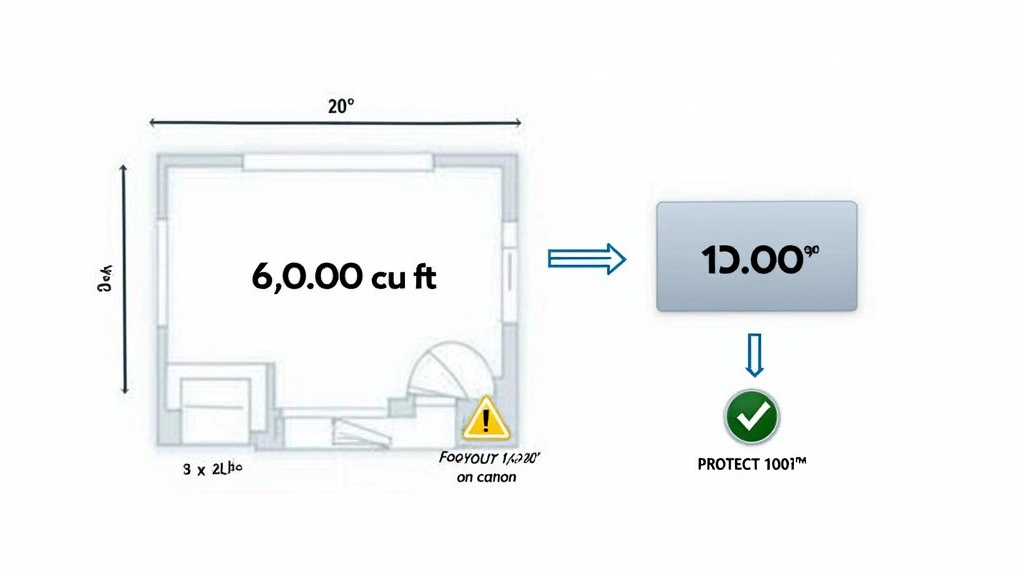
This is a sizing and matching exercise. Get it wrong, and you waste money.
First, calculate your volume. Multiply length x width x height (in feet or meters). A 20′ x 30′ shop with a 10′ ceiling is 6,000 cubic feet. Now compare that to the manufacturer’s coverage spec. The Foggyou covers 5,300 cubic feet. It’s a tight fit, but it works. For that same space, a PROTECT 1100i™ might be more comfortable. If your space is larger or has an open mezzanine, you need a bigger model or two linked units.
Second, audit your existing security. Do you have an alarm panel with an unused output? If yes, you can integrate a pro-tier model. If no, you’re looking at a standalone system with its own triggers, which simplifies choice but may limit functionality.
Third, apply the 10-second rule. Ask the supplier: “How long to fill my calculated volume?” If the answer is over 30 seconds, keep looking. The YouTube footage of fog filling a room in 10 seconds is from a high-output commercial unit. That’s what you’re paying for in the upper price brackets—certainty.
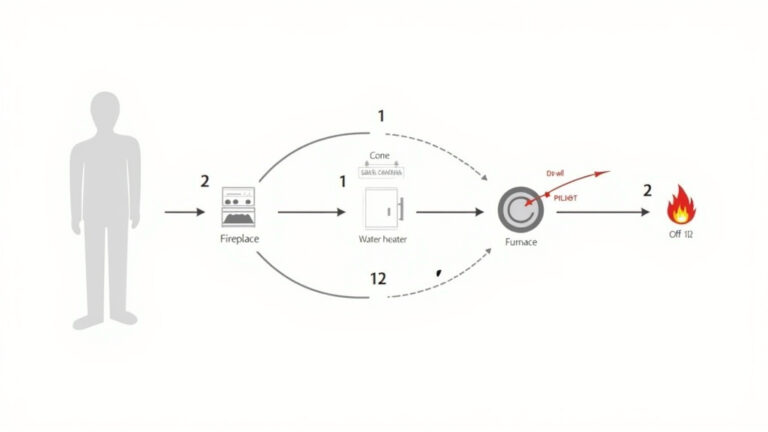
Here’s a simple flow for decision-making:
1. Measure your space.
2. Check for local subsidies.
3. Rule out any system that doesn’t meet your coverage and speed (under 30s) minimums.
4. Choose between DIY (Foggyou-style) or integrated pro-install models.
5. Add the cost of the first refill canister to your total.
This process mirrors the diligence needed when selecting other critical equipment, like choosing the right fog light kits for a vehicle—you match the output to the environment. The same principle applies when upgrading a truck; you wouldn’t put a basic light on a heavy-duty rig, just as you wouldn’t use a small cannon in a warehouse. For specialized environments like motorcycles, the need for compact, durable units is similar to needing weather-resistant bike lights. The core idea across all these professional fog solutions is matching spec to need.
Frequently Asked Questions
Does fog damage electronics or inventory?
Reputable systems use fog fluids that are non-conductive and residue-free, certified to standards like IEC 62642-8. They won’t damage computers, clothing, or most stock. Always confirm this with the manufacturer, especially for sensitive environments.
Can I install a fog cannon myself?
Some models are designed for DIY. The Foggyou system markets a 20-minute install. However, if your system integrates with an alarm, has hardwired triggers in multiple locations, or requires mounting on high ceilings, professional installation is safer and often required for warranty compliance.
How long does the fog last?
The dense, vision-obscuring cloud typically lasts 5-10 minutes. A lingering haze can remain for up to an hour, continuing to disorient anyone who remains. The system is designed to stop the crime in the first 60 seconds, not to maintain a fog bank indefinitely.
What triggers the fog cannon?
Activation methods include wireless remotes (like a key fob), hardwired panic buttons, and integration with burglar alarm motion sensors or door contacts. The best practice is to have two methods: one for daily use (remote) and a hidden, hardwired backup.
Is the fog safe to breathe?
The fog is non-toxic and harmless. It’s primarily water and glycol-based vapor. However, it’s extremely disorienting and will cause coughing and an immediate urge to leave the area. It is not dangerous like chemical irritants.
Are fog cannons legal everywhere?
They are legal in most jurisdictions as a non-violent, non-escalatory security measure. However, local fire codes may have regulations about automated aerosol releases. It is your responsibility to check with local authorities before installation.
The Bottom Line
A fog cannon’s price tag tells you what’s in the box. The real value is what happens when the box has to work. Spending $1,500 on a properly sized, integrable system with battery backup is smarter than wasting $800 on a unit that’s too slow or too small. The $4,000 government subsidy in eligible areas changes the math completely, making top-tier protection a zero-cost investment.
Remember the fluid. Budget for a refill every two years. Match the cannon’s coverage to your room’s farthest corner, not its center. And for food businesses, the food-safe fluid certification isn’t an upgrade—it’s a requirement. The right system doesn’t just protect your stuff; it ends the robbery before the thief takes a second step. That’s the number that matters.