How to Fix a Dehumidifier That Trips Your Circuit Breaker
This post contains affiliate links. As an Amazon Associate, we earn from qualifying purchases.
A dehumidifier can trip a breaker because its compressor demands more current than the circuit can handle, either at startup or continuously. The main culprits are circuit overload, the temporary inrush current spike, or a fault within the appliance or wiring that triggers a GFCI or AFCI breaker.
The mistake most people make is assuming the appliance itself is broken. They swap the dehumidifier, then watch the new unit trip the same breaker a week later. The problem is usually the electrical environment, the circuit it’s on, the other appliances sharing that circuit, or the type of breaker protecting it.
This guide walks through the five most common reasons a dehumidifier trips a breaker, how to diagnose each one safely, and the permanent fixes that stop the nuisance trips without creating a fire hazard.
Key Takeaways
- A 50-pint dehumidifier can draw over 6 amps continuously; on a 15-amp circuit with other appliances, that’s already near the 12-amp safe limit before the compressor even starts.
- The inrush current spike when the compressor kicks on can be 2–5 times the running amps, hitting 13–15 amps on a small unit, enough to trip a 15-amp breaker instantly.
- Arc Fault Circuit Interrupter (AFCI) breakers trip on the tiny electrical arcs a worn motor or loose wire connection creates, even if the total amps are fine.
- Never replace a standard breaker with a higher-amperage one to stop trips. The wiring behind it isn’t rated for more current, and you’ll create a hidden fire risk.
- If the dehumidifier runs fine on a different circuit, your wiring or the shared load on the original circuit is the problem, not the machine.
What Causes the Trip? The 5 Most Common Culprits
Look at the nameplate on the back of your dehumidifier. The number printed after “Amps” or “Current” is your starting point. A standard 30-pint unit might list 3.5A, a 50-pint model 5.8A, and a 70-pint basement unit up to 7.5A. That’s the running draw. The trip happens when the real demand exceeds that number, or when something else on the circuit adds to it.
A 50-pint Frigidaire dehumidifier draws 5.8 amps at 115 volts according to its nameplate. On a 15-amp circuit, the National Electrical Code’s 80% rule for continuous loads sets the safe ceiling at 12 amps. If a refrigerator (6 amps) and an LED TV (1 amp) are already on that circuit, adding the dehumidifier pushes the total to 12.8 amps, over the limit before the compressor’s startup spike even happens.
TL;DR: The nameplate amps are your baseline. Add everything else on the circuit. If the total exceeds 80% of the breaker rating, the trip is an overload, not a faulty dehumidifier.
1. Circuit Overload – The Silent Default
This is the default diagnosis. You plugged the dehumidifier into a bedroom outlet that also feeds the bathroom lights, a gaming PC, and maybe a space heater in winter. The breaker sees the combined load, not just the dehumidifier.
A 15-amp breaker can handle 15 amps momentarily, but for a continuous load like a dehumidifier running for hours, the NEC says you shouldn’t exceed 80% of that rating, 12 amps. A 20-amp breaker’s continuous limit is 16 amps. Your dehumidifier’s running draw plus the other appliances on the circuit must stay under that ceiling.
| Appliance on Circuit | Typical Amperage | Cumulative Load on 15-Amp Circuit |
|---|---|---|
| Dehumidifier (50-pint) | 5.8 A | 5.8 A |
| Refrigerator | 6 A | 11.8 A |
| Gaming PC & Monitor | 2.5 A | 14.3 A (over 12 A limit) |
| Space Heater | 12 A | 26.3 A (instant trip) |
The fridge cycles on and off, but when its compressor kicks in simultaneously with the dehumidifier’s compressor, the combined inrush can be 18 amps on a 15-amp circuit. The breaker trips to protect the wires from overheating.
Common mistake: Adding a dehumidifier to a circuit that already has a refrigerator or space heater, the combined inrush current will trip a 15-amp breaker within two or three compressor cycles, usually on the first humid day when both appliances run longer.
2. Inrush Current – The Instant Spike
The compressor motor inside a dehumidifier isn’t like a light bulb. When it starts, it needs a burst of energy to overcome inertia. This startup spike, called inrush current, lasts only a second but can be 2 to 5 times the running amperage.
A unit rated for 5.8 amps running can demand 13 to 15 amps at startup. If your breaker is a standard 15-amp model and the circuit is already supplying 4 amps to other devices, that spike pushes the total past 15. The breaker trips immediately, often before the dehumidifier even begins to hum.
Why this matters for older breakers: Thermal-magnetic breakers (the common type) have a slight tolerance for brief overloads. But if the breaker is old or has tripped many times before, its calibration wears. It becomes more sensitive and may trip at 14 amps instead of 15. That’s when a dehumidifier that ran fine for years starts tripping every time it cycles on.
3. AFCI Breakers – The Arc Hunters
Arc Fault Circuit Interrupter breakers look for specific patterns of electricity leaking across a gap, a tiny arc. Loose wire connections inside your house, a worn dehumidifier motor, or even a slightly damaged power cord can create these micro-arcs.
I installed AFCI breakers throughout my house for safety. My older Kenmore dehumidifier, which had run for eight years on the old standard breaker, started tripping the new AFCI within minutes. The breaker wasn’t faulty; it was detecting the carbon buildup on the motor’s commutator that created small arcs every time the compressor cycled. Replacing the motor fixed it.
AFCI trips feel random because the arc might only happen when the motor is under load or when humidity is high. If your dehumidifier trips a new AFCI breaker but ran fine on the old one, the AFCI is likely doing its job, telling you there’s an internal fault or a wiring issue.
4. GFCI/RCD Breakers – The Ground-Fault Guardians
Ground Fault Circuit Interrupter (GFCI) outlets or Residual Current Device (RCD) breakers trip when electricity finds an unintended path to ground, like through water or your body. They’re common in bathrooms, garages, and outdoors.
If your dehumidifier sits in a damp basement, moisture can ingress into the unit’s electrical compartment. A GFCI will trip at around 5 milliamps of leakage (in the US). Even a long power cord running across a wet floor can create enough capacitive leakage to nuisance-trip a sensitive GFCI.
The fix isn’t to remove the GFCI. It’s to move the dehumidifier to a dry, dedicated outlet on a standard breaker, or to repair the moisture intrusion inside the unit.
5. The Dehumidifier itself – Internal Faults
Sometimes the appliance is the problem. A failing capacitor won’t provide the extra kick the compressor needs at startup, causing the motor to stall and draw excessive current continuously. A seized compressor draws locked-rotor amperage, often triple the normal running load, until the breaker trips. A short in the internal wiring creates a direct path to ground, tripping a GFCI instantly.
Listen for a hard click followed by nothing, or a grinding hum instead of the usual smooth compressor sound. Those are internal fault clues.
How to Diagnose Which Culprit Is Tripping Your Breaker
Before you start: Breakers can fail. If you reset one and it feels loose, doesn’t snap firmly, or trips again with nothing plugged in, stop. That breaker needs replacement by an electrician. Also, never stand in water or touch terminals while testing.
Step 1: Isolate the circuit. Unplug everything else from the circuit the dehumidifier is on. Turn off lights. If the dehumidifier alone still trips the breaker, the problem is either the unit or the house wiring to that outlet.
Step 2: Test on a known-good circuit. Move the dehumidifier to a different circuit, like a bathroom GFCI outlet or a garage outlet. Use a heavy-duty extension cord rated for the dehumidifier’s wattage if needed. If it runs fine there, your original circuit is overloaded or has faulty wiring.
Step 3: Measure the actual draw. A plug-in ammeter like a Kill A Watt shows running amps. Watch the display when the compressor starts, the spike is the inrush. If the running amps match the nameplate but the spike exceeds 15 amps on a 15-amp circuit, you need a dedicated 20-amp line.
Step 4: Inspect the unit. Check the power cord for nicks or cracks. Look inside the unit (unplugged) for water residue, corroded terminals, or a capacitor that looks swollen or leaking. A swollen capacitor is a sure sign.
Step 5: Decide the fix. If the circuit is overloaded, relocate the dehumidifier. If the inrush is too high for the circuit, you might need a soft-start capacitor installed by a technician. If an AFCI is tripping, the dehumidifier likely has an internal arc fault; repair or replace it. If a GFCI trips, move the unit to a drier location.
The 4 Tools That Replace a $200 Service Visit
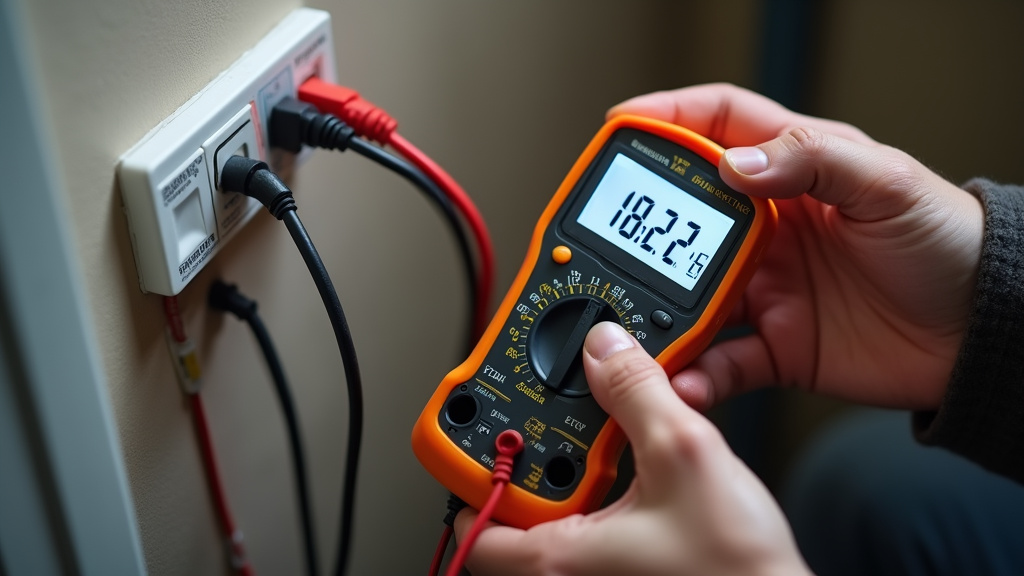
You don’t need an electrician for the diagnosis phase. These four tools let you see the problem yourself.
- Plug-in ammeter ($25–$40). It gives you the running amps and the peak. The peak reading during compressor startup is your inrush current number.
- Non-contact voltage tester ($15). Use it to confirm the outlet is live after a trip, and to check for voltage on the dehumidifier’s terminals if you open it up. Never trust the silence after a trip, wires can still be hot.
- Heavy-duty extension cord. A 12-gauge cord rated for 15 amps lets you test the dehumidifier on another circuit safely. Thin 16-gauge cords add resistance, cause voltage drop, and can make the problem worse.
- Your ears. A healthy compressor starts with a solid thump and settles into a smooth hum. A failing one grinds, clicks repeatedly, or just hums without the thump.
I keep a Kill A Watt meter plugged into my basement outlet year-round. When my 70-pint unit started tripping, the meter showed a running draw of 7.1 amps, normal. But the peak at startup flashed 18.2 amps. That spike, combined with the basement lights on the same circuit, was the culprit. I moved the dehumidifier to a dedicated outlet I installed, and the trips stopped.
When NOT to Do These Things – The Safety Rules
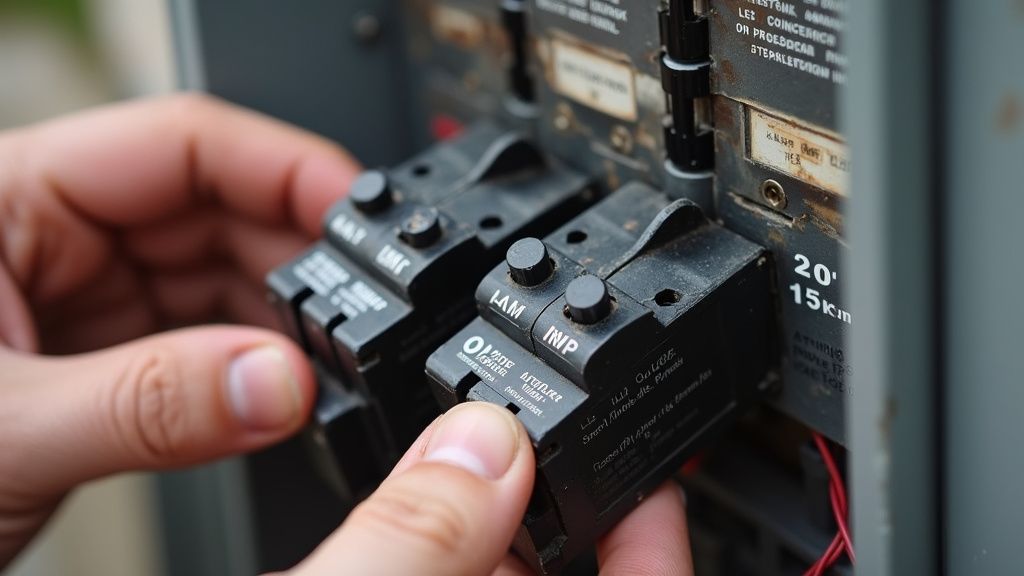
Do not replace a 15-amp breaker with a 20-amp breaker. The wires in your wall are likely rated for 15 amps. A 20-amp breaker allows more current to flow through those wires, which can overheat and start a fire inside the wall before the breaker trips. This is why electricians call it a “fire waiting to happen.”
Do not ignore repeated AFCI trips. The breaker is telling you there’s a tiny, dangerous arc somewhere. It could be a loose wire in the dehumidifier, a worn motor brush, or a connection in your wall. Arcing carbonizes insulation and creates conductive carbon tracks that lead to bigger faults.
Do not run a dehumidifier on a long, thin extension cord. Voltage drop on a thin cord makes the motor draw more current to compensate. That higher current can trip the breaker or overheat the cord itself. If you must use an extension cord, get a 12-gauge one shorter than 25 feet.
What About Other High-Draw Appliances on the Same Circuit?
A dehumidifier rarely runs alone. The fog machine wattage for a medium-duty unit is similar, around 400W, pulling roughly 3.3 amps. If you’re running both a dehumidifier and a fog machine on the same circuit, you’re adding two compressor-driven loads with independent inrush spikes.
The math gets tight quickly. A 5.8-amp dehumidifier plus a 3.3-amp fog machine is 9.1 amps running. Add a 6-amp refrigerator, and you’re at 15.1 amps on a 15-amp circuit, over the limit. When the fridge and dehumidifier compressors start together, the combined inrush can hit 25 amps. The breaker trips to protect the wiring.
This is why venues with multiple high-draw devices often install dedicated circuits. The power consumption of fog machines is a known variable, just like a dehumidifier’s draw. Plan for both.
Can You Fix a Dehumidifier That’s Tripping the Breaker?
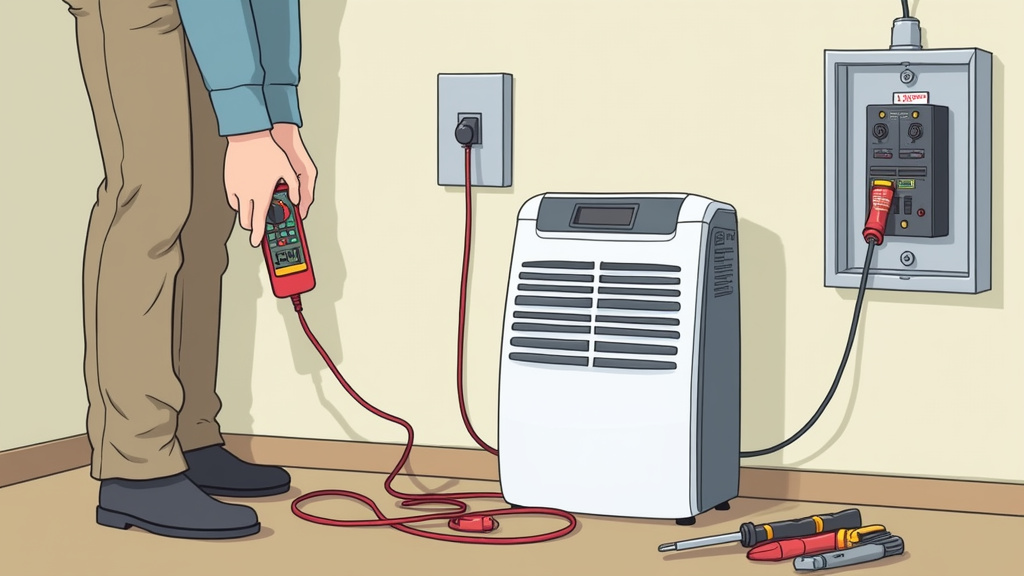
Yes, but the fix depends on the cause.
For circuit overload: Move the dehumidifier to a different circuit that has spare capacity. A bathroom or garage outlet often has a 20-amp dedicated line. If no circuit exists, an electrician can install a new dedicated outlet for the unit. This is the most permanent solution.
For inrush current spikes: A soft-start device can be added to the dehumidifier’s compressor circuit. It ramps up the voltage slowly, reducing the spike. Not all units support this, and it requires a technician. Alternatively, a dedicated 20-amp circuit handles the spike without a soft-start.
For AFCI trips: The dehumidifier likely has an internal fault. Common fixes include replacing the motor, cleaning carbonized brush debris, or securing loose internal wiring. If the unit is old, replacement is often cheaper than repair.
For GFCI trips: Ensure the dehumidifier is in a dry location. Check for moisture inside the unit. If the GFCI outlet itself is old, replace it, older GFCIs become more sensitive over time.
For internal faults: A swollen capacitor is a DIY replacement if you can find the exact match. A seized compressor means replacing the whole unit. Shorts in the wiring require tracing and repair, which is best left to a professional.
Frequently Asked Questions
Why did my dehumidifier start tripping the breaker after years of working fine?
Breakers wear out and become more sensitive after repeated trips. Wiring connections can loosen over time, increasing resistance and heat. The dehumidifier’s compressor also wears, drawing more current or creating internal arcs. Finally, you may have added another appliance to the same circuit without realizing it.
Is it safe to reset the breaker and try again?
Reset it once. If it trips again immediately with the dehumidifier plugged in alone, stop. Repeated resetting can damage the breaker’s mechanism and mask a serious overload or short circuit. That’s a fire risk.
Can I use an extension cord with my dehumidifier?
Only if it’s a heavy-duty (12-gauge) cord shorter than 25 feet. Thin cords cause voltage drop, which makes the motor draw more current and can trip the breaker or melt the cord insulation.
Do all dehumidifiers trip AFCI breakers?
No. Modern units with electronically commutated motors (ECM) or sealed compressors are less likely to create the tiny arcs that trip AFCI breakers. Older units with brushed motors and worn bearings are the usual culprits.
How many amps does a typical dehumidifier use?
Check the nameplate. A 30-pint unit uses about 3.5–4.2 amps. A 50-pint model uses 5.5–6.5 amps. A 70-pint basement unit can draw 7–8 amps. These are running amps; startup inrush is higher.
The Bottom Line
A tripping breaker is a message, not a mystery. It tells you the electrical demand exceeds the circuit’s capacity, or that a fault exists. Start with the nameplate amps, isolate the circuit, and measure the real draw. If the dehumidifier runs fine elsewhere, the problem is your house wiring or the shared load. If it trips everywhere, the unit has an internal fault.
Never upgrade the breaker without upgrading the wiring. Never ignore an AFCI that trips consistently. And never assume a dehumidifier is broken just because it trips, the circuit might be the real culprit. Solving it takes a methodical check of each possibility, but the fix is usually straightforward: relocate, repair, or replace.