Is Fog Machine Smoke Flammable? The Straight Answer
This post contains affiliate links. As an Amazon Associate, we earn from qualifying purchases.
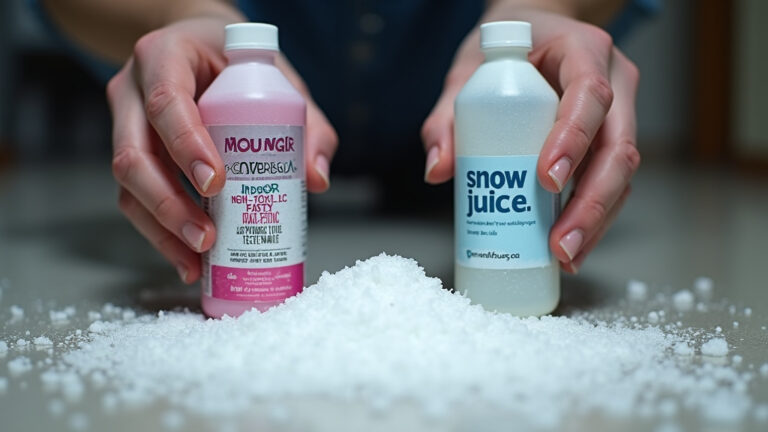
Fog machine smoke is not flammable. The visible cloud is a vaporized fluid of water and glycol or glycerin. These substances have high flash points and will not ignite. The real fire risk comes from using the wrong fluid, allowing residue buildup on hot surfaces, or placing the machine near flammable materials.
Modern fog machine smoke is not flammable. The fog itself, the visible cloud, is a vaporized mixture of water, propylene glycol, or glycerin. These ingredients have high flash points and won’t ignite under normal conditions. The real fire risk comes from three specific mistakes: using the wrong fluid, letting residue build up on hot surfaces, or placing the machine’s heating element near flammable materials.
People get this wrong because they see a dense cloud and think “smoke equals fire.” They panic about the fog itself and miss the actual hazards hiding in their setup. That misplaced fear leads to sloppy placement and fluid choices that actually create danger.
This guide cuts through the confusion. You’ll learn which fluids can burn, how residue turns safe fog into a fire starter, and the non-negotiable steps to protect your venue, your gear, and your people.
Key Takeaways
- The fog cloud from standard water-based fluid is not a fuel source. You cannot light it with a match.
- Oil-based fog fluids are flammable and are a specialty product for specific, controlled effects.
- Glycol and glycerin residue is slippery and can be flammable when it concentrates on a hot machine housing or a stage light.
- Fire alarms are triggered by particle density, not heat. Photoelectric detectors will scream long before any fire risk exists.
- Always check the Material Safety Data Sheet (MSDS) for your specific fluid. It lists the exact flash point and handling warnings.
The #1 Real Danger Isn’t the Fog
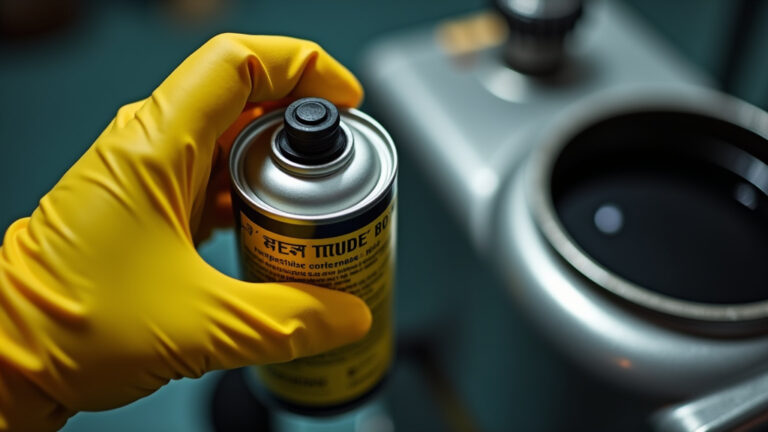
Water-based fog fluids typically consist of propylene glycol, glycerin, and de-ionized water. These glycols are classified as combustible liquids, not flammable liquids, with flash points generally above 100°C (212°F). This means the fluid must be heated significantly before it can produce an ignitable vapor, a condition not met by the atomized output of a properly functioning machine.
You are not managing a fire in the air. You are managing a film on surfaces. Propylene glycol and glycerin are hygroscopic, they pull moisture from the air. When atomized, most of that moisture carries the glycol particles as a fine mist that eventually settles.
The problem is the settling. That invisible film coats everything: cables, lighting barn doors, the fog machine’s own exterior. If that film builds up on a 500-watt halogen stage light or the machine’s own heating block, the heat can pyrolyze the glycol. It doesn’t burn with a flame. It carbonizes into a sticky, conductive goo that can short electronics and, with enough heat and oxygen, eventually smolder.
I learned this the hard way running a small Atlas fogger too close to a par can for a Halloween haunt. After two hours of continuous use, the side of the fogger facing the light was tacky. By hour three, a faint acrid smell, like burning sugar, filled the booth. I shut everything down and found a brown, caramelized patch on the fogger’s casing. No flame, but the plastic was permanently stained and slightly softened. The heat was maybe 90°C, far below the fluid’s published flash point, but direct, prolonged contact was enough to break it down.
TL;DR: The fog cloud is safe. The oily residue it leaves behind on hot surfaces is not. Your primary job is to manage where that residue lands.
Water-Based vs. Oil-Based: The Flammability Divide
Not all “fog juice” is the same. The base ingredient dictates everything.
| Fluid Type | Base Ingredients | Flammability | Common Use Case | Key Risk |
|---|---|---|---|---|
| Water-Based | De-ionized water, Propylene Glycol and/or Glycerin | Non-flammable (high flash point) | 95% of theatrical, halloween, and event fog | Residue flammability on hot surfaces |
| Oil-Based | Mineral Oil, Paraffin | Flammable (low flash point) | Specialized low-lying or dense atmospheric effects | Fog cloud itself can ignite near open flame |
| Dry Ice | Solid Carbon Dioxide (CO2) | Non-flammable, non-toxic | Low-lying “graveyard” fog | Asphyxiation risk in unventilated spaces |
Water-based is the standard for a reason. Major brands like Rosco and Froggys formulate with specific glycol/water ratios that vaporize cleanly in common machines like the Chauvet Hurricane or the ADJ Fog Fury. The fluid is designed to be heated in a controlled block, atomized, and expelled as a cool mist.
Oil-based fluids are a different beast. They exist to create a thicker, longer-lasting fog that hugs the ground. They work by being mechanically atomized (often without heat) into a fine oil mist.
Common mistake: Using an oil-based fluid in a machine designed for water-based fluid, the different viscosity and vaporization point can cause the fluid to overheat in the block, creating a flammable vapor inside the machine that can ignite or cause a pressure blowout.
The choice is simple. Unless you are specifically trained for oil-based effects and have written safety protocols, you use water-based fluid. Every time.
How Fire Alarms Get Triggered (It’s Not the Heat)
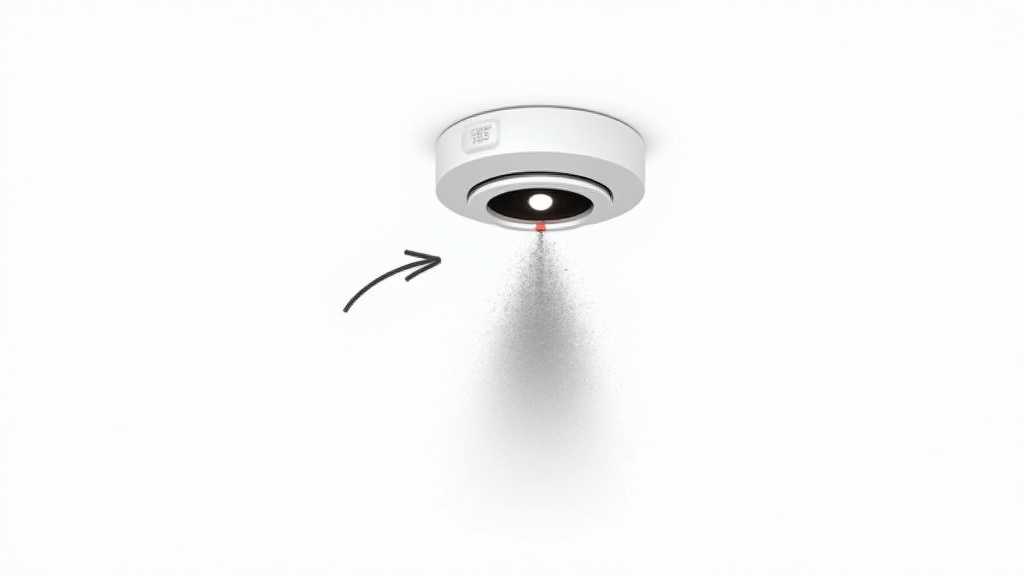
Your fog machine won’t start a fire, but it will absolutely convince a smoke detector that a fire has started. This is the most common emergency shutdown scenario.
Fire alarms detect particles, not temperature. Here’s how the two main types react to your fog:
| Detector Type | How It Works | Reaction to Fog | Bypass Strategy |
|---|---|---|---|
| Photoelectric | Shines a light beam; alarms when particles scatter the light. | Extremely sensitive. A light haze will trigger it. | Use low-output machines, place them low, ensure rapid dissipation. |
| Ionization | Measures current between two plates; alarms when particles disrupt it. | Moderately sensitive. Dense fog will trigger it. | Less common in modern commercial venues. |
| Heat Detector | Alarms at a fixed temperature or rapid rise. | Essentially immune. Only reacts to actual heat from fire. | Found in some warehouse spaces; safe for fog. |
As the YouTube breakdown from Master Effects confirms, the hybrid photoelectric/ionization detector is the most common and most sensitive. Your fog particles are identical to smoke particles in the eyes of that sensor.
I won’t run a hazer in a venue without first doing a threshold test with the fire panel in test mode. You need to know how many minutes of runtime it takes to set off the alarm. Found that out after evacuating a 200-person wedding during the first dance. The venue had ultra-sensitive aspirating detectors we didn’t know about.
The solution is coordination, not disablement. You must speak with the venue’s designated fire safety officer or facilities manager. They can often place the system in a supervised “test” mode for your rehearsal. This lets you find the maximum fog density that won’t cause an alarm while keeping the system live. Never, ever ask to disconnect or tape over a detector.
Your 5-Step Pre-Event Safety Checklist
Do this before you plug in the machine. It takes ten minutes and prevents 99% of problems.
- Audit Your Fluid. Check the bottle label for “water-based.” Cross-reference it with your machine’s manual. Using a fluid with too high a glycol concentration for your machine’s heater can lead to incomplete vaporization and wet, residue-heavy fog.
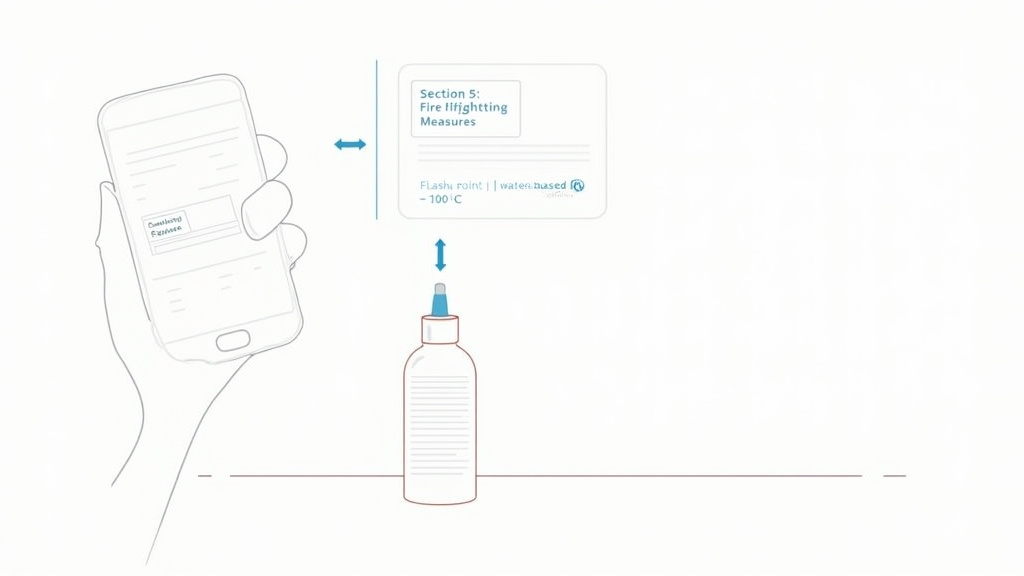
- Locate the MSDS. Search online for “[Fluid Brand Name] MSDS.” This PDF will list Section 5: Fire-Fighting Measures and Section 9: Physical and Chemical Properties. Find the flash point. If it’s above 100°C, you have a standard water-based fluid.
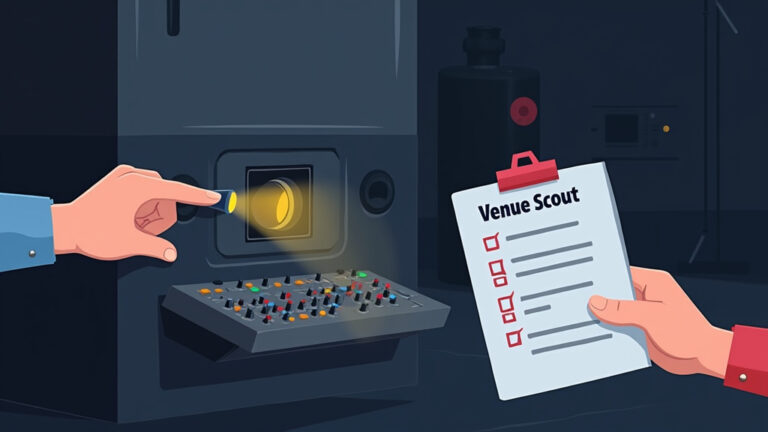
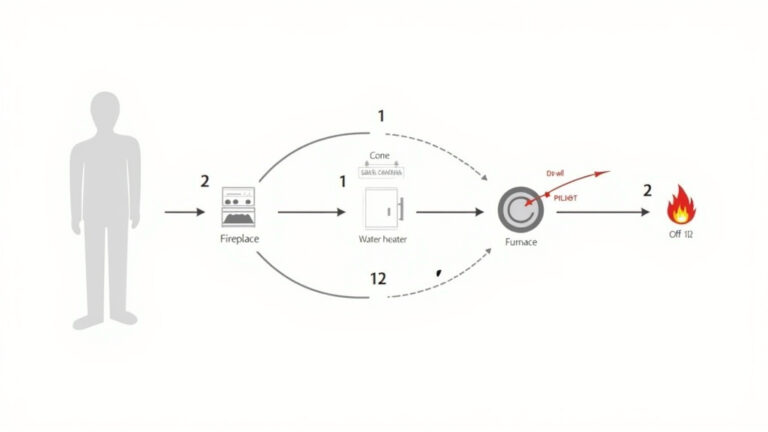
- Map Ignition Sources. Walk the area. Note open flames (candles, pyro), hot surfaces (lighting fixtures, speakers, amplifiers), and electrical outlets. Your machine needs a 10-foot buffer from all of them.
- Identify the Smoke Detectors. Look up. Find the detectors and note their type if possible (photoelectric usually has a honeycomb or LED light). Plan your machine placement and fan direction so fog dissipates before reaching them.
- Plan Your Exhaust. How will the fog leave? Open a door or window upstream from the detector. Use a fan to direct fog away from sensitive areas. Stagnant fog builds density and sets off alarms.
Skipping the MSDS step is how you end up with a “water-based” fluid that uses a cheaper, more flammable glycol blend. The label might be vague, but the MSDS is legally required to tell the truth.
What to Do When Something Goes Wrong
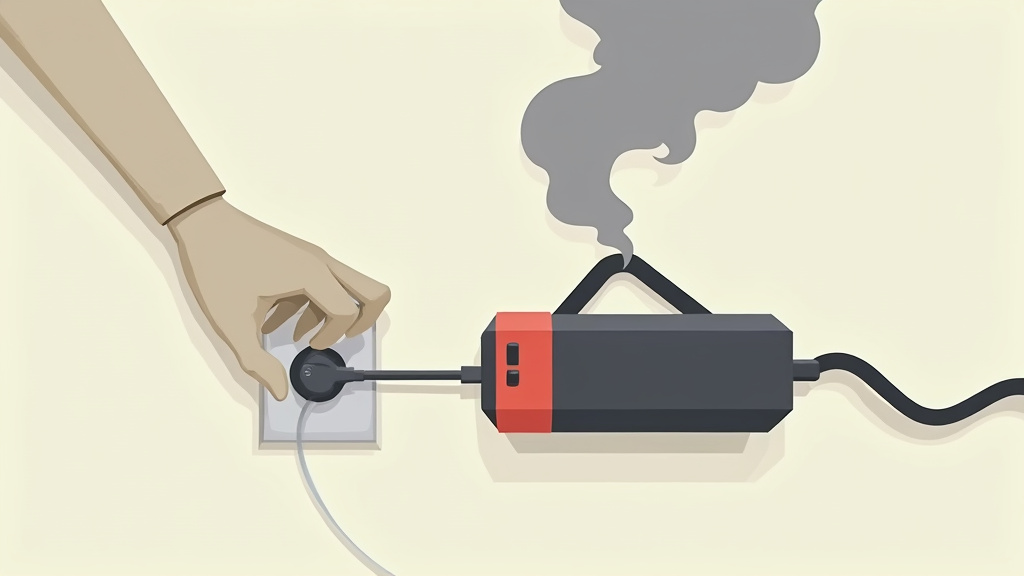
Mistakes happen. Here’s your response protocol for three real scenarios.
Scenario 1: The fog cloud touches a candle flame.
You’ll see a quick, bright whump of flame that extinguishes instantly as the cloud moves. It looks scary but is usually harmless if the fluid is water-based. The flame cannot travel back to the machine.
* Immediate Action: Extinguish the open flame. Do not move the machine. Direct the fog output away.
* Follow-up: Check the fluid MSDS to confirm it was water-based. If you were using oil-based fluid, you have a serious fuel source in the air and must stop the effect immediately and ventilate.
Scenario 2: The machine itself is smoking or smells burnt.
This is a machine failure, not a fluid fire. The pump may be dry, the heater may be clogged with carbonized residue, or an electrical component is failing.
* Immediate Action: Unplug the machine from the wall. Do not pour water on it.
* Follow-up: Let it cool completely. This is a job for a troubleshooting guide or professional repair. Continuing to use it risks an electrical fire.
Scenario 3: The fire alarm is sounding.
Stay calm. This is a false alarm caused by particle density, not a fire.
* Immediate Action: Turn off the fog machine. Activate your planned ventilation (open doors, turn on fans).
* Follow-up: Contact the venue’s fire safety officer immediately. They will silence the alarm and reset the system. Do not attempt to silence a central alarm panel yourself.
Your fog machine operation plan must include these scenarios. Brief your crew on them.
Long-Term Maintenance Prevents Hidden Risks
The slowest fire risk is the one you can’t see: internal residue buildup. Glycol residue left inside the machine’s heating chamber or pump will carbonize over multiple uses. This gunk is a thermal insulator. It causes the heater to work harder to achieve the same temperature, stressing the electrical components and creating a potential ignition point inside the machine’s casing.
Your fog machine maintenance routine is a fire prevention routine. After every major use, run the machine until the fluid tank is empty to clear the lines. Periodically, use compressed air to blow out the nozzle and pump head. Never use solvents like alcohol or acetone to clean internal parts, they can damage seals and leave their own flammable residue.
Think of it like cleaning a deep fryer. Letting old oil polymerize on the elements is asking for trouble. The same fog machine mechanics that make your effect possible demand you clean up after yourself.
Frequently Asked Questions
Can you add scent or color to fog fluid?
No. Adding anything foreign to fog fluid alters its chemical composition and boiling point. This can damage the machine’s heating element and pump. More critically, it can create toxic fumes when vaporized. Colored fog is achieved by lighting the fog with a colored gel or LED light, not by dyeing the fluid.
Is dry ice fog flammable?
No. Dry ice fog is solid carbon dioxide sublimating into a cold CO2 gas, which condenses water vapor in the air. CO2 is non-flammable and is actually used in some fire extinguishers. The primary risk is asphyxiation in a tightly sealed, low-lying area, as CO2 can displace breathable oxygen.
How do I know if my fluid is oil-based?
Check the label and the MSDS. Oil-based fluids will list ingredients like “mineral oil,” “paraffin oil,” or “white mineral oil.” They will also have a much lower flash point, often below 60°C (140°F). If you’re unsure, assume it is oil-based and do not use it in a standard thermal fog machine.
Why does my fog machine trip the circuit breaker?
This is an electrical overload, not a flammability issue. Fog machines, especially high-output models, have significant power consumption range. A 1500-watt fog machine on the same 15-amp circuit as several stage lights can easily exceed the circuit’s capacity. Plug the machine into a dedicated circuit or use a lower-wattage model.
The Bottom Line
Fog machine smoke is not the threat. Complacency is. You now know the visible cloud is harmless, but the residue it deposits and the fluids you choose are not. Your safety hinges on three concrete actions: verifying your fluid with its MSDS, managing where the fog goes in relation to heat and detectors, and cleaning your gear to prevent internal buildup.
Treat the MSDS as your first piece of paperwork, not an afterthought. Place your machine with the same deliberate care you’d use positioning a speaker or light. That’s how you create breathtaking atmosphere without the breathless panic of an emergency. The effect should be memorable, not the evacuation that follows it.