Fog Machine Not Working? 7 Proven Fixes You Can Try
This post contains affiliate links. As an Amazon Associate, we earn from qualifying purchases.
When your fog machine isn’t working, start with a systematic check of power, fluid, and the pump. Ninety percent of failures trace to a clogged pump, a blocked heater from mineral deposits, or incorrect DMX settings. You can fix most clogs in under ten minutes with distilled white vinegar and a syringe without opening the chassis.
People assume the machine is broken when it just needs cleaning. They hear the heater fan, see the ready light, and get nothing. The frustration is real. I’ve packed a machine for a shoot only to have it sit silent while the clock runs.
This guide walks through the fixes in order, from the simple plug check to the vinegar flush that saves a $300 machine. You’ll learn how to spot a dead pump versus a clogged one, why your heater block turns white, and what that burnt smell really means.
Key Takeaways
- A humming pump with no fog means a clog, not a dead pump. The vinegar flush fixes it 80% of the time.
- White, crusty buildup on the heater block is mineral deposit from poor-quality fluid or tap water. It chokes output completely.
- Always let the machine warm up for a full 5–10 minutes. Triggering too early floods the cold block and causes a burnout smell.
- DMX issues often come down to a mismatched address or a faulty cable. Bypass the controller and test manually first.
- Storing a machine with fluid inside guarantees a clog within months. Always run distilled water through it before storage.
The 3-Minute Power & Fluid Check
Skip this, and you’ll waste an hour. Before you touch a screwdriver, verify the basics. The machine needs electricity, a signal to activate, and the correct fuel.
First, confirm the outlet works. Plug in a phone charger or lamp. Check the power switch on the machine itself, some have a physical rocker on the back. Listen for the internal cooling fan. If you hear nothing, the issue is upstream. Inspect the power cord for cuts or kinks. Some models have a user-replaceable fuse in the plug head; a visual check shows a broken filament.
A fog machine requires three things to produce output: operational AC power reaching the heating element, a full reservoir of manufacturer-recommended fog fluid, and a completed warm-up cycle where the internal thermostat reaches its setpoint, typically between 180°C and 220°C (356°F–428°F).
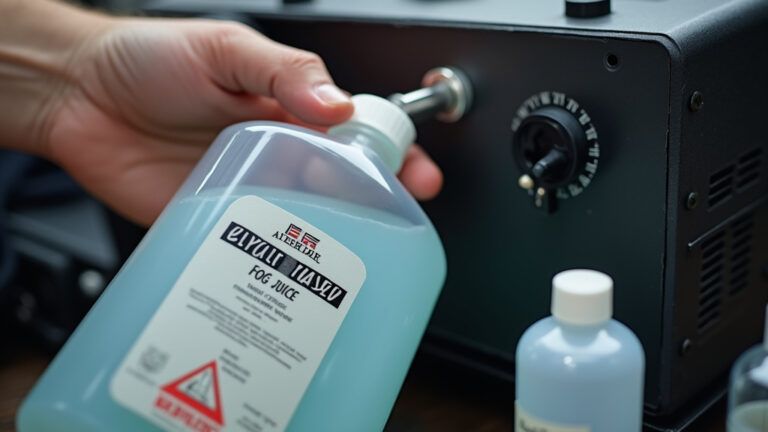
Now, look at the fluid. Is the tank empty? Top it up with fresh, high-quality fog juice. Old or diluted fluid is a top cause of weak output and clogs. Using the wrong fluid type, like oil-based in a water-based machine, can cause immediate damage. Never use plain water.
TL;DR: No fan sound? Check power. Tank full? Use good fluid. Still nothing? Move to the pump.
Is the Pump Dead or Just Clogged?
The pump is the heart. It pulls fluid from the tank and pushes it into the hot heater block. When it fails, you get no fog. The sound tells you everything.
A healthy pump makes a steady, soft clicking or buzzing when activated. A completely silent pump during a trigger command points to an electrical fault, no power reaching it. A loud, straining hum with no fluid movement means the pump is clogged. The motor runs, but the internal diaphragm can’t move.
| Pump Symptom | Likely Cause | Immediate Test |
|---|---|---|
| Silent when triggered | No power, blown fuse, faulty control board | Use a multimeter to check for 12V/24V at pump terminals. |
| Loud hum, no fluid | Clogged inlet or internal mineral blockage | Disconnect fluid line; try to blow air through the pump. |
| Weak, intermittent clicking | Worn diaphragm, low voltage | Listen for inconsistent rhythm; output will be sputtering. |
| Leaking from pump body | Cracked housing, failed seal | Look for fluid seepage at seams; replace the pump. |
Common mistake: Assuming a humming pump is dead and ordering a replacement. That hum means the motor has power and is trying to work. A clog is stopping it. A five-minute vinegar clean saves the cost and wait for a new pump.
If the pump is silent, your troubleshooting path is electrical. Check connections inside the machine. The pump wires lead to the control board. Look for a loose plug. If you have a multimeter, set it to DC voltage (usually 12V or 24V for these pumps). Touch the probes to the pump’s terminals while triggering the machine. No voltage means the board isn’t sending the signal.
The Vinegar Flush for a Clogged Pump
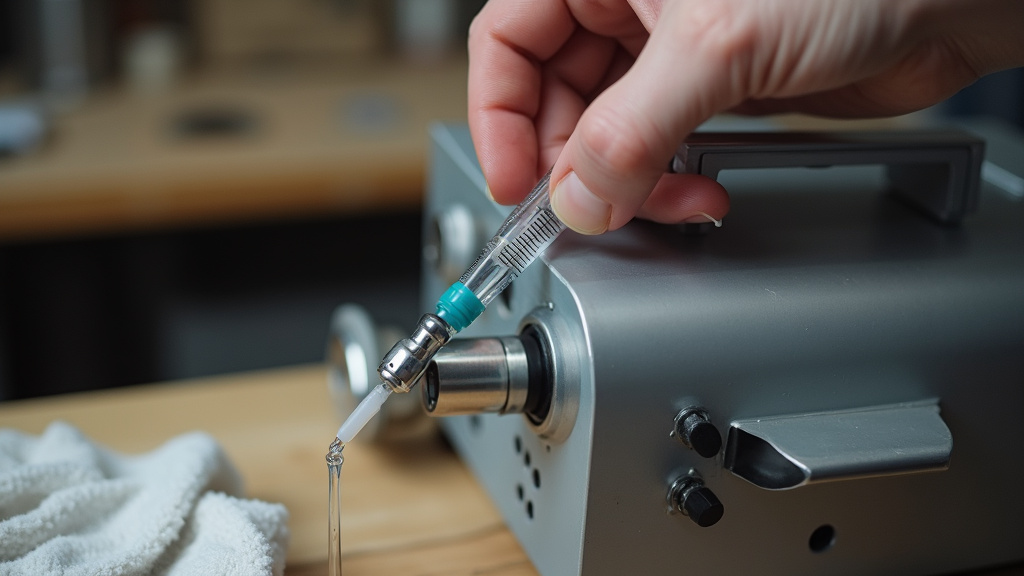
This is the fix that feels like magic. Distilled white vinegar dissolves the glycol and mineral deposits that jam the pump. You need a 5ml syringe (from a pharmacy) and a cup.
Unplug the machine. Locate the small-diameter tube that runs from the fluid tank to the pump. Pull it off the pump’s inlet barb. Have a rag ready for drips. Draw vinegar into the syringe. Attach the syringe tip to the pump’s inlet.
Slowly press the plunger. You’ll feel resistance if the clog is bad. Apply steady pressure. You might hear a faint pop as the blockage clears. Inject about 10ml of vinegar. Let it sit inside the pump for ten minutes. This soak breaks down the crystalline gunk.
After soaking, flush the pump with distilled water using the same syringe. Push through 20ml of water until it runs clear from the pump’s outlet. Reconnect the fluid line. This process cleared a stubborn clog on my Chauvet Hurricane 1300 last fall. The pump had hummed for a week before I tried the flush. It clicked back to life on the first test.
TL;DR: Vinegar dissolves pump clogs. Inject, wait, flush with water. Reconnect and test.
Heater Block Clogs: The White Crust That Kills Output
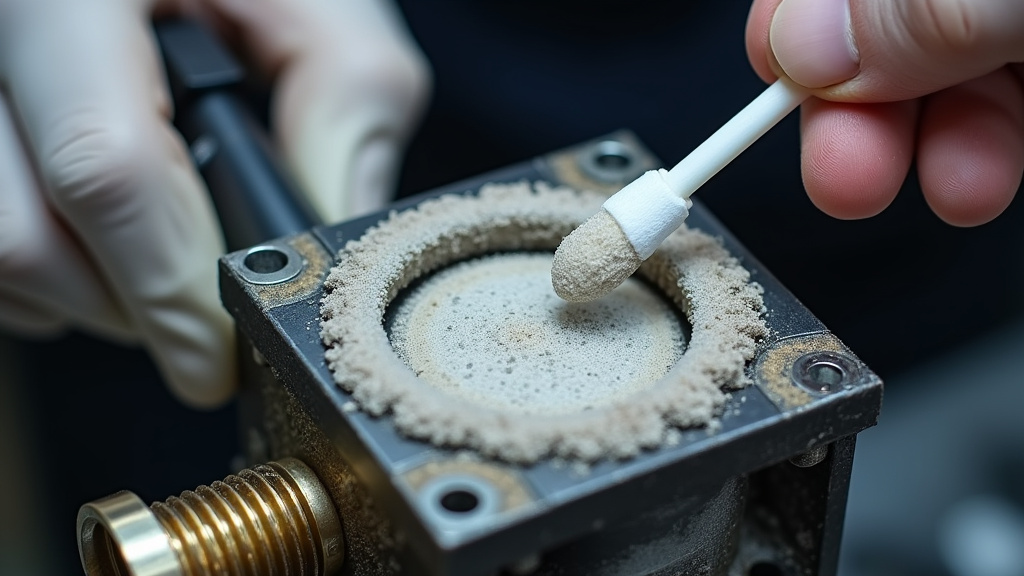
The heater block is where fluid vaporizes. It’s a metal chamber with a heating element inside. Over time, minerals and burnt fluid residue coat the element and the small passage to the nozzle. This crust acts as insulation, preventing heat transfer. Output drops to a wisp, then nothing.
To inspect it, unplug the machine and let it cool completely. Remove the output nozzle, usually held by a couple of screws. Look inside. A clean block is metallic. A clogged one has a white, chalky, or brown baked-on coating. That’s the enemy.
I opened a cheap 400W machine that had been used with bargain fluid for a season. The heater block looked like a geode, completely packed with white mineral scale. No amount of vinegar would fix that; the block was a total loss.
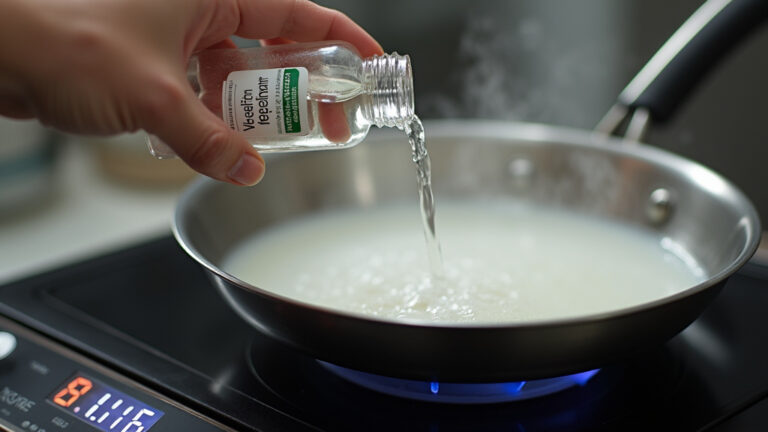
Cleaning a mildly clogged block works. Soak the nozzle and any removable parts in a 50/50 mix of distilled white vinegar and distilled water for 30 minutes. Use a soft cloth or cotton swab to gently wipe the scale off the heating element. Do not scratch or scrape the metal. Rinse everything with distilled water and reassemble.
For severe blockages, a commercial fog machine cleaner is stronger. Follow the product instructions, which often involve running the cleaner through the machine in place of fluid.
Control Issues: Thermostat, Timer, and DMX
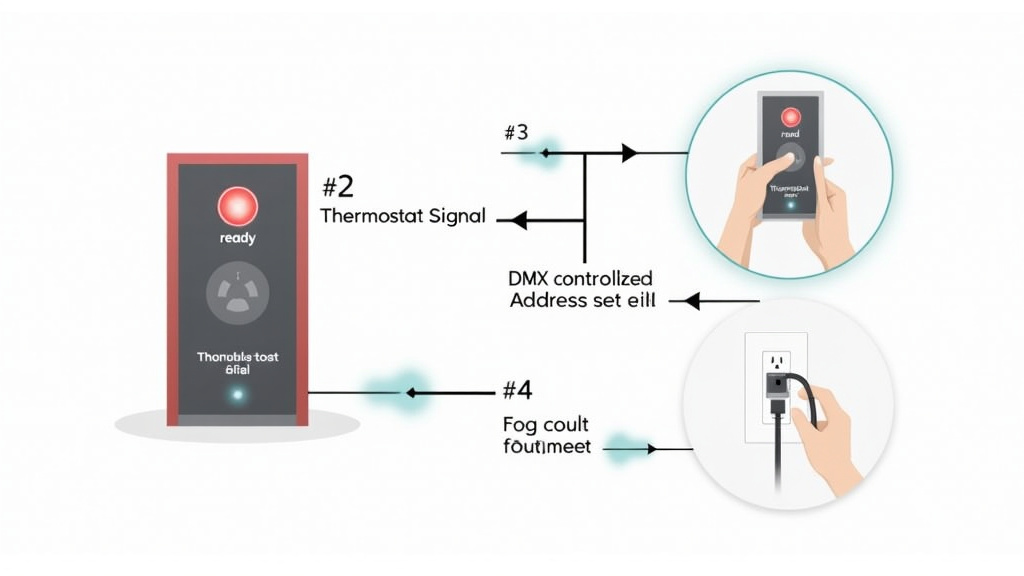
The machine has power and fluid. The pump and heater seem clear. But it still won’t fog on command. Now you’re in the control layer.
First, respect the warm-up. Most machines have a “ready” light. Wait for it. Triggering early forces fluid onto a cold element. It doesn’t vaporize, instead baking onto the block and creating that acrid burnt smell. Give it a full five minutes, even if the light comes on sooner.
If the ready light never comes on, the thermostat might be faulty. This sensor tells the control board when the heater is hot enough to activate the pump. A failed thermostat keeps the pump locked out. Testing it requires a multimeter and knowledge of the specific model’s wiring. Often, replacement is the only fix.
For DMX-controlled machines, the problem is usually in the data chain. Here’s a quick checklist:
– Address Match: Does the DMX controller address match the address set on the fog machine?
– Cable Integrity: Is it a proper DMX cable (110-ohm impedance), not a microphone cable?
– Termination: Is there a 120-ohm terminator plug in the last device on the line?
– Controller Output: Is the controller’s fader up and the channel unmuted?
Bypass the DMX entirely. Plug the machine directly into a wall outlet and use its manual trigger button. If it works, the issue is in your DMX setup, not the machine.
Leaks, Smells, and Weak Fog
Other problems have specific signatures. A puddle under the machine points to a leak. Smell indicates something burning. Weak fog is a performance issue.
Leaks usually come from three places: the fluid tank seal, a cracked pump housing, or a loose tube connection. Tighten any hose clamps. If the pump body is cracked, it must be replaced. A leak at the tank often means the O-ring is worn or missing.
Common mistake: Over-tightening plastic fittings to stop a leak. This strips the threads or cracks the housing, creating a bigger leak. Snug is enough.
A burning electrical smell with no fog is serious. Unplug the machine immediately. This often indicates a failing heating element shorting out or insulation burning. Do not use it again until inspected by a technician.
Weak or wispy fog has a short list of causes:
1. Partial Heater Block Clog: The most common. Clean as described.
2. Low-Quality or Diluted Fluid: Swap in a premium brand like Froggy’s or Chauvet.
3. Worn-Out Pump: The diaphragm loses elasticity and can’t push full volume.
4. Low Line Voltage: If the machine is on a long extension cord or shared circuit, it may not get enough power to heat fully.
Your Fog Machine Maintenance Schedule
Prevention is cheaper than repair. A simple routine stops most problems before they start.
After every use, especially if storing the machine for more than a week, run a cleaning cycle. Empty any leftover fog fluid from the tank. Fill the tank with distilled water. Run the machine until it emits clear vapor for a minute. This flushes residual fluid from the lines and pump.
Every 20 hours of operation, do a deep clean. Use a commercial fog machine cleaner following its instructions, or the vinegar flush method on both the pump and heater block.
For storage, always leave the tank empty and dry. Store the machine in a clean, dust-free place. Dust sucked into an empty tank is a leading cause of clogs when you next fill it.
Sticking to this schedule adds years to your machine’s life. It’s the difference between reliable fog on demand and a last-minute panic.
Frequently Asked Questions
Why did my fog machine work yesterday but not today?
This is almost always a clog that formed as leftover fluid dried and crystallized in the pump or heater block overnight. Perform the vinegar flush. Also, check that no one used the wrong fluid or topped it up with something like water.
Can I use tap water to clean my fog machine?
No. Tap water contains minerals that cause the exact scale deposits that clog the heater block. Always use distilled water for flushing and cleaning. Using plain water as fog fluid can permanently damage the heating element.
The pump is running but fog only comes out in bursts.
This indicates a partial clog, often in the small nozzle orifice or the heater block inlet. It can also mean air in the fluid line. Ensure the fluid tank is full and the pickup tube is securely attached and submerged. Clean the nozzle and block.
Is it worth repairing an old fog machine, or should I just buy a new one?
If the heating element still works, it’s almost always worth repairing. Pumps are inexpensive and replaceable. Clogs are free to clean. A new heating element or control board can cost half the price of a new machine, so weigh that. For basic models under $100, replacement is often simpler.
My DMX fog machine won’t respond to cues, but the manual button works.
This confirms the machine is functional and the issue is in the DMX data chain. Triple-check the address setting on the machine matches the controller. Swap the DMX cable for a known-good one. Ensure the controller output is patched correctly in your lighting software.
The Bottom Line
A non-working fog machine is usually a dirty fog machine. Start with the simple stuff: power, fluid, warm-up time. When you hear that telltale pump hum with no output, reach for the vinegar and syringe before you reach for your wallet. That flush fixes the majority of problems.
Remember what kills these machines: neglect, bad fluid, and tap water. A five-minute cleaning ritual after each use prevents 90% of failures. Keep quality fluid in the tank, distilled water for cleaning, and store it dry. Your machine will pay you back with years of reliable, thick fog exactly when you need it.