Smoke Machine Fluids: Mineral Oil Versus Baby Oil Compared
This post contains affiliate links. As an Amazon Associate, we earn from qualifying purchases.
Using mineral oil vs baby oil for a smoke machine is a choice between protecting a $500 tool and saving $3 on fluid. Mineral oil – specifically cosmetic-grade or food-grade USP mineral oil – is the correct fluid. Baby oil, which is scented mineral oil with additives, will coat your heating element with sticky residue within 5-10 uses, produce harmful fumes when heated, and void most manufacturer warranties.
The universal mistake is grabbing the baby oil bottle because it’s cheaper and sitting in the bathroom cabinet. People think “it’s just mineral oil with a nice smell.” That smell is the problem. The additives that create it don’t vaporize cleanly – they bake onto your machine’s internals.
This guide breaks down the chemical difference, what each fluid actually does inside your fogger or EVAP diagnostic machine, and the step-by-step for swapping fluids if you’ve already used the wrong one.
Key Takeaways
- Baby oil is scented mineral oil. The fragrance additives and other compounds vaporize poorly, leaving a sticky residue that clogs the heating element and fluid pathways.
- Cosmetic-grade “white mineral oil” or food-grade USP mineral oil is pure hydrocarbon. It vaporizes cleanly, produces odorless fog, and won’t gum up your machine.
- Using baby oil in a commercial fog machine or professional EVAP diagnostic tool voids the warranty immediately. Manufacturers test with pure fluids.
- For theatrical fog machines, a glycerin-and-water OEM fluid is still the best choice. Mineral oil is the backup for glycerin-based machines and the standard for automotive smoke machines.
- Switching from baby oil to mineral oil requires a reservoir clean-out. The leftover baby oil residue will mix with the new fluid and continue causing problems.
What’s Actually in the Bottle?
The labels “mineral oil” and “baby oil” aren’t synonyms. They’re different grades of the same petroleum-derived base.
Cosmetic-grade mineral oil, often called “white mineral oil,” is a highly refined hydrocarbon mixture. The refining process strips out impurities, sulfur compounds, and aromatic molecules. What remains is a clear, odorless, inert liquid. The Cosmetics Info mineral oil profile details its safety and purity standards for topical use, which is the same level of purity needed for clean vaporization. Food-grade mineral oil meets United States Pharmacopeia (USP) standards, meaning it’s safe for indirect food contact and human ingestion in small amounts. This is the stuff you’d use on a cutting board or as a laxative.
Baby oil is cosmetic-grade mineral oil with additives. The primary additive is fragrance – often a complex blend of esters and aldehydes to give that “baby” scent. Some brands also include aloe vera extract or vitamin E. These additions are great for skin. They are terrible for a heating element.
Pure mineral oil consists of long-chain hydrocarbons (C15–C50) that vaporize at a consistent temperature around 200–250°C. Fragrance compounds are shorter-chain molecules with lower boiling points and different thermal stability.
When you heat baby oil, the mineral oil base vaporizes into fog. The fragrance additives don’t. They either burn, producing acrid smoke, or they decompose into a sticky, polymerized film that coats everything inside the machine.
TL;DR: Baby oil is mineral oil plus perfume and other stuff. That “other stuff” burns dirty.
The 3 Things Baby Oil Actually Does Inside Your Machine
It’s not just a bad choice. It’s a destructive one. Here’s the sequence.
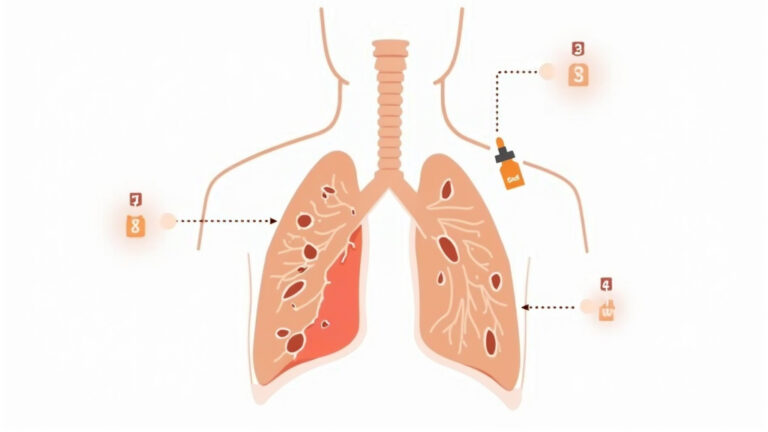
First, the fragrance burns. That pleasant baby powder scent becomes a sharp, chemical odor in the fog. In an enclosed space like a garage using an EVAP smoke machine, that smell lingers. It’s also a respiratory irritant for some people. You’re not producing clean diagnostic smoke; you’re producing scented, potentially irritating vapor.
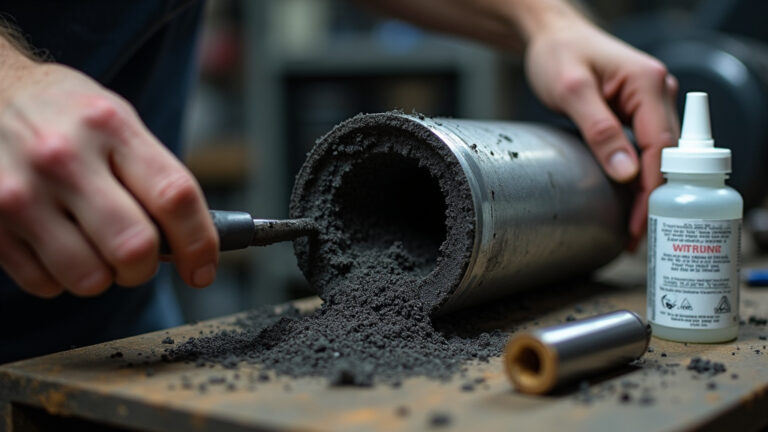
Second, the additives plate out. After a few cycles, the decomposed fragrance and any other non-volatile additives form a thin, sticky coating on the heating element and the small fluid nozzles. This coating acts as an insulator.
Common mistake: Using baby oil in a fog machine for more than five sessions – the residue builds up on the heating element, reducing its efficiency and causing the machine to overheat to compensate. Within ten uses, the flow rate drops by about half.
The machine has to run hotter to vaporize the fluid through that insulating layer. That extra heat stresses the electronics and can lead to premature failure. The coating also traps new fluid, creating a feedback loop of more residue.
Third, it clogs. The sticky film eventually builds up enough to physically block the fine channels that deliver fluid to the heating element. The machine stops producing fog, or it sputters. Cleaning this requires disassembly and scrubbing with isopropyl alcohol – a 30-minute job you wouldn’t have needed with the right fluid.
I used baby oil in a cheap portable fogger for a Halloween party once. The machine worked fine for the first hour. By the second hour, the output was weak and the smell had changed from vanilla to something like burnt plastic. I opened it up a week later to find a yellowish, tacky film covering the entire heating chamber. It took a full afternoon to clean.
TL;DR: Baby oil leaves a smell, then a coating, then a clog. Each stage makes the machine worse.
How Mineral Oil Works (and Why It’s Safer)
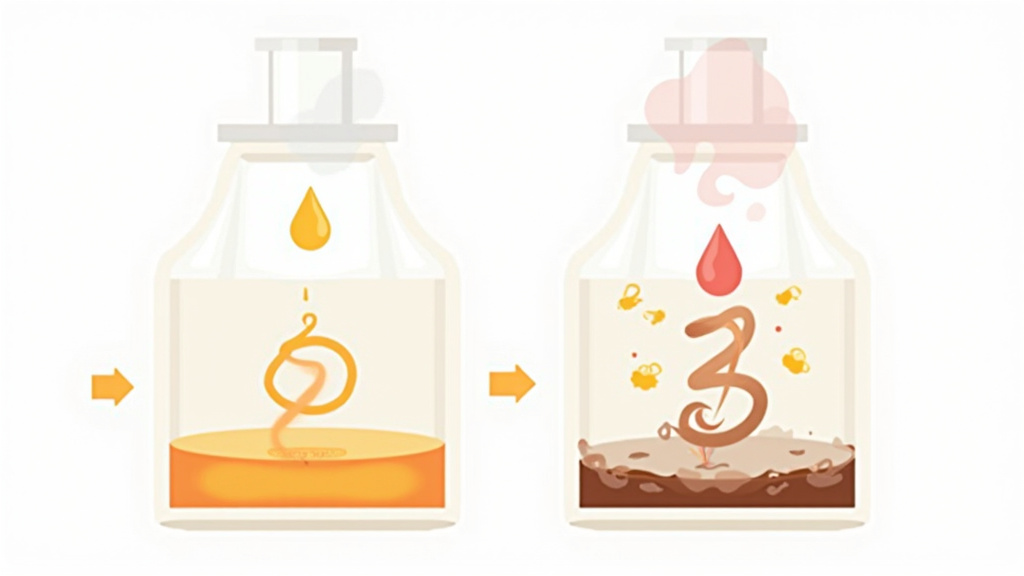
Pure mineral oil lacks the problematic additives. Its behavior inside a smoke machine is predictable and clean.
The fluid is pumped or drawn onto a heating element, usually a metal block or coil. The element raises the oil to its vaporization temperature – roughly between 200°C and 250°C depending on the machine’s design. The pure hydrocarbons turn into a fine mist or smoke without decomposing.
Because there’s nothing else in the fluid, there’s no residue. The vapor condenses back into liquid droplets in the air, creating the fog effect, but it doesn’t leave a persistent film inside the machine. This is why mineral oil is the industry standard for automotive EVAP leak detection smoke machines. Technicians need a clean, odorless smoke that won’t contaminate sensors or leave deposits in the vehicle’s fuel system. A detailed fluid review of professional fluids shows that they are essentially high-purity mineral oil with specific viscosity ratings.
The safety profile is documented. The USDA Mineral Oil Technical Report outlines its use as a veterinary laxative, highlighting its low toxicity and high purity standards. When heated in a smoke machine, these same qualities mean it doesn’t produce harmful pyrolysis products. The fog is safe to breathe in the quantities produced for entertainment or diagnostics.
| Property | Cosmetic-Grade Mineral Oil | Baby Oil |
|---|---|---|
| Primary Use | Skin moisturizer, cutting board preservative, machinery lubricant | Skin moisturizer with fragrance |
| Key Additives | None | Fragrance compounds, sometimes aloe or vitamin E |
| Vaporization Cleanliness | Clean, leaves no residue | Leaves sticky residue from burnt additives |
| Odor When Heated | Odorless | Burnt, chemical smell |
| Warranty Status | Usually acceptable if pure | Almost always voids warranty |
| Cost per Liter | ~$8–$15 | ~$3–$5 |
TL;DR: Pure mineral oil vaporizes cleanly, leaves no residue, and is non-toxic. It’s the technical choice.
When You Should Never Use Either (The Glycerin Rule)
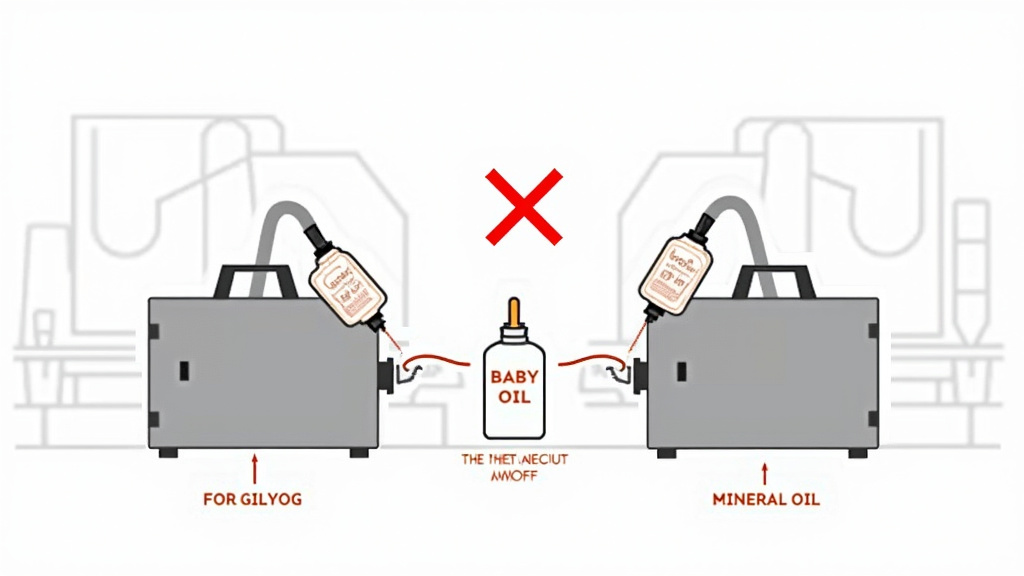
This is the critical exception. Most theatrical fog machines, the ones used for concerts, stage shows, and haunted houses, are designed for a different fluid: glycerin-based fog juice.
Glycerin (or glycol) mixes with water to create a fluid that vaporizes at a lower temperature and produces a thicker, longer-lasting fog. The machines have heating elements and pumps calibrated for that specific fluid’s viscosity and vaporization point. Pouring mineral oil into a glycerin-machine can cause poor fog output, pump damage, or even failure.
Common mistake: Assuming all “fog machines” use the same fluid – putting mineral oil in a theatrical fogger designed for glycerin juice. The pump will struggle with the thicker oil, and the fog output will be thin and oily-smelling instead of dense and neutral.
Check your machine’s manual. If it says “use fog juice” or lists a specific brand like Rosco or Froggy’s, you need glycerin-based fluid. Our guide on different fluid types breaks down the major categories. Mineral oil is a backup option for some glycerin-based machines if you’re in a pinch, but it’s not optimal. For automotive EVAP smoke machines, mineral oil is the requirement.
The rule is simple: glycerin machines want glycerin fluid; diagnostic smoke machines want mineral oil. Baby oil is wrong for both.
The Step-by-Step Fluid Swap (If You’ve Already Used Baby Oil)
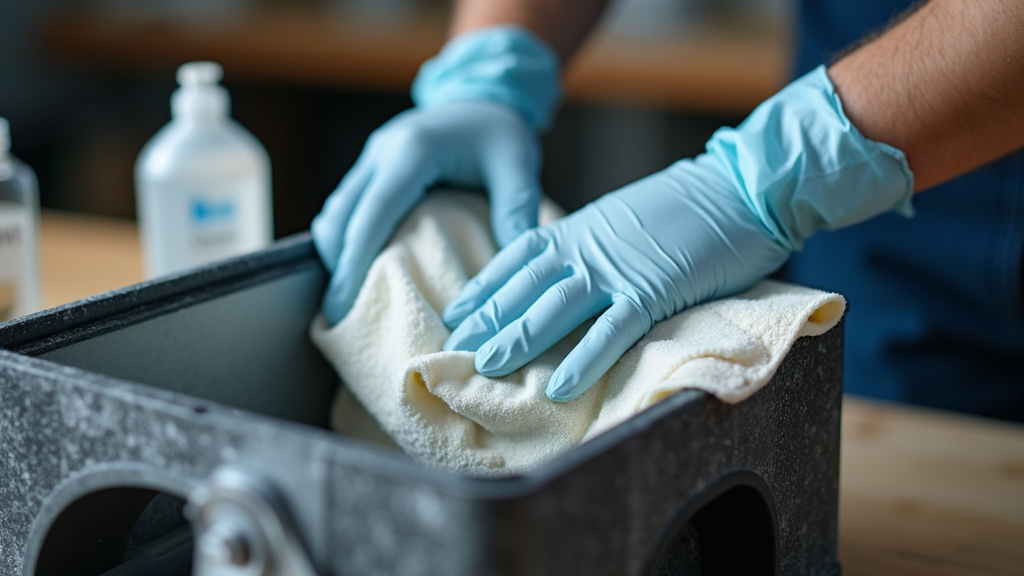
If you’ve run baby oil in your machine, you need to clean it before switching to the correct fluid. Leftover residue will mix with the new oil and continue causing problems.
- Drain the reservoir completely. Let the machine cool. Remove any leftover baby oil. Dispose of it properly.
- Wipe the reservoir with a lint-free cloth. Get as much of the residual film out as you can. You’ll feel the sticky texture.
- Flush with a small amount of isopropyl alcohol (optional). For machines with severe residue, a quick flush with 90% isopropyl alcohol can dissolve the film. Pour a cup in, swish, drain immediately. Do not run the machine with alcohol inside – it’s just a cleaning rinse.
- Dry the reservoir. Let it air dry for an hour or wipe it dry with another cloth. Any leftover alcohol will evaporate.
- Fill with the correct fluid. For diagnostic machines, fill with high-purity mineral oil. For theatrical foggers, fill with the recommended professional fog fluid.
- Run a test cycle. Operate the machine for a minute. Observe the fog output and smell. Clean fog with no odor means you succeeded. Weak output or a lingering sweet smell means residue remains and you may need a more thorough cleaning.
Missing the cleaning steps means the new fluid will slowly re-dissolve the old residue, contaminating it from the start. Your first few runs will still smell off.
Mineral Oil Grades and What to Buy
Not all mineral oil is equal for this use. You need a high-purity grade.
Cosmetic-grade (white mineral oil) is your best bet. It’s refined to remove impurities and is odorless. It’s sold in drugstores and online, often in 16oz or 32oz bottles. Look for the words “pure,” “odorless,” or “white mineral oil” on the label.
Food-grade USP mineral oil is also acceptable. It’s held to a higher standard for ingestion safety. You’ll find it in hardware stores as a wood preservative for cutting boards. It’s often sold in larger, more economical containers.
Technical or industrial mineral oil is not recommended. It may contain sulfur compounds or other additives for lubrication that could produce unpleasant odors or residues when vaporized.
I keep a gallon of food-grade USP mineral oil in the shop for EVAP diagnostics. It’s cheaper per ounce than the cosmetic-grade bottles, and the purity is guaranteed. The one-gallon container lasts through dozens of vehicle tests.
When shopping, avoid any bottle that lists “fragrance,” “aloe,” “vitamin E,” or “extracts” on the ingredients panel. That’s baby oil, regardless of the brand name.
What About Making Your Own Fluid?
Some DIY guides suggest mixing distilled water with glycerin or propylene glycol to create homemade fog juice. For glycerin-based theatrical machines, this can work if you follow precise ratios. Our article on DIY fog fluid covers the safe recipes.
For mineral oil-based machines, there is no safe DIY substitute. You cannot dilute mineral oil with water – it will not mix. You cannot add anything to it to improve performance. The required purity is the point. Buying the correct grade is the only option.
Attempting to mix your own mineral oil fluid risks introducing contaminants that will burn or leave residue, defeating the entire purpose. This isn’t a chemistry experiment. It’s a maintenance procedure.
The Warranty Void You Won’t See Mentioned
Manufacturer warranties for smoke machines, especially professional diagnostic units, have a hidden clause. They require the use of “approved fluids.” Approved fluids are listed in the manual, and they are always pure mineral oil or specific glycerin-based OEM juices.
Using baby oil – or any non-approved fluid – voids that warranty instantly. If your machine fails and you send it for service, the technician will open it up. The telltale sticky residue or unusual smell is obvious. They will deny the repair claim.
You saved $5 on fluid. You lost a $300 repair coverage. It’s not a gamble. It’s a forfeit.
Frequently Asked Questions
Can I use baby oil in my smoke machine just once?
Even one use deposits some residue. The fragrance additives begin coating the heating element on the first heat cycle. For a critical diagnostic tool or a machine you rely on, don’t risk it.
Is mineral oil safe to breathe from a fog machine?
Yes, when vaporized from a pure source, mineral oil fog is considered safe to breathe in the concentrations produced. This is documented in its use as a fog machine safety ingredient and in pharmaceutical applications. Baby oil fumes, due to burnt fragrance, are not.
My fog machine manual says “use only glycerin-based fluid.” Can I use mineral oil?
You can, but performance will suffer. The machine is engineered for a fluid with different viscosity and vaporization temperature. The fog will be thinner. Use the recommended specialized fog machine juices for best results.
How often should I clean my smoke machine if I use mineral oil?
With pure mineral oil, you may never need an internal clean. The fluid vaporizes cleanly. If you switch from baby oil, clean it once as described above, then just refill.
Where do I buy the right mineral oil?
Cosmetic-grade (white) mineral oil is at any pharmacy or big-box store. Food-grade USP mineral oil is at hardware stores (often labeled for cutting boards). For bulk, look online at chemical supply sites. Avoid the baby oil aisle.
The Bottom Line
The choice between mineral oil vs baby oil for a smoke machine isn’t about cost or convenience. It’s about chemistry. Baby oil’s additives burn and coat. Mineral oil vaporizes clean. That coating leads to clogs, repairs, and voided warranties.
For automotive EVAP diagnostics, buy food-grade or cosmetic-grade mineral oil. For theatrical foggers, buy the glycerin-based fluid the manual specifies. Skip the baby oil bottle entirely. The $5 you save isn’t worth the $200 repair bill that follows.