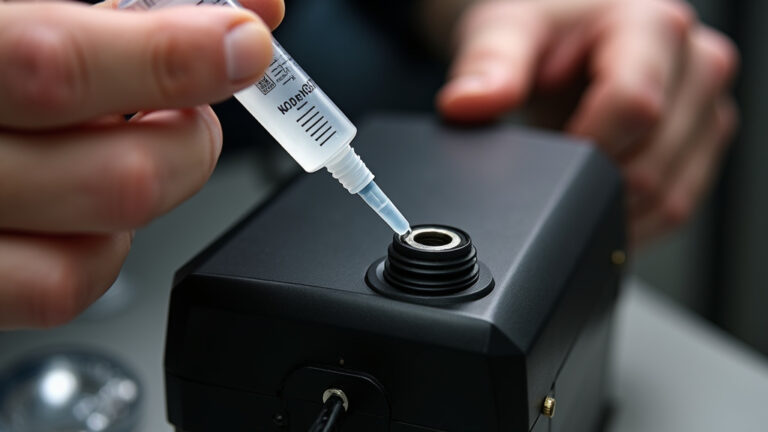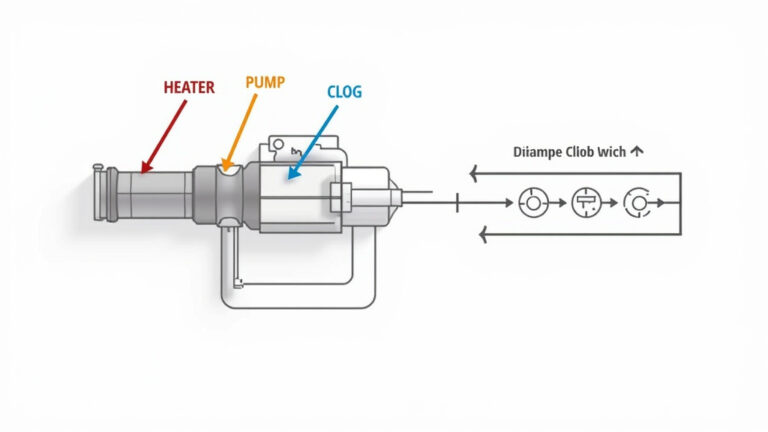
How to Clean Fog Machine Residue in 7 Steps (And Stop It)
This post contains affiliate links. As an Amazon Associate, we earn from qualifying purchases.
To clean fog machine residue, you need to flush the internal fluid path with a cleaning solution, either a 50/50 mix of white vinegar and distilled water or a dedicated commercial cleaner, and then flush again with pure distilled water. The process removes the sticky glycol deposits from the pump, tubing, and heating block that cause clogs and burnt smells.
Most people get this wrong by using tap water for the flush. The minerals in tap water, calcium, magnesium, leave their own deposits inside the machine. You’re trading one type of clog for another, and the new mineral scale is harder to remove than the original glycol residue.
This guide walks through the two proven cleaning methods, the exact materials you need, and the one storage step that prevents your next cleaning session from being a repair job.
Key Takeaways
- Use only distilled water for internal cleaning and flushing. Tap water minerals cause permanent clogs.
- Clean after every 8–10 hours of use or before any long-term storage. Waiting for performance loss means the residue has already baked onto the heating element.
- For a deep clean on a neglected machine, let the cleaning solution soak in the tank for 2–4 hours before running the flush cycle.
- Never store the machine with vinegar or cleaner in the lines. Always perform a final distilled water flush, then prime the system with a small amount of fresh fog fluid.
- If your machine is spitting liquid instead of fog, you likely have a viscosity issue from old, separated fluid or a partial pump clog, cleaning is the first fix.
Why Fog Machines Leave Residue (And Where It Hides)
Fog fluid is mostly water and a glycol compound, usually propylene glycol or glycerin. The machine heats this fluid until it vaporizes, creating fog. The glycol doesn’t fully vaporize. A sticky fraction of it condenses back onto the cooler internal surfaces of the pump, fluid lines, and the heating block itself.
Technical Snippet: Fog machine residue consists primarily of polymerized glycol compounds that caramelize on the heating element at temperatures above 150°C. This creates an insulating layer that reduces heat transfer efficiency, forcing the thermostat to cycle longer and increasing the risk of element burnout. The residue is hygroscopic, attracting moisture that promotes corrosion in metal pump parts.
That residue builds up with every use. Left alone, it acts like an insulator on the heating element. The machine has to work harder and longer to reach temperature. You’ll notice longer warm-up times, weaker output, and eventually a sharp, burnt plastic smell in the fog.
The pump is the other critical failure point. Glycol residue thickens inside the pump’s small internal channels and on its seals. A gummed-up pump loses pressure. Your machine might sputter, spit liquid, or stop producing fog altogether. This is why a regular fog machine cleaning schedule isn’t optional maintenance, it’s what keeps the pump and heater from dying.
TL;DR: Glycol residue bakes onto the heating element and gums up the pump. Clean it before your warm-up time doubles or the output smells burnt.
The 4 Tools You Actually Need (Not the 10 They List)
You don’t need a specialty kit. You need four things, and one of them is non-negotiable.
| Tool | Why It’s Required | What Happens If You Skip It |
|---|---|---|
| Distilled Water (1 gallon) | Has no dissolved minerals (calcium, magnesium). Prevents new mineral scale deposits inside the machine. | Tap water leaves limescale in the heating block. This scale fuses with glycol residue into a concrete-like clog that often requires a full heating element replacement. |
| White Vinegar | Mild acid dissolves glycol deposits and light mineral scale. Cheap and easily available. | Using only water won’t break down the sticky glycol polymer. The flush does nothing, and residue continues to build. |
| Spray Bottle | For applying vinegar solution to the exterior and nozzle for spot cleaning. | You’ll over-saturate the case with a rag, risking liquid seepage into ventilation slots near electronics. |
| Lint-free Cloths | Microfiber cloths won’t leave fibers inside the nozzle or on the heating element grill. | Paper towels or shop rags shed lint. That lint gets sucked into air intakes or sticks to warm residue, creating a new clog source. |
A soft-bristle brush (an old toothbrush works) is helpful for scrubbing the exterior nozzle opening, but it’s optional. The core four are above.
Common mistake: Using isopropyl alcohol or other solvents on the exterior plastic.. Many plastics used in fog machine casings will craze and become brittle after repeated contact with alcohol. The case develops micro-cracks within a few months.
Your goal is to remove residue without creating new problems. That starts with the right liquid inside the machine.
Vinegar vs. Commercial Cleaner: Which One Actually Works?
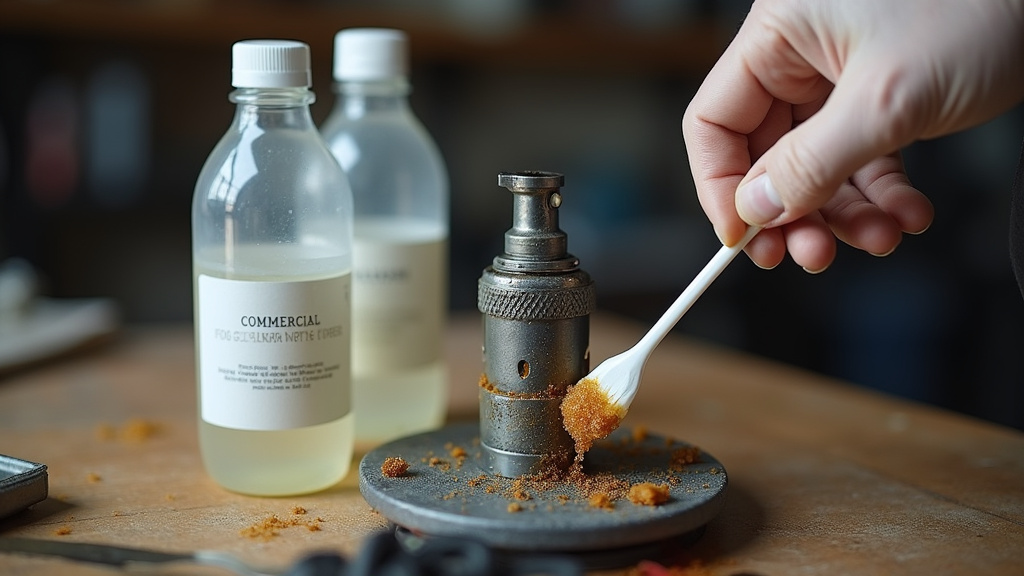
You have two paths: the DIY vinegar mix or a dedicated commercial fog machine cleaner like Professor Mysterious Quick Clean. They both work, but for different stages of grime.
The Vinegar and Distilled Water Mix (50/50)
This is your standard maintenance cleaner. The acetic acid in vinegar is weak enough to be safe for internal seals and tubes but strong enough to dissolve fresh glycol deposits. It’s perfect for the recommended cleaning after every 8–10 hours of use.
The limitation is baked-on residue. If your machine has been neglected and the heating block has a thick, caramelized layer, vinegar might not touch it. It needs a longer soak or a stronger agent.
Dedicated Commercial Fog Machine Cleaner
Products like Quick Clean are formulated with stronger surfactants and solvents designed to cut through polymerized glycol. They’re the tool for a deep clean or when you’re troubleshooting a clogged fog machine.
They also often include corrosion inhibitors to protect metal pump parts during the cleaning process, which plain vinegar does not.
| Scenario | Best Choice | Reason |
|---|---|---|
| Routine cleaning (every 8–10 hrs) | Vinegar & Distilled Water | Effective, cheap, and readily available. Adequate for preventive maintenance. |
| Reduced output / burnt smell | Commercial Cleaner | Formulated to dissolve baked-on deposits vinegar can’t break down. |
| Before long-term storage | Either, followed by distilled water flush | The goal is to remove all active fluid. The cleaner type matters less than the thorough flush afterward. |
| Machine is spitting liquid | Commercial Cleaner | Often indicates a pump viscosity issue. The stronger cleaners can cut through thickened fluid in the pump channels. |
I keep both on hand. Vinegar for the regular schedule, commercial cleaner for the annual deep clean or when a machine comes to me with problems. If you only buy one, get the commercial cleaner. It’s more versatile.
TL;DR: Vinegar for prevention, commercial cleaner for cure. If your machine already has problems, start with the stronger cleaner.
The 7-Step Cleaning Process (and the One Step Nobody Skips)
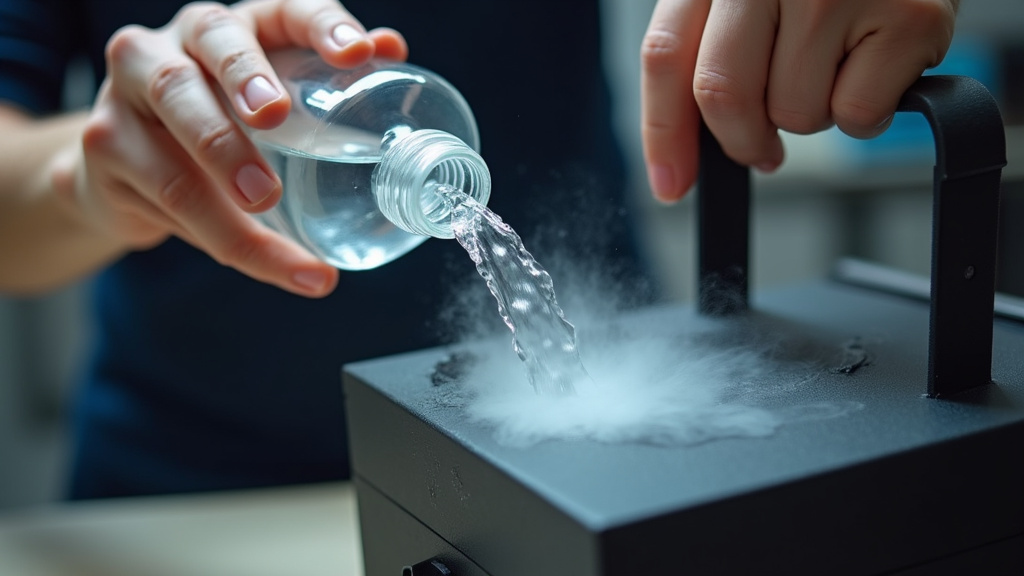
Before you start: The heating element remains dangerously hot for at least 30 minutes after shutdown. Touching it or spilling liquid on it before it cools can cause severe burns. Always unplug the machine from its power source before handling any parts to eliminate electrical risk.
This sequence works for both vinegar and commercial cleaners. The difference is in step 3.
Step 1: Cool Down and Unplug.
Turn the machine off. Let it sit for a full 30 minutes, undisturbed. Then unplug it from the wall or controller. This is non-negotiable. Working on a warm machine warps plastic parts and risks a steam burn if liquid hits the element.
Step 2: Empty the Fluid Tank.
Take the machine outside or to a sink. Remove the fluid tank and pour any leftover fog juice down the drain. It’s water-soluble and non-toxic. Rinse the tank with a little distilled water. Wipe it dry with a lint-free cloth.
Skipping this dilutes your cleaning solution with old fluid, reducing its effectiveness by half.
Step 3: Add Your Cleaning Solution.
- For Vinegar Mix: Pour a 50/50 blend of white vinegar and distilled water into the tank until it’s about half full.
- For Commercial Cleaner: Follow the bottle’s instructions. Usually, you’ll pour the cleaner straight into the tank, sometimes with added distilled water.
If the residue is severe (weak output, strong burnt smell), fill the tank with your cleaning solution and let it sit for 2–4 hours. This soak loosens the baked-on gunk before you run the machine.
Step 4: Run the Cleaning Cycle.
Reattach the tank. Plug the machine back in. Turn it on and run it in short bursts, 30 seconds on, 30 seconds off, until the cleaning solution has cycled through and the output runs clear. You’ll see the fog change from thick and smelly to thin and clear.
Running it continuously can overheat the pump when it’s moving viscous, residue-laden fluid.
Step 5: The Distilled Water Flush.
This is the step people skip. It’s the most important one.
Empty the tank of cleaning solution. Rinse it with distilled water. Fill the tank with pure distilled water. Run the machine again in short bursts until the output is completely clear and free of any vinegar or chemical smell.
Why? Leaving any acid or cleaner in the lines corrodes internal metal parts and degrades plastic seals. This single step prevents more fog machine repair calls than any other.
Step 6: Clean the Exterior.
Unplug the machine again. Dampen a lint-free cloth with distilled water. Wipe down the entire case, focusing on the nozzle and any ventilation grilles. Use a soft brush to clear any debris from the nozzle opening. For sticky spots on the case, a tiny spray of your vinegar mix on the cloth can help.
Never spray liquid directly onto the machine.
Step 7: Prime for Storage.
Never store the machine dry. After the final distilled water flush, add a small amount of fresh fog fluid to the tank, just enough to cover the bottom. Run the machine for 10 seconds. This coats the internal lines and pump with fresh fluid, preventing the seals from drying out and cracking.
This is the secret to easy startups next season. A dry-stored machine will almost always need clearing a clog before it works.
How Often Should You Clean? The Numbers That Prevent Breakdowns
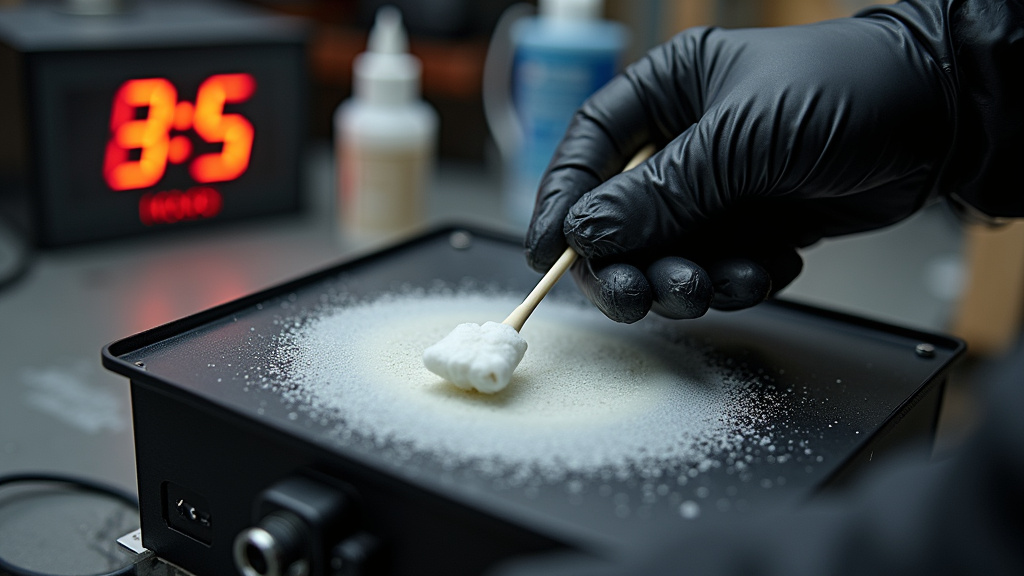
Cleaning frequency isn’t a guess. It’s based on the glycol load your machine has processed.
Follow this schedule based on your usage pattern:
| Usage Profile | Cleaning Frequency | If You Delay Cleaning |
|---|---|---|
| Heavy (Stage, weekly events) | After every 8–10 hours of run time. | Residue builds exponentially. The heating element coats within 30 hours, leading to a 50% loss in output efficiency and a permanent burnt taste in the fog. |
| Moderate (Monthly parties) | After every 30–40 hours of run time, or before storage. | The pump is at risk. Glycol thickens in the pump mechanism, leading to pump issues like sputtering or complete failure. |
| Light (Few times a year) | Before every use, and always before storage. | Old fluid separates in the tank. Using it causes immediate spitting liquid and can clog the pump on first startup. |
The 8–10 hour rule for heavy users comes from professional stage manuals. It’s the point where glycol accumulation starts to affect the heater’s thermal transfer rate. You might not see symptoms yet, but the damage is starting.
For context, a single Halloween party running for 4 hours puts you in the “Moderate” category. Clean it before you pack it away for the year.
A hard-won lesson: I stored a Chauvet Hurricane 700 after a season without cleaning or the priming step. Next fall, it wouldn’t start. The pump was seized solid from dried glycol. The repair bill was more than half the cost of a new machine. Now, the final fluid prime is the last thing I do before the cover goes on.
Storing Your Fog Machine: The Right Way and the Costly Way
Storage is where most machines die. The wrong choice here guarantees a problem next time.
The Right Way (The 3-Point Checklist)
- Clean and Flush using the 7-step process above.
- Prime with Fluid as described in Step 7. A thin coat of fresh fluid in the lines is protective.
- Store in a Cool, Dry Place. Avoid damp basements or hot attics. Extreme temperatures degrade seals and electronics.
This method keeps the internal mechanics ready for the next safe operation.
The Costly Way (Three Common Mistakes)
- Storing with Fluid in the Tank: Old fluid separates and grows microbes. It turns into a sludgy, acidic mess that corrodes the tank and clogs the pump on first startup. If you must store with fluid, use a fluid between uses guide to treat it.
- Storing with Cleaning Solution in the Lines: Vinegar or commercial cleaner left inside will attack metal components and plasticizers in seals over months. You’ll find worn seals and corrosion.
- Storing Dirty: Any leftover residue continues to harden and polymerize during storage. It becomes significantly harder to remove later, often requiring a full disassembly.
Think of storage as putting the machine into a protective coma. You clean out the toxins, give it a protective coating, and put it in a stable environment. Do it right, and it wakes up ready.
Troubleshooting: When Cleaning Isn’t Enough
Sometimes, a machine is too far gone for a standard clean. Here’s how to diagnose.
Problem: No fog output, but the heater and fan work.
This is a full clog. The cleaning process might not work if the fluid line is completely blocked. You’ll need to disassemble the machine to access and manually clear the line from the tank to the pump, and possibly the pump to the heating block. This is advanced troubleshooting a fog machine.
Problem: Fog output is weak and smells like burnt sugar.
The heating element is coated. Perform a deep clean with a commercial cleaner and the 2–4 hour soak. If that doesn’t restore output, the element itself may be failing due to insulation and overheating.
Problem: Machine is leaking fog machine fluid from the base or connections.
Cleaning won’t fix this. Leaks are usually from cracked tanks, loose fittings, or failed pump seals. Cleaning can sometimes make a minor leak worse by removing residue that was temporarily plugging it. Address the mechanical repair first.
Problem: The pump hums but doesn’t move fluid.
The pump is seized or has a broken internal component. Cleaning can’t free a mechanically seized pump. This requires pump replacement.
If a thorough clean doesn’t solve the issue, the problem is mechanical, not maintenance. Stop and repair.
Frequently Asked Questions
Can I use tap water if I don’t have distilled water?
No. Never. The minerals in tap water, calcium, magnesium, chlorides, will deposit inside your machine’s heating block and fluid lines. This creates limescale, a hard, cement-like clog that is more difficult to remove than glycol residue. Using tap water guarantees a future breakdown.
How do I clean residue off walls or windows after using the fog machine?
Fog residue from fog machines is water-soluble. Mix a few drops of dish soap into a bucket of warm water. Dampen a microfiber cloth in the solution, wring it out well, and wipe the surface. Rinse with a clean water cloth. Avoid glass cleaners with ammonia, as they can streak the glycol film.
My machine has a burnt smell even after cleaning. What now?
The burnt smell means residue has caramelized onto the heating element. A standard clean might not remove it. You need a deep clean: use a commercial cleaner, let it soak in the tank for 4 hours, then run the flush cycle. If the smell persists, the heating element may be damaged and need inspection.
Is it safe to pour used cleaning solution down the drain?
Yes. Both the vinegar mixture and commercial cleaners are designed to be water-soluble and non-toxic in the diluted amounts from cleaning a fog machine. Pour it down a drain with running water.
Can I use isopropyl alcohol to clean the outside?
It’s risky. Many fog machine casings are made from ABS plastic, which can become brittle and crack after repeated exposure to alcohols. For the exterior, distilled water on a cloth is safer. For tough grease, use a tiny bit of mild dish soap diluted in water.
The Bottom Line
Cleaning fog machine residue is straightforward chemistry: dissolve the sticky glycol with a mild acid, then rinse it away with mineral-free water. The complexity comes from the consequences of getting it wrong.
Use distilled water. Clean before you notice problems. Always flush with distilled water after the cleaner. Prime the lines with fresh fluid before storage. That sequence keeps the pump moving and the heater burning clean for years.
The alternative is a machine that slowly suffocates on its own waste, first with weak fog, then a burnt smell, then a silent pump. That’s a repair bill, not a maintenance task. Do the clean.