Fix a Fog Machine in 6 Steps — The DIY Guide That Works
This post contains affiliate links. As an Amazon Associate, we earn from qualifying purchases.
To fix a fog machine, diagnose the symptom, then flush the internal pipes with a distilled water and white vinegar solution to clear the most common cause: a clog from dried fluid residue. This requires a 2:1 water-to-vinegar mix, a full cleaning cycle, and a refill with proper fog fluid.
Most people assume a humming machine with no fog is broken for good. They hear the pump working and think the heater is dead or the electronics are fried. The real failure is almost always a simple physical clog in the thin copper pipe that carries fluid to the heating element. That gunk is dried glycol from old fog juice, and it builds up silently every time you store the machine with fluid in the tank.
This guide walks through the exact steps to clear that clog, along with troubleshooting for weak output, no heat, and strange smells. You’ll learn the cleaning ratio that works, the mistakes that make clogs worse, and when to put the screwdriver down and call a technician.
Key Takeaways
- The number one fix for a humming fog machine with no output is a distilled water and white vinegar flush in a 2:1 ratio. Tap water contains minerals that scale the pipes.
- Clean your machine after every 10-15 uses or before any long-term storage. Leaving fluid in the tank for weeks guarantees a clog.
- If the cleaning flush doesn’t work, check the exterior nozzle for a physical blockage before disassembling the unit.
- A burnt plastic smell means stop immediately. This is often overheated fluid or a failing heating element, not a simple clog.
- For issues with no power or no heat, always verify the outlet and check the machine’s internal fuse before suspecting major component failure.
How a Fog Machine Actually Works (And Why It Clogs)
Head design changes the entire process. Look at the business end of your trimmer.
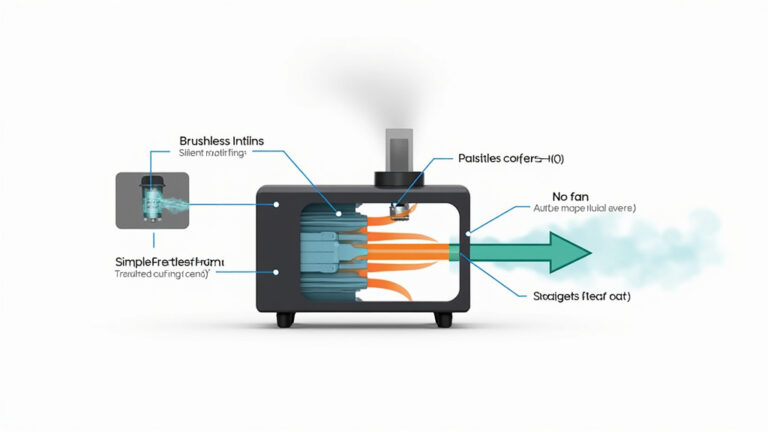
A standard fog machine pumps a glycol-based fluid from a reservoir through a narrow, coiled copper pipe (the heat exchanger) wrapped around an electric heating element. The fluid vaporizes into fog at approximately 400°F (204°C) and is expelled by the pump’s pressure through a nozzle.
The critical weak point is that thin copper pipe. High-quality fog fluid is designed to vaporize completely. But cheaper fluids, old fluids, or fluid left sitting in a warm machine leave behind a sticky, caramelized residue. This residue acts like arterial plaque. It builds up on the pipe walls with each use, especially if the machine isn’t flushed cleanly after shutdown.
Eventually, the opening narrows so much that the pump can’t push fluid through. You hear the pump motor humming because it’s trying, but no fluid reaches the heater. No fluid, no fog. This is the “all noise, no smoke” failure that sends most machines to the landfill prematurely.
TL;DR: Fog machines clog in the internal heating pipe because fluid residue bakes onto the walls. A regular cleaning flush prevents this.
The Universal Fix: The Vinegar and Water Flush
This is the solution for probably 80% of home fog machine problems. You need two ingredients: distilled white vinegar and distilled water. The vinegar’s mild acidity dissolves the glycol-based gunk. The distilled water ensures no new mineral deposits are introduced.
Before you start: Unplug the machine and let it cool completely. The cleaning solution will steam and the vinegar smell is strong—work in a well-ventilated area or outdoors. Have a container ready to catch the drained fluids.
Here is the step-by-sequence that clears a clog.
- Empty the old fluid. Pour any remaining fog juice from the tank into a disposable container. Tilt the machine to get every last drop out.
- Mix your cleaning solution. Use a clean measuring cup. The proven ratio is 2 parts distilled water to 1 part distilled white vinegar. For a standard machine, 2 cups of water to 1 cup of vinegar is sufficient. Never use tap water.
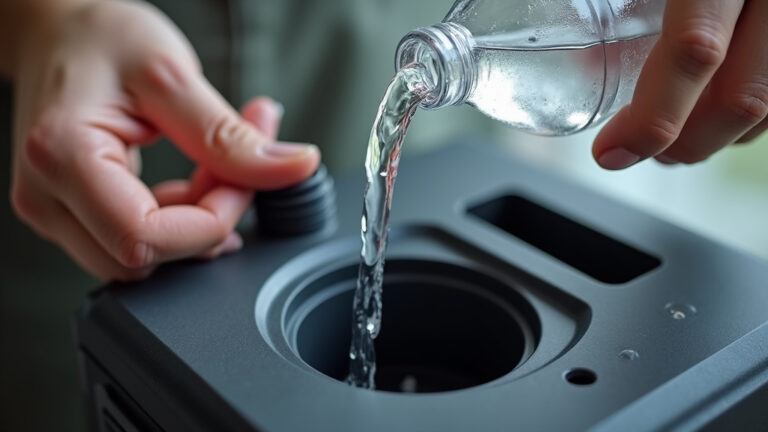
- Fill the tank with cleaner. Use a funnel to pour the solution into the empty fluid tank. Replace the tank cap securely.
- Heat and purge. Plug in the machine and turn it on. Allow it to reach its full operating temperature—this usually takes 3-5 minutes. Once the ready light is on, activate the fog output in short, 2-3 second bursts. Point the nozzle into a sink or out a window.
- Watch the output. Initially, you might see weak, sputtering fog or just steam. This is the cleaner breaking up the clog. Continue short bursts until the output is consistently thin, clear, and smells only of vinegar. This can take 10-20 bursts for a badly clogged machine.
- Drain the cleaner. Once the output is clear, unplug the machine. Carefully empty the remaining cleaning solution from the tank.
- Flush with distilled water (optional but recommended). Pour a cup of pure distilled water into the tank, slosh it around, and drain it. This removes any residual vinegar that could affect the taste of your next fog batch (yes, fog has a slight taste).
- Refill and test. Fill the tank with fresh, manufacturer-recommended fog fluid. Plug the machine back in, let it heat, and test the fog output. It should now be strong and consistent.
Common mistake: Using tap water for the cleaning mix — the dissolved minerals (calcium, lime) deposit on the hot pipe walls during the purge, creating a worse, rock-like scale that is nearly impossible to remove without disassembly.
If the machine still doesn’t produce fog after this full clean, the clog might be severe or the issue lies elsewhere. Move to the next section.
Troubleshooting Specific Fog Machine Problems
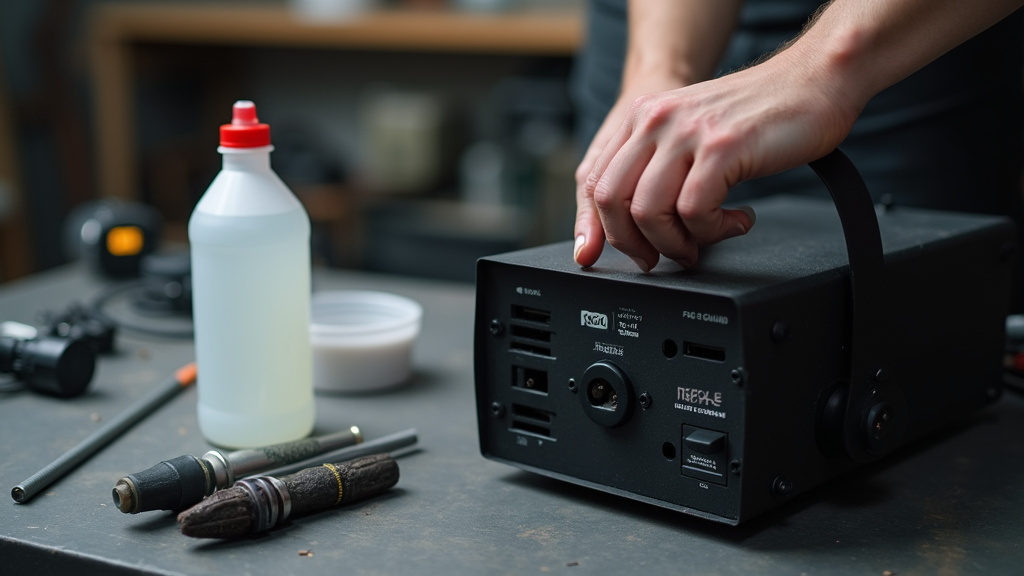
Not every problem is a clog. Use this table to match your symptom with the most likely cause and immediate action.
| Symptom | Most Likely Cause | Immediate Fix to Try |
|---|---|---|
| Machine hums, no fog | Clogged internal pipe | Perform the vinegar/water flush as detailed above. |
| No power (no lights) | Blown fuse, faulty outlet | Check wall outlet with another device. Inspect and replace the machine’s internal fuse. |
| No heat (light on) | Failed thermostat/heating coil | Professional repair likely needed. Confirm by checking for voltage at the heater. |
| Weak, wispy output | Partial clog, low fluid, air | Clean machine. Ensure tank is full. Tilt machine 45° to purge air from the fluid line. |
| Burnt plastic smell | Overheating, burnt fluid | Stop use. Clean thoroughly. May indicate a failing heater block. |
| Fluid leaking | Cracked tank, loose fittings | Inspect for visible cracks. Tighten hose clamps. Replace damaged parts. |
“Why is my fog output so weak and wispy?”
A partial clog is the usual suspect. The vinegar flush might need a second round. But also check the simple things first. Is the fluid tank actually full? An air bubble trapped in the fluid line can cause the pump to cavitate, delivering inconsistent fluid to the heater.
The fix for an air lock is straightforward. With the machine powered on and the tank full, gently tilt the entire unit forward to about a 45-degree angle and activate the fog output for a second. The tilt helps the pump draw liquid instead of air. You should hear the pump sound change from a hollow chug to a smoother hum.
The quality of your fog fluid matters tremendously. Cheap, off-brand, or old fog machine fluid becomes thicker and doesn’t vaporize cleanly. Using a premium fog juice from a reputable brand like Chauvet or Froggys ensures consistent chemistry and output.
“My machine has power but won’t heat up at all.”
If the power light turns on but the heater never engages (you don’t feel heat radiating from the case after 10 minutes), the issue is likely internal. The first stop is the fuse. Many machines have a small, user-accessible fuse on the back or near the power inlet. Refer to your manual, pull it, and check for a broken filament.
If the fuse is good, the problem could be the thermostat or the heating coil itself. Diagnosing this requires a multimeter to check for continuity and voltage, which is beyond a casual DIY fix. This is the point where you weigh the cost of a professional repair against the price of a new unit.
I once spent two hours cleaning a Chauvet 700 because it had no heat. The fuse was fine. I finally found the service manual online and tested the thermostat—it was dead. The replacement part cost $12, but sourcing it and the soldering job meant the machine was down for a week. For a $150 machine, that downtime was acceptable. For a $50 party-store unit, it wouldn’t be.
“It smells like burning plastic when I try to use it.”
Stop. Unplug the machine. This smell indicates the heater is overheating, often because no fluid is reaching it (severe clog) or because the fluid is contaminated and burning instead of vaporizing. Continuing to run it can melt internal wiring or damage the heating block permanently.
Let it cool completely. Then, perform an aggressive vinegar flush. If the smell persists after cleaning and refilling with fresh, high-quality fluid, the heating element may be damaged and coated in burnt residue. This usually requires professional service to clean or replace.
Advanced Checks: Pump, Nozzle, and Fluid Line
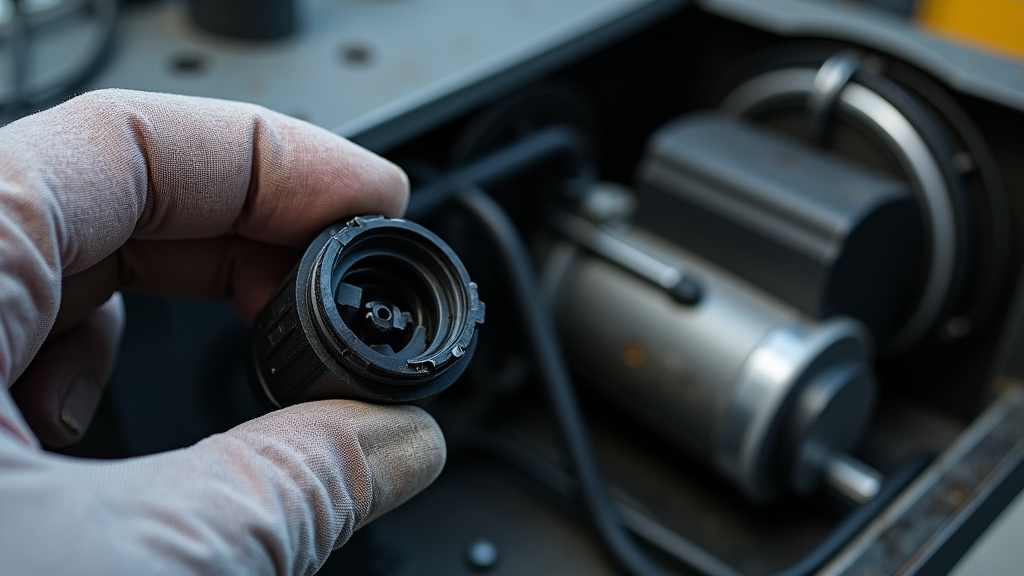
When the basic flush fails, you need to look a little deeper. These are the next most common failure points.
The Pump Coupling: The pump motor connects to the actual pump mechanism via a small plastic or rubber coupling. If this coupling strips or breaks, the motor hums but doesn’t turn the pump. You’ll need to open the casing to inspect it. A broken coupling is a cheap part but requires disassembly.
The Nozzle: The final exit hole can get blocked by external debris or a chunk of dislodged internal gunk. Inspect the nozzle opening. Use a toothpick or a pin to gently clear any visible obstruction. For residue, dip a cotton swab in isopropyl alcohol and wipe the nozzle clean.
The Fluid Line: The tube that runs from the tank to the pump can kink, crack, or become disconnected. Open the case and trace the line. Look for cracks, ensure it’s fully seated on the pump barb, and check that it hasn’t been pinched by the casing.
The Right Way to Store Your Fog Machine
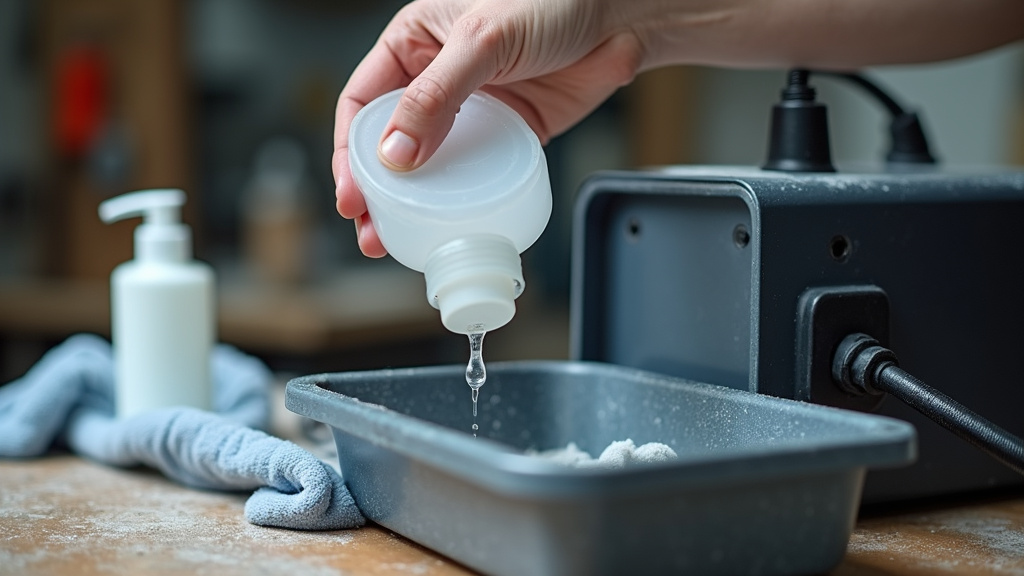
This is the part people skip. Every time. How you store the machine determines when it will clog next.
Short-term storage (between parties this season): You can leave high-quality fog fluid in the tank if you’ll use the machine again within a week or two. For longer intervals, empty the tank and run the machine dry for a few seconds to clear the fluid line.
Long-term or seasonal storage: This is non-negotiable. Do not store the machine with fluid inside.
1. Empty the fluid tank completely.
2. Perform the vinegar-and-water cleaning flush as described earlier.
3. After the flush, drain the cleaner. Do not refill with fog fluid.
4. Store the machine in a cool, dry place, ideally in its original box.
5. Once a month during storage, plug it in and let it complete a heat cycle (without activating fog) to keep the internal components dry and prevent seal degradation.
Leaving fog juice inside a cold machine for months allows moisture to condense into the fluid, diluting it and promoting bacterial growth. This creates a sludge that will absolutely clog the pipe on first startup.
When to Call a Professional Technician
You can’t fix everything with vinegar and a screwdriver. Know your limits to avoid causing expensive damage.
- Electrical issues beyond a fuse: If you’ve confirmed power to the unit and the fuse is good, but components like the heater or main control board are dead.
- Physical damage: A cracked fluid tank, a broken pump housing, or a severed wire harness.
- Persistent problems after thorough cleaning: You’ve done multiple cleaning cycles, checked the nozzle and line, and the machine still fails.
- High-end or DMX-controlled professional units: These have complex circuit boards and calibration routines. Tampering can void warranties and create new problems.
Investing in professional repair makes sense for machines that cost several hundred dollars or more. For a budget machine, the service call may cost more than a replacement. That’s a financial decision, not a technical one.
Frequently Asked Questions
Can I use apple cider vinegar or cleaning vinegar?
No. Use only clear, distilled white vinegar. Apple cider vinegar contains sugars and other organics that will gunk up your machine. Cleaning vinegar is often a higher acidity (6-8%) which can be too aggressive for the thin copper pipes.
How often should I clean my fog machine?
For regular use, clean it after every 10-15 hours of operation. If you use it heavily for an event, clean it immediately afterward before storage. This routine prevents the residue from hardening into a full clog.
Is it safe to disassemble the machine to clean the pipe directly?
It can be, if you are methodical. Unplug the machine, take photos of every connection before disconnecting wires, and keep track of your screws. The main risk is damaging the delicate heating coil or breaking plastic clips. For most people, the external vinegar flush is safer and effective.
Will using a different brand of fluid damage my machine?
Using a wrong fluid type like snow fluid or oils will almost certainly cause damage. Always use fluid specified for your machine type (water-based vs. oil-based). Sticking with your manufacturer’s recommended fluid or a reputable third-party brand designed for your model is the safest bet.
Why does my machine work for a minute then stop?
This is a classic sign of a fluid sensor error or an air bubble. The machine thinks the tank is empty. Try the 45-degree tilt trick while operating to clear the air lock from the sensor. Also, ensure you’re using a fluid that isn’t too viscous for the sensor.
Before You Go
Fixing a fog machine is usually about reversing neglect, not repairing complex electronics. The distilled water and white vinegar flush is the first, best, and cheapest tool in your kit. It resolves the vast majority of no-fog problems.
Commit to a cleaning schedule. Treat your fog fluid like perishable milk—don’t leave it sitting in the tank. And know that a burnt smell or complete electrical silence means it’s time to step back and consider a pro.
A well-maintained fog machine should last for years of parties, Halloween nights, and photo shoots. The maintenance takes ten minutes. The alternative is a trip to the store and another hundred bucks spent. Your choice.