The Truth About Putting Food Coloring in Your Fog Machine
This post contains affiliate links. As an Amazon Associate, we earn from qualifying purchases.
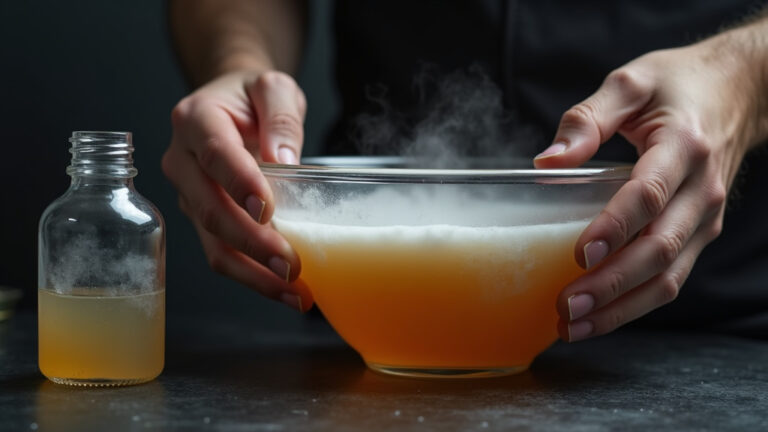
No. You cannot put food coloring in a fog machine. It will not produce colored fog. The dye particles are too large to aerosolize and will instead carbonize on the machine’s internal heater core, causing permanent clogs, pump failure, and potentially toxic fumes. The only safe, effective method for colored fog is to shine colored LED lights onto standard white fog.
The universal mistake is thinking a fog machine works like a humidifier or a pot of boiling water. It doesn’t. You’re not adding dye to steam. You’re forcing a precise chemical mixture through a superheated metal block at high pressure. Introducing anything that wasn’t engineered for that environment breaks it.
This guide explains the physics of why dyes fail, shows you the exact damage they cause inside a $300 machine, and gives you the two proven methods that actually work for professional colored effects. We’ll also cover what those colored fluids on the shelf are really for.
Key Takeaways
- Food coloring will not color fog. The dye separates, burns, and clogs.
- The heater core is the most expensive part to replace. Dye residue insulates it, causing overheating and burnout.
- Colored LED lighting is the universal professional solution. It’s safe, instant, and offers infinite colors.
- Pyrotechnic smoke bombs create true colored smoke for outdoor use but require ventilation and carry fire risk.
- Using unapproved additives voids the warranty on every major brand’s fog machine.
The Physical Reason Dyes Don’t Work (Particle Size vs. Vapor)
Fog machines don’t make steam. They create an aerosol. The pump forces a mixture of water and glycol or glycerin through a precision-machined heater block, flashing it into a cloud of microscopic droplets. These droplets are between 1 and 10 microns in diameter. They stay suspended in the air, reflecting ambient light to appear white.
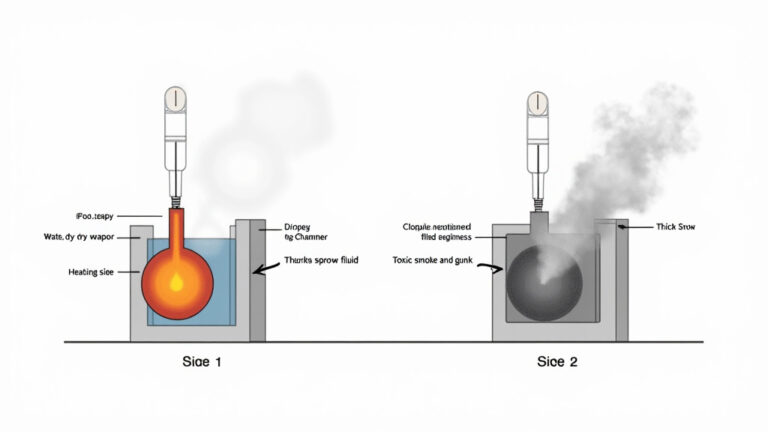
Food coloring molecules, and even commercial liquid dyes, are dissolved in water. When this water hits the 400–500°F heater core, it vaporizes instantly. The dye particles, however, do not. They are solid pigments suspended in the liquid.
A standard water-based fog fluid droplet vaporizes completely at the heater core’s surface. A dye pigment is orders of magnitude larger and lacks the volatile carriers to aerosolize. It instead undergoes pyrolysis—it bakes onto the hot metal as a solid carbon deposit.
The result is zero colored fog. You get the same white cloud, but now with a layer of insulating gunk building up inside your machine. This is the core mechanical truth every beginner misses.
TL;DR: Fog is an aerosol of clear liquid droplets. Dyes are solid particles that burn, not vaporize, leaving no color in the fog and a mess in your machine.
What Actually Happens When You Add Food Coloring
I learned this the expensive way. A client insisted on “blood red” fog for a Halloween haunt and added a bottle of red food coloring to a gallon of fluid in a Chauvet DJ 1200. The first two bursts were normal. The third was weak. By the fifth, the machine groaned and emitted a thin, brownish haze that smelled like burnt sugar.
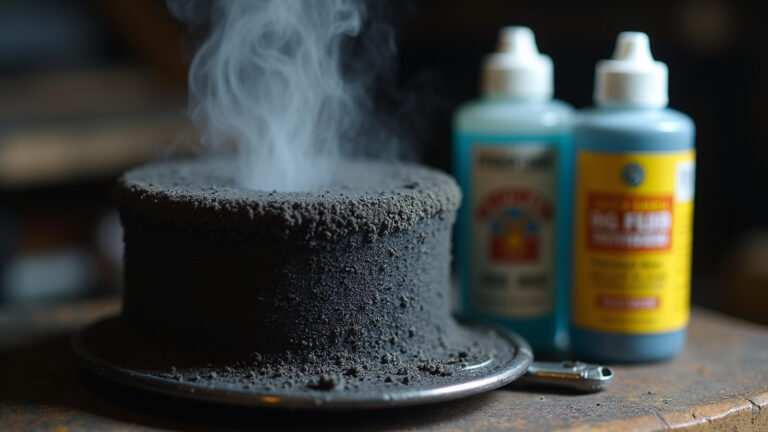
We opened it after it cooled. The heater block looked like it had been dipped in tar. The thermal fuse had blown. The repair bill was more than the machine cost, and the haunt had no fog for the opening night.
The sequence is predictable.
- Immediate Separation. The water-based dye does not fully integrate with the glycol-based fog fluid. It forms microscopic globules.
- Carbonization on Contact. These globules hit the heater core and burn, leaving a carbonized residue.
- Insulation and Overheat. The residue acts like a ceramic coating on the heater. The thermostat senses cooler output and commands more power, overheating the element itself.
- Pump Failure. As the passages narrow from buildup, the pump motor strains against backpressure. It either seizes or burns out.
The smell is the real warning. It’s a sharp, acrid chemical odor, not the mild, sweet scent of vaporizing glycol. That’s the sign of incomplete combustion and off-gassing.
Common mistake: Adding “just a few drops” to see what happens — the carbon buildup starts on the first activation. It’s cumulative and irreversible without a full teardown and scrub.
The Damage Inside Your Machine
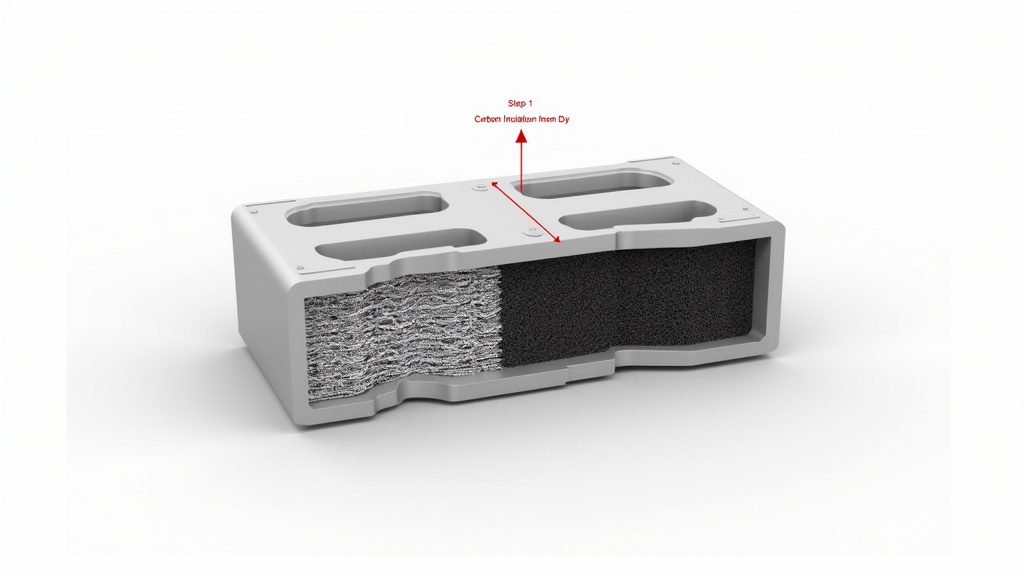
Let’s name the parts that fail. Knowing the cost makes the rule stick.
| Component | Function | Failure Mode from Dye | Typical Repair Cost |
|---|---|---|---|
| Heater Core / Block | Vaporizes fluid | Carbon insulation leads to element burnout | $80–$200 + labor |
| Pump | Pressurizes fluid | Seizes from thickened fluid/backpressure | $40–$100 |
| Nozzle / Jet | Creates fog pattern | Clogs with solid deposits | $15–$50 |
| Thermal Fuse | Safety cut-off | Blows from overheated element | $5–$10 (plus labor) |
The heater core is the heart. It’s a labyrinth of tiny channels machined into aluminum or brass. Once carbon coats those channels, you cannot clean them out with solvent. The replacement process involves disassembling the entire machine, desoldering old wires, and recalibrating the thermostat.
Most consumer-grade machines cost less than the repair. You throw it away. That’s the real consequence of the “let’s try it” experiment.
The Two Methods That Do Create Colored Effects
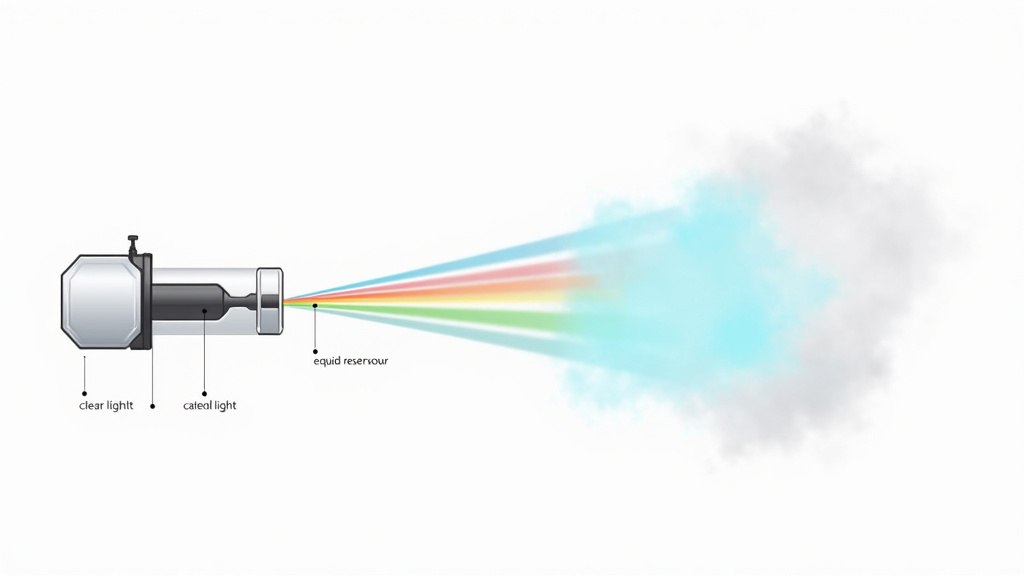
Since colored fog fluid is a physical impossibility, the industry uses two workarounds. One is for indoor stages, the other for outdoor fields.
Method 1: Colored Lighting (For 99% of Use Cases)
This is the professional standard. You use a standard fog machine with clear fluid to produce a dense, white cloud. You then illuminate that cloud with colored lights.
The science is simple: the clear fog droplets are excellent light reflectors. Shine a blue LED on them, and the entire cloud appears blue. Use a moving light with a color wheel, and the fog changes color in real time.
Why it’s better:
- Zero machine damage. You’re using approved fluids.
- Instant color changes. Swap lights or use RGB LEDs.
- Unlimited colors. Not limited to dye chemistry.
- Safe for indoors. No chemical fumes.
Many modern fog machines, like the Chauvet DJ Hurricane 1200 Flex, come with built-in RGB LED lighting specifically for this purpose. It’s the manufacturer admitting this is the only way.
Method 2: Pyrotechnic Smoke Bombs (For Outdoor, Short Durations)
These are the canisters you see at air shows or in music videos. They contain a pyrotechnic composition mixed with a volatile organic dye. Igniting them burns the composition, vaporizing the dye into a cloud of true colored smoke.
| Aspect | Fog Machine + Lights | Pyrotechnic Smoke Bomb |
|---|---|---|
| Smoke Color | Reflected light | True colored particles |
| Visibility | Best in low light | Visible in full daylight |
| Duration | Continuous, refillable | 60–120 seconds per unit |
| Safety | Very high (electrical only) | Fire risk, fumes, requires ventilation |
| Indoor Use | Perfectly safe | Never |
Pyrotechnic smoke is a specialty effect. It requires careful handling, a clear outdoor area, and often a permit. The smoke itself is not as safe to breathe as glycol-based fog. It’s a different tool for a different job.
TL;DR: Use colored LEDs indoors. Use smoke bombs outdoors with caution. Never use food coloring.
Why “Colored” Fog Fluid Exists (And What It’s Really For)
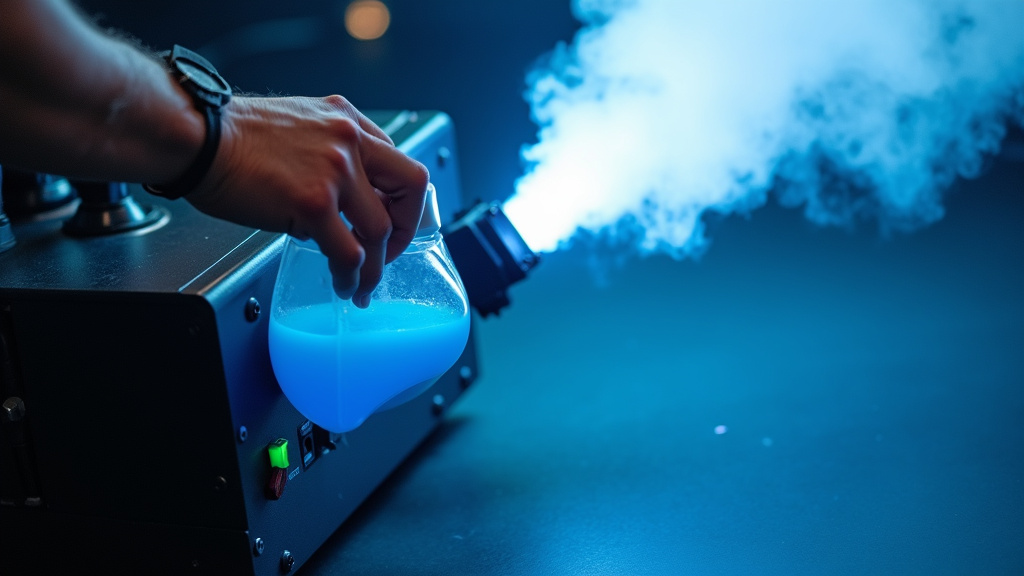
You’ll see bottles of fluid tinted blue or pink. This is not for coloring fog.
Manufacturers add a slight tint for identification only. It helps users distinguish between different fluid formulations at a glance. A blue tint might indicate a “low-lying” fluid with a different glycol mix for a denser fog. A pink tint might signal a “haze” fluid with a longer hang time.
The colorant is minuscule and engineered to vaporize completely, leaving no residue. It does not affect the color of the output fog. Using a blue-tinted “ice fog” fluid will not give you blue fog. It will give you a whiter, denser, colder-looking fog that hugs the ground—which you then color with lights.
This is a major point of confusion. People buy the blue fluid expecting a blue cloud and are disappointed. Now you know why.
How to Choose the Right Fog Fluid
Stick with the clear stuff. The rule is absolute: use the fluid recommended by your machine’s manufacturer. The chemistry is calibrated to the specific boiling point of that machine’s heater.
- Standard Fog Fluid: Typically a mix of distilled water and propylene glycol. For general use.
- Low-Lying / Ice Fog Fluid: Higher glycerin content. Produces a denser fog that stays near the ground.
- Haze Fluid: Finer particle size for a lingering, atmospheric haze.
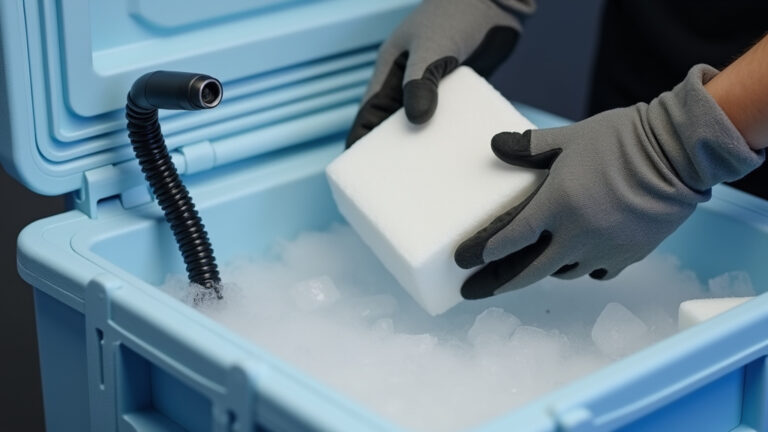
Mixing in food coloring, essential oils, or other substances like dry ice is a direct violation of the fluid’s chemical specification. Each type of specialty fog fluid is engineered for a specific result and machine tolerance. Straying from the recommended fog fluids is how you turn a simple effect into a costly repair.
For a deeper dive, our fog fluid product review breaks down the top brands by performance and residue.
Frequently Asked Questions
Will a little bit of food coloring ruin my fog machine?
Yes, even a small amount will begin to carbonize on the heater core. The damage is cumulative. One use might not kill it, but it starts a clog that worsens with each subsequent use, leading to inevitable failure.
Can I use anything to scent or color my fog safely?
No. There are no safe additives for standard thermal fog machines. Scenting requires specialized cold-fogging equipment that doesn’t use heat. For color, you must use external colored lighting. The risks of adding essential oils or dyes are identical: machine damage and potential respiratory irritants.
What about using water instead of fog fluid?
Never use plain water. Fog fluid contains glycol or glycerin to lubricate the pump and prevent mineral scale. Using water in fog machines will cause pump seizure and limescale buildup on the heater, destroying it just as surely as dye.
How do I clean my fog machine if I already added dye?
If you’ve run dye through it, a standard fluid flush won’t work. The carbon is baked on. You need to disassemble the machine and manually scrub the heater core with a specialized descaling solution—if it’s not already too far gone. This is a professional repair job. Prevention is infinitely cheaper.
Does fog machine fluid expire?
Yes. Over time, glycol can break down and become acidic. Using old fluid can still damage internals. Check our guide on fog fluid shelf life for storage tips and signs of degradation.
Before You Go
The desire for colored fog is universal. The method most people reach for is fundamentally broken. Food coloring doesn’t mix, doesn’t vaporize, and doesn’t color anything but the inside of your broken machine.
The path that works is straightforward. Buy a quality, clear fog machine fluid. Rent or buy a couple of affordable colored LED par lights. Point the lights at your fog, not into the machine’s nozzle. You’ll have vibrant, changeable, and safe colored effects all night.
Save the chemical experiments for a lab. Your fog machine, your wallet, and your lungs will thank you.