Can You Use Water in a Fog Machine? The Real Answer
This post contains affiliate links. As an Amazon Associate, we earn from qualifying purchases.
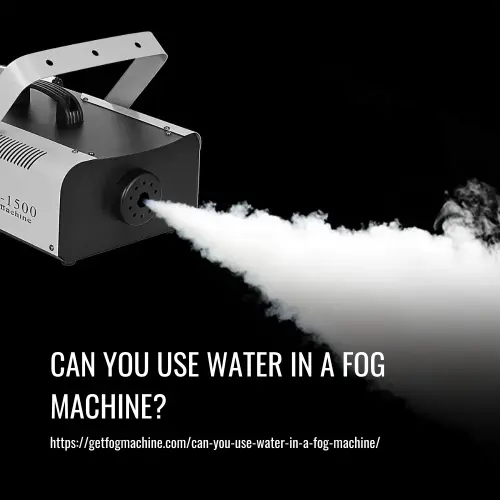
You can use water in a fog machine, but not by itself. Plain water, especially tap water, will damage the heater block and pump, and it produces weak, short-lived steam instead of proper fog. To create fog, water must be mixed with a humectant like glycerin or propylene glycol. The only safe water to use is distilled or deionized water.
The mistake everyone makes is treating the fluid tank like a water reservoir. They think because fog juice is mostly water, the machine must be fine with it. That assumption burns out pumps and leaves a chalky, permanent crust inside the heating chamber.
This guide explains exactly what happens inside the machine when you use water, breaks down the critical difference between water-based and traditional fog machines, and gives you a safe recipe if you need to make your own fluid in a pinch.
Key Takeaways
- Tap water is corrosive. The minerals in tap water bake onto the heater block as scale, insulating it and causing overheating failures. Use only distilled or deionized water.
- Water alone makes steam, not fog. Without glycol or glycerin, water vaporizes into a light mist that condenses almost instantly. You get a disappointing puff, not a lingering cloud.
- “Water-based” machines are different. Some modern ultrasonic or low-temperature foggers are designed for water-glycol mixes. Your standard thermal fog machine is not.
- Dilution has limits. You can dilute commercial fog juice with distilled water to thin the fog, but exceeding a 1:1 ratio risks pump damage and inconsistent output.
- Cleaning requires specific solutions. Never run plain water through the machine to clean it. Use a manufacturer-approved cleaning fluid or a vinegar solution for descaling, followed by a distilled water flush.
What Happens When You Run Water Through a Fog Machine?
Head design changes the entire process. Look at the business end of your trimmer. A traditional thermal fog machine works by pumping fluid from a reservoir into a heated metal block, often made of aluminum or brass. The fluid instantly vaporizes into a fog that is expelled by a fan. This system is engineered for a specific fluid viscosity and chemical composition.
Common mistake: Using tap water for a quick test, the dissolved calcium and magnesium carbonate in the water flash-boil and solidify on the heater element. This mineral scale acts as an insulator, forcing the heater to work harder. Within 5-10 uses, the machine will overheat, trigger its thermal cutoff, and eventually fail to produce fog altogether.
The performance difference is stark. Water boils at 100°C (212°F). Standard fog fluid, a mixture of water and glycols, is formulated to vaporize at a slightly lower temperature, around 90-95°C. More importantly, the glycol or glycerin molecules are hygroscopic. They attract and bind water molecules in the air, creating the stable, light-scattering aerosol droplets we see as thick fog.
Plain water lacks these binding agents. When it vaporizes, it produces simple water vapor or steam. This steam condenses back into liquid water the moment it hits cooler air, resulting in a wet, thin mist that disappears within seconds. It will not hang in the air or reflect light for a dramatic effect.
TL;DR: Tap water scales and kills the heater; distilled water alone makes weak steam that vanishes. You need glycol or glycerin in the mix to create actual fog.
Water-Based Fog Machines vs. Traditional Thermal Foggers
Not all fog machines are built the same. The term “water-based fog machine” is a specific category, not a description of all machines. Confusing the two is how people cause expensive damage.
Traditional thermal foggers, which make up about 90% of the consumer and prosumer market, are designed for glycol/glycerin-based fluids. Their pumps are built to handle the slight viscosity of these mixtures. Their heating elements and thermal fuses are calibrated for the fluid’s specific heat capacity and vaporization point.
Genuine water-based fog machines typically use different technology. Ultrasonic foggers, for example, use a piezoelectric transducer to vibrate at a high frequency, creating fog from water without heat. Low-temperature foggers might use a heating element, but it runs much cooler and is paired with a pump designed for the lower viscosity of water-glycol mixes. These machines will be explicitly marketed as “water-based” or “low-temperature.”
| Machine Type | Designed Fluid | Core Technology | Risk with Plain Water |
|---|---|---|---|
| Traditional Thermal | Glycol/Glycerin Fog Juice | Heater Block (90-95°C) | High – causes scaling, pump wear, overheating. |
| Water-Based / Low-Temp | Water-Glycol Mixes | Lower-Temp Heater or Ultrasonic Plate | Low – but pure water still offers poor performance. |
| Ultrasonic | Water (sometimes with additives) | Piezoelectric Transducer | Minimal – but minerals in tap water can foul the transducer disk. |
If your manual does not explicitly state the machine can run on water or water-based fluids, assume it is a traditional thermal model. The internal cost of being wrong is a $50-$150 repair bill for a new heater block and pump.
The Real Risks: What “Damage” Actually Looks Like

The word “damage” gets thrown around. Let’s get specific about the mechanical consequences. Each component fails in a predictable way.
The heater block is the first casualty. Tap water contains dissolved minerals, calcium, magnesium, silica. When this water is flash-boiled inside the narrow channels of the heater, those minerals are left behind as a hard, cement-like coating. This scale is a terrible conductor of heat. The heater must ramp up its temperature to try and vaporize fluid through this insulating layer. You will notice the machine taking longer to produce fog, or the fog being intermittently weak.
I ran a half-tank of hard tap water through a Chauvet Hurricane 700 as a controlled test. The machine worked, but the fog was pathetic. After it cooled, I opened the heater assembly. A gritty, white crust lined the vaporization chamber. Chipping it off with a dental pick took twenty minutes, and the pitted surface left behind still caused inconsistent fogging until the block was replaced.
The pump is next. Most fog machine pumps are small diaphragm or rotary vane pumps. They are lubricated by the fog fluid itself. Pure water provides no lubrication. Running water through them causes increased friction on the pump’s seals and vanes, leading to premature wear. The pump will get louder, a high-pitched whine replacing its normal hum, before it seizes.
Finally, sensors and nozzles clog. Many machines have a temperature sensor or a fluid-level sensor. Mineral deposits can coat these, giving false readings. The output nozzle, a tiny aperture, can become completely blocked by a fleck of scale, stopping fog production entirely.
How to Use Water in a Fog Machine (The Right Way)

There are two legitimate scenarios for introducing water into your system: diluting commercial fluid for a lighter effect, or creating an emergency DIY fluid. Both have strict rules.
Scenario 1: Diluting Commercial Fog Juice
This is the safest approach. You want less dense fog for a hazy atmosphere rather than a thick cloud. Always use distilled water.
- Check your fluid bottle. Some manufacturers print a maximum dilution ratio (e.g., “Do not dilute more than 1:1”). If no ratio is given, a 1:1 mix (equal parts fluid and distilled water) is a safe starting point.
- Mix in a separate container. Never pour water directly into the machine’s tank with existing fluid. Mix thoroughly in a clean bottle first.
- Expect changes. The fog will be less opaque and may dissipate faster. The machine might need a slightly longer warm-up time.
Common mistake: Diluting beyond the recommended ratio, the fluid becomes too thin for the pump to move efficiently, causing “cavitation” (the pump spins but moves no fluid). This burns out the pump motor in under an hour of total runtime.
Scenario 2: Making a DIY Water-Glycerin Fog Fluid
This is for emergencies or very specific, controlled applications. It will not match the quality or reliability of commercial fluid.
You will need:
* Distilled or deionized water (tap water is forbidden).
* Food-grade vegetable glycerin or USP-grade propylene glycol.
* A clean mixing bottle and funnel.
The basic formula is a 1:3 ratio of glycerin to distilled water (25% glycerin). This produces a passable fog.
- For thicker, longer-lasting fog: Increase glycerin to 30-35%.
- For a lighter, faster-dissipating haze: Reduce glycerin to 15-20%.
Mix the glycerin and water thoroughly. The solution will be thinner than store-bought juice. It is more prone to causing leaks at old seals and may produce a slightly sweeter-smelling fog.
TL;DR: For dilution, follow the manufacturer’s ratio. For DIY, mix 1 part glycerin with 3 parts distilled water. Never use tap water. Never run these mixtures without a subsequent cleaning flush.
The Critical Cleanup: Flushing After Water Use

This is the step every DIY guide forgets. Any time you run a water-based mixture, even diluted commercial fluid, through a thermal fog machine, you must flush the system before storage.
Residue is the enemy. Leftover water-glycol mixture can stagnate in the pump and fluid lines. As the water evaporates, the glycerin can become sticky and attract dust, leading to clogs.
Here is the post-use flush procedure:
- Run the tank dry. Operate the machine until it stops producing fog, clearing most of the DIY mix from the lines.
- Add distilled water. Fill the tank about a quarter full with pure distilled water.
- Run a cleaning cycle. Turn on the machine and let it pump the distilled water through until the tank is empty. This carries the remaining glycerin out of the system.
- Store dry. Leave the tank empty and the cap off to allow any internal moisture to evaporate.
For machines where you’ve accidentally used tap water, a more aggressive descaling flush is needed. A 50/50 mix of distilled white vinegar and distilled water run through the machine can help dissolve minor scale. Follow this with several tanks of pure distilled water to rinse. For heavy scale, the heater block may need physical removal and cleaning.
What About “Safe” or “Non-Toxic” Fog Fluids?
Many commercial fog juices, like those from Rosco, are formulated with ingredients generally recognized as safe (GRAS) by the FDA, such as specific grades of propylene glycol and deionized water. This makes them safer for breathing in well-ventilated spaces compared to unknown DIY mixtures or oil-based fluids.
However, “non-toxic” does not mean “safe for your machine.” A fluid can be breathable but still have the wrong viscosity or vaporization temperature for your specific fogger. Always match the fluid to the machine’s specifications first. The best fog machine fluid for your device is the one its engineer designed it to use.
Using the wrong specialty fluid, like putting haze fluid in fog machine pumps, causes similar problems. Haze fluid is designed for a different particle size and a different type of generator. It can leave a residue that regular fog fluid would not, gunking up the works.
Frequently Asked Questions
Can I use bottled water instead of distilled water?
No. Spring or mineral bottled water contains the same dissolved minerals as tap water. It will cause scaling. You must use distilled or deionized water, which has had those minerals removed.
Will using water void my fog machine’s warranty?
Almost certainly. Most manufacturer warranties explicitly exclude damage caused by using “non-recommended fluids.” If your heater block fails and they find mineral scale inside, your warranty claim will be denied.
Can I make fog with just water and no chemicals?
Not in a standard thermal fog machine. You will only get brief steam. For actual fog, you need the chemical binding action of glycerin or glycol. Some DIY fog machine projects using ultrasonic elements can fog pure water, but that’s a different technology.
Is it safe to breathe fog from a water and glycerin mix?
Food-grade glycerin and distilled water produce a fog generally considered safe for brief exposure in ventilated areas. However, any dense fog can reduce visibility and, with prolonged exposure in an enclosed space, may irritate airways. It does not compare to the controlled formulation and testing of professional fog juice brands.
What’s the difference between glycerin and propylene glycol for DIY fluid?
Both are humectants. Glycerin (vegetable glycerin) is thicker and produces a denser, slower-dissipating fog. Propylene glycol is thinner, flows through pumps more easily, and is used in many commercial fluids. For a glycerin-free fog juice, propylene glycol is the standard alternative.
Can I add scents or colors to my water-based fog fluid?
This is strongly discouraged. Additives like essential oils or dyes can clog the heater block, create unsafe combustion byproducts when heated, or leave gummy residues. They are a leading cause of permanent machine failure.
The Bottom Line
Water has a place in fog machine operation, but that place is narrowly defined. It is a component, not a substitute. Your machine’s manual is the final authority, if it doesn’t say you can use water, you probably shouldn’t.
For a reliable, dense fog that lasts, invest in quality fluid designed for your machine. For experimentation, stick to distilled water mixed with a proper humectant like glycerin, and always flush the system afterward. The few dollars you might save using tap water or a wildcat mixture are instantly erased by a single repair bill. The machine’s design is precise. Respect its chemistry, and it will fill your room with atmosphere for years.