Fog Machine Pump Not Working: 5 Proven Fixes & Diagnosis
This post contains affiliate links. As an Amazon Associate, we earn from qualifying purchases.
A fog machine pump not working is almost always a clog, a seized plunger, or a burned-out coil. Fix it by first clearing the clog with forced distilled water or vinegar, then checking for pump vibration and voltage. If the pump is silent, replace it, the common SP-12A AC piston pump is a straightforward swap.
Most people hear the machine hum and assume the heater is dead. They replace the whole unit. That’s a $200 mistake. The hum is the pump coil trying to work against a blockage. The heater is usually fine. You just need to clear the line or replace a $30 component.
This guide walks through the five-step diagnostic ladder: from simple fluid checks to internal pump surgery. We’ll cover how to identify your pump type, force-clear a clog without opening the machine, disassemble the common SP-12A pump, and swap it for a new one when cleaning fails.
Key Takeaways
- A humming pump with no fog means a clog. Silence means a dead pump or broken wire.
- Force-clearing a clog with a syringe of distilled water or white vinegar works 80% of the time without disassembly.
- Never use tap water or non-recommended fluid in the pump, mineral deposits seize the plunger within weeks.
- The SP-12A AC piston pump is the most common replacement part. Match voltage exactly.
- If you replace an AC pump with a DC pump, you must add a transformer and rectifier, the wiring is different.
Before You Start: Safety First
Before you start: Unplug the machine and let it cool for at least 30 minutes. The heater block stays at 120°C long after shutdown. Opening a live machine risks severe burns and electrical shock. If you see any melted wiring or charred components inside, stop, the fault is beyond a simple pump fix and requires professional repair.
Always work on a dry, stable surface. Keep a multimeter handy for voltage checks. Have a small container for old fluid.
The Diagnostic Ladder: From Simple to Complex
Start here. Jumping straight to pump replacement wastes time and money.
First, verify the machine has power and a full tank of recommended fog fluids. Let it complete its full pump warm-up cycle, usually 3–5 minutes. If the heater isn’t ready, the pump won’t engage.
Press the fog button. Listen closely.
Humming but no fog: The pump coil is energized, but the plunger can’t move. This is a clog 90% of the time. The blockage is usually in the nozzle pinhole or the pump’s internal chamber. You’ll fix this without opening the machine.
Silence: No vibration, no sound. The pump isn’t getting power, or the coil is burned out. Check the wiring and fuse first. Then test voltage at the pump terminals.
Weak, intermittent sputtering: Fog comes in bursts then stops. This is a partial clog or an airlock in the line. Tapping the pump casing can dislodge the bubble. If it persists, the fluid intake tube might be kinked or the tank filter clogged.
| Symptom | Likely Cause | First Action |
|---|---|---|
| Humming, no fog | Clogged pump or nozzle | Syringe force-cleaning |
| Complete silence | Dead pump / no power | Check wiring & voltage |
| Intermittent fog | Airlock / partial clog | Tap casing, check tube |
| Fog then nothing | Empty tank / faulty switch | Refill fluid, inspect switch |
TL;DR: Listen first. Hum means clog. Silence means electrical. Sputtering means air.
Force-Clearing a Clog Without Opening the Machine
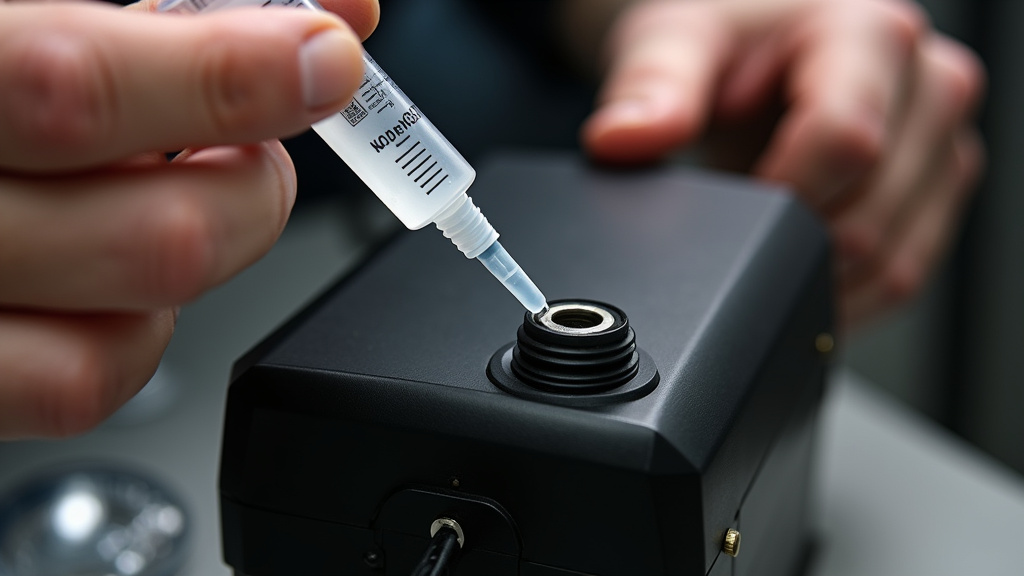
This is the on-site fix from the YouTube transcript. It works because you’re pushing cleaning fluid backwards through the pump’s intake path, dislodging debris stuck in the plunger chamber or the tiny nozzle orifice.
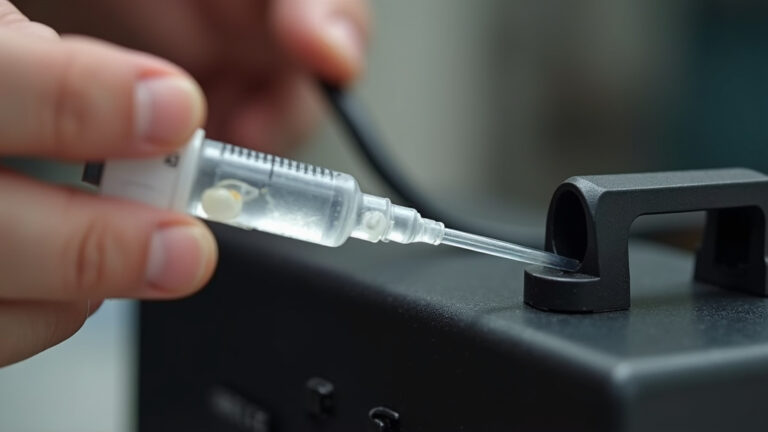
You need a 5ml syringe and distilled water or white vinegar. White vinegar dissolves clogging residue from glycol-based fluids better than water.
Unplug the machine. Disconnect the fluid intake tube from the pump inlet. Fill the syringe. Insert the syringe tip firmly into the pump inlet port.
Hold the pump casing steady. Press the fog button briefly while forcefully injecting the cleaning fluid. The combined pressure from the syringe and the pump’s own attempted suction blasts the blockage loose. You might need to do this 5–10 times.
Reconnect the fluid tube. Refill the tank with fresh premium fog machine juice. Test.
If fog returns, you’re done. If the hum persists but no fog appears, the clog is deeper. You must open the pump.
Common mistake: Using tap water for force-cleaning, the minerals leave deposits inside the pump that harden into a new clog within a month. Always use distilled water or vinegar.
When You Must Open the Pump: Internal Cleaning
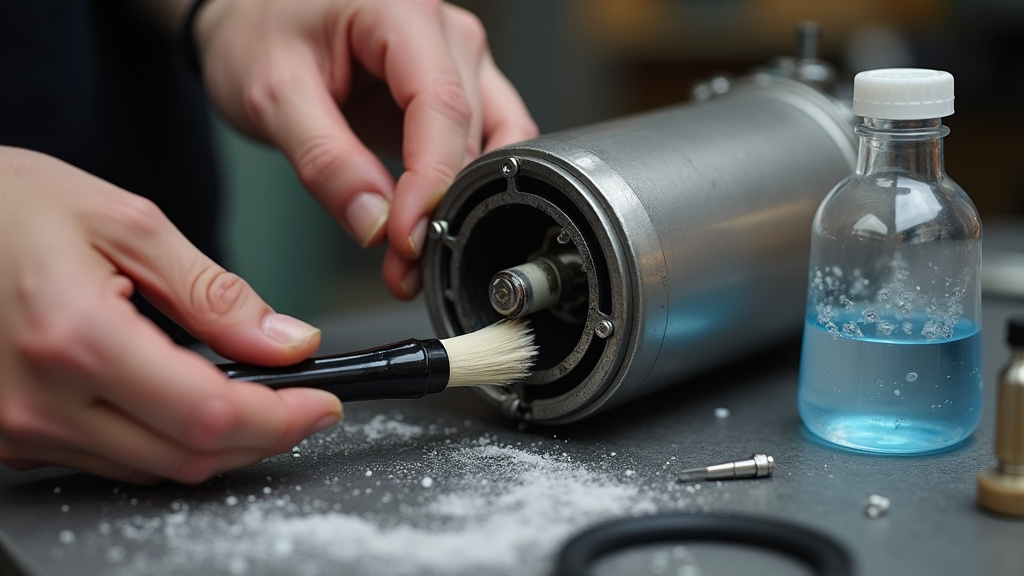
If force-cleaning fails, the plunger is seized by crystallized fluid or the internal O-ring is gummed up. This requires disassembly.
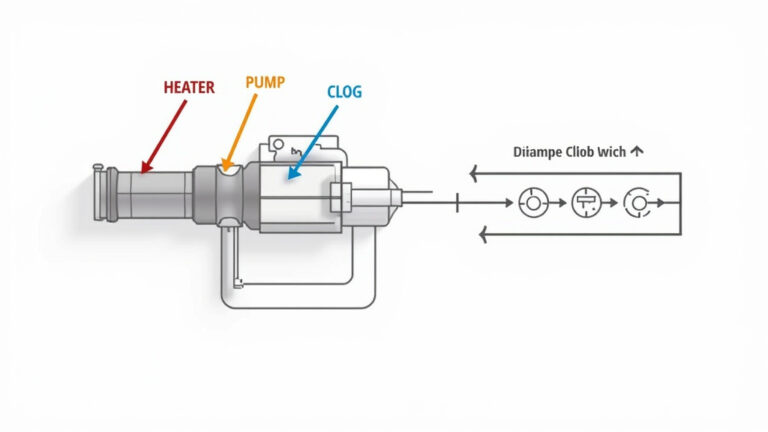
Most consumer fog machines use a standard AC piston pump like the SP-12A. You’ll see a cylindrical metal casing with two wires and an inlet/outlet port. Remove it from the machine, usually it’s held by one or two screws.
Open the casing. You’ll find a solenoid coil, a metal plunger, a return spring, and a small rubber seal. The plunger moves back and forth 50 or 60 times per second (depending on your country’s AC frequency).
Clean every part with distilled water. Scrub the plunger shaft gently with a soft brush. Check the rubber seal for cracks or swelling. A swollen seal means old fog machine fluid has degraded and attacked the material.
Reassemble in the exact order. The spring sits inside the plunger cavity. The seal fits over the plunger shaft. Misplacing the spring causes weak vibration and no fluid movement.
I tried cleaning a pump with isopropyl alcohol once. The alcohol dried out the rubber seal. It shrunk and cracked after two days of use. The pump leaked internally and the machine dripped fluid onto the floor. Now I only use distilled water or vinegar for internal parts.
TL;DR: Open the pump only if syringe cleaning fails. Clean the plunger and seal, reassemble precisely.
The SP-12A Pump: Diagnosis and Replacement
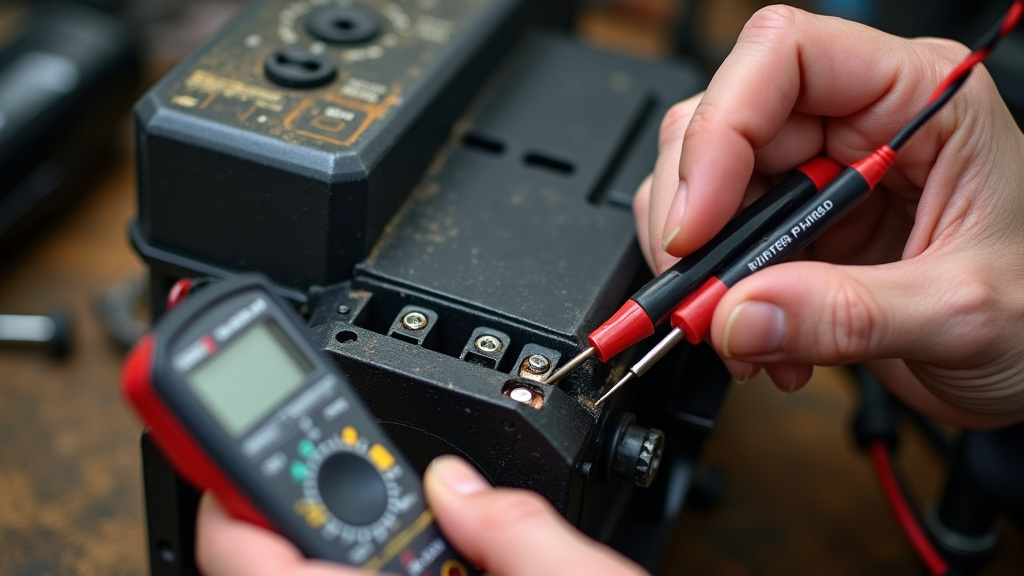
The SP-12A is a 120V AC piston pump rated for about 18–22 watts. It’s the go-to replacement for many machines. If your pump is silent, test the voltage at its terminals with a multimeter. You should see 120V AC (or 240V in some regions) when the fog button is pressed.
If voltage is present but the pump is dead, the coil is burned out. Replace the entire pump.
If no voltage reaches the pump, trace the wiring back. Check the fuse on the control board. Look for a thermal cut-off switch that might have failed. Sometimes the fault is in the button mechanism itself.
The SP-12A pump coil operates on half-wave AC due to a small diode on its circuit board. This diode can fail, causing the pump to receive full-wave power and vibrate erratically. It burns out the coil within hours. If you replace the pump, check that diode on the old unit, if it’s blown, you might need to replace it on the new pump’s board too.
Replacement is straightforward. Match the mounting holes and port orientations. Connect the wires to the same terminals. The pump doesn’t care about polarity.
Run a test without fluid first. You should feel a strong, rapid vibration when you press the button. Then reconnect the fluid line.
| Pump Type | Voltage | Common Use | Replacement Notes |
|---|---|---|---|
| SP-12A | 120V AC | Consumer fog machines | Direct swap, check diode |
| DC Diaphragm Pump | 12V DC | Portable / battery units | Needs DC power source |
| Modified Washer Pump | 12V DC | DIY replacement | Requires transformer & rectifier |
Step-by-Step Pump Replacement
- Unplug and cool. Let the machine sit for 30 minutes.
- Remove the old pump. Unscrew its mounting bracket. Disconnect the two wires and the fluid tubes.
- Identify the replacement. Match voltage and physical size. An SP-12A for an SP-12A.
- Mount the new pump. Use the same screws. Ensure the inlet port aligns with the fluid tube.
- Connect wires. Same terminals as before. If the old pump had a diode on its board, inspect it.
- Reattach fluid lines. Push the tubes firmly onto the barbed ports.
- Test dry. Press the fog button briefly. Feel for vibration.
- Test with fluid. Fill the tank with proper fog machine liquid and run a full fog cycle.
Skip step 7, and you might install a dead pump. You’ll reopen everything.
After replacement, run a cleaning cycle with distilled water to flush any debris from the lines. Then use fresh fluid.
Voltage Conversion: Replacing an AC Pump with a DC Pump
Some DIY guides suggest using a 12V DC car windshield washer pump as a cheap replacement. This works, but you must convert your machine’s AC power to DC.
An AC output is 120V alternating current. A DC pump needs 12V direct current. You need a step-down transformer and a bridge rectifier. Wiring them incorrectly sends AC into the DC pump, destroying it instantly.
If you’re not comfortable with basic electronics, stick with an AC replacement pump. The cost difference is negligible, and the reliability is higher.
I installed a DC washer pump in a machine once, forgetting the rectifier. The pump vibrated violently for three seconds, then smoked. The coil melted. The machine’s internal fuse also blew. I spent more on the replacement parts than a new SP-12A would have cost.
Preventing Future Pump Failures
Pumps fail from neglect. Three habits keep them running for years.
First, use only compatible fog fluids designed for your machine. Thickened or specialized fog fluid for theatrical use is fine, but avoid using plain water or homemade mixtures. They leave deposits.
Second, never leave fog juice inside the machine for long-term storage. After use, run a pump cycle with distilled water to flush the system, then empty the tank. Residual fluid degrades and gums up the plunger seal.
Third, clean the nozzle pinhole monthly with a pin or needle. This tiny orifice is the first point of clogging. A clean nozzle prevents back-pressure that strains the pump.
Store the machine in a dry place. Humidity corrodes the pump’s metal parts.
TL;DR: Use good fluid, flush after use, clean the nozzle monthly.
Frequently Asked Questions
My fog machine hums but produces no fog. Is the pump broken?
Probably not. A humming pump is receiving power and trying to work. The issue is a clog in the fluid path. Start with the syringe force-cleaning method before assuming pump failure.
Can I use any 12V pump to replace my fog machine pump?
No. You must match the power type. If your original pump is AC (like the SP-12A), a 12V DC pump will not work without adding a transformer and rectifier circuit. Always replace an AC pump with an AC pump.
How do I know if my pump is the SP-12A model?
Look at the pump casing. It’s usually a cylindrical metal can about 2 inches long. The label might say “SP-12A” or “120V AC.” If there’s no label, check the machine’s manual or search for your fog machine models online, many manufacturers list replacement part numbers.
What’s the difference between a clogged pump and a burned-out pump?
clogged pump vibrates or hums when you press the button. A burned-out pump is completely silent and shows no vibration. Test with a multimeter: if voltage reaches the silent pump, the coil is dead.
Why does my pump work intermittently, producing fog in bursts?
This is usually an airlock in the fluid line or a kinked intake tube. Tap the pump casing firmly to dislodge air bubbles. Also check that the fluid tank is properly seated and the intake filter isn’t blocked.
Is it worth repairing a fog machine pump, or should I just buy a new machine?
Repair is almost always worth it. A new pump costs between $20 and $40. A new machine costs $100 or more. If the heater is still functional, replacing the pump restores the machine for a fraction of the cost.
The Bottom Line
A silent pump needs voltage testing and likely replacement. A humming pump needs cleaning. Start with the syringe method, it fixes most clogs without opening the machine.
When you open the pump, clean the plunger and seal with distilled water only. Reassemble with care.
Replace with an exact voltage-match pump. The SP-12A is the standard for AC machines. Avoid DC pump swaps unless you can add the required electronics.
Finally, prevent the problem. Use high-quality glycol-based fluids, flush the system after use, and store the machine dry. Your pump will last for seasons.