Homemade Low Lying Fog Juice Recipe for Ground-Hugging Fog
This post contains affiliate links. As an Amazon Associate, we earn from qualifying purchases.
To make low lying fog juice, mix 30-35% 100% pure vegetable glycerin with 70-65% distilled water by volume. This creates the dense aerosol base. The low-lying effect itself is achieved by chilling this output with a fog machine’s ice compartment, a separate fog chiller, or a DIY cooling setup.
Most guides get the recipe half right but miss the physics. They’ll give you a glycerin ratio and call it a day. Your fog still rises because the secret isn’t just in the bottle, it’s in the temperature drop between the machine’s heating element and the room air.
This guide walks through the exact two-ingredient mix, explains why propylene glycol is a different tool, and details the chilling methods that turn a cloud into a creeping ground effect. We’ll also cover what breaks a machine and how to test your mix safely.
Key Takeaways
- The standard low lying fog juice recipe is 1 part glycerin to 3 parts distilled water (25% glycerin). For thicker fog, increase to a 35% glycerin mix.
- Distilled water is non-negotiable. Tap water minerals calcify on the heating element and clog the pump within a dozen uses.
- The fog only stays low if it’s cooled below ambient air temperature. A machine with an ice compartment or a separate fog chiller is mandatory.
- 100% pure vegetable glycerin (USP-grade) is the only safe glycerin for this. Avoid anything labeled as a skin product with additives.
- Always test a 100ml batch in your machine before mixing a full liter. Compatibility varies, and a bad batch can leave a sticky residue.
The Core 2-Ingredient Recipe
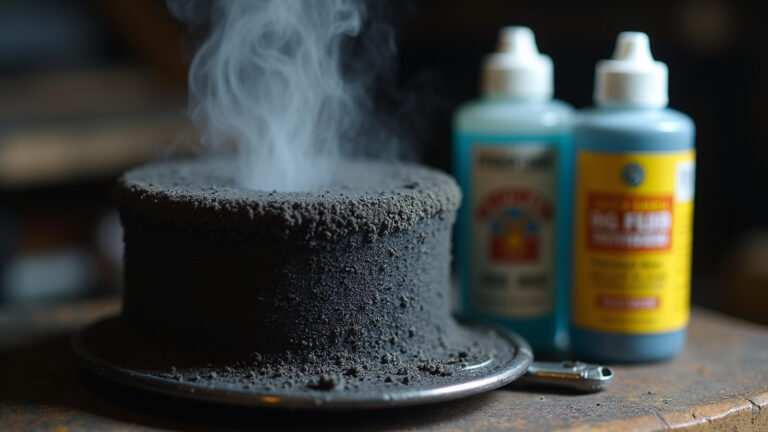
Open your cabinet. You need two things: a bottle of distilled water and a bottle of 100% pure vegetable glycerin. The glycerin must be USP-grade, sold as a food or cosmetic ingredient. The stuff marketed as a skin moisturizer often has perfumes or oils that will gum up your machine’s internals. I learned this after a $30 bottle of “natural glycerin” left a film that required a full teardown of my Chauvet 1301.
Glycerin is a humectant, it attracts and holds water molecules. In the fog machine’s heating chamber, this mixture vaporizes into a dense aerosol of larger, heavier water-glycerin droplets. Larger droplets fall faster and resist evaporating into the air. That’s your foundation.
The most reliable starting ratio is a 1:3 mix by volume: 25% glycerin to 75% distilled water. For a 1-liter batch, that’s 250ml of glycerin and 750ml of water. This produces a solid, general-purpose low-lying fog. If you need a thicker, more persistent blanket, like for a haunted house corridor, step up to a 35% glycerin mix (350ml glycerin, 650ml water). More glycerin means thicker fog, but it also increases the fluid’s viscosity. Some cheaper pumps struggle with mixes over 40%.
A 35% glycerin to 65% distilled water mixture produces aerosol droplets with approximately 40% greater mass than a standard 15% mix, according to fluid dynamics models of theatrical fog. This increased mass is the primary factor in its faster settling rate.
Common mistake: Measuring by “glugs” or cup estimates, the density difference between glycerin and water means volume estimates are off by 15% or more. An inaccurate ratio is the main reason a batch feels “weak.” Use a graduated measuring cup or a kitchen scale (1ml of glycerin ≈ 1.26 grams).
TL;DR: Mix 1 part 100% pure vegetable glycerin with 3 parts distilled water for a standard batch. Use a measuring cup.
Why Propylene Glycol Is a Different Tool
You’ll see propylene glycol (PG) in discussions about making fog machine fluid. It’s not a substitute for glycerin; it’s a different ingredient for a different job. Think of glycerin as a thickening agent and PG as a dispersant.
Propylene glycol vaporizes into much finer, lighter aerosol particles. These particles hang in the air longer, creating a uniform haze that fills a room evenly. It’s the standard for water-based fog fluids used in concert lighting because it doesn’t settle on equipment. Combining PG with glycerin can create a hybrid effect, some body with better dispersion. A common hybrid formula for a versatile haze is 20% glycerin, 10% propylene glycol, and 70% distilled water.
| Ingredient | Primary Effect | Particle Size | Best For | Risk If Skipped |
|---|---|---|---|---|
| Vegetable Glycerin | Thickens, adds density | Large, heavy | Low-lying ground fog, dense atmospherics | Fog rises and dissipates in under 60 seconds. |
| Propylene Glycol | Disperses, creates haze | Fine, light | Room-filling haze, light beam effects | Fog appears patchy and won’t hold in lighting. |
| Distilled Water | Base carrier fluid | N/A | All recipes | Mineral deposits destroy the heating element. |
Ethylene glycol is sometimes mentioned as an alternative. Don’t go there. It’s toxic and its fumes are a serious health risk. Stick with food-grade, USP-certified propylene glycol if you experiment with hybrid mixes. Your lungs and your guests will thank you.
The Non-Negotiable Chilling Step
Here is the part every beginner misses. You can mix the perfect 35% glycerin batch, but if your fog machine blows it out hot, it will billow upward every single time. Warm air rises. Your fog is mostly warm, moist air. Physics wins.
To get low lying fog, you must cool the fog output below the temperature of the surrounding air. This is achieved with a fog chiller. There are three practical ways to do this:
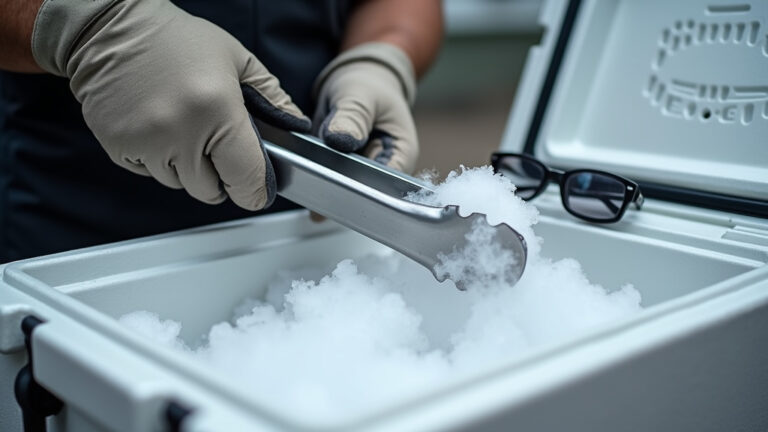
- Integrated Ice Compartment: Many machines marketed for low-lying fog have a built-in chamber where you load ice above or around the output pipe. The fog passes through this cold zone.
- Separate Fog Chiller: A standalone device, often a cooler or insulated tube filled with dry ice or ice packs, that the fog is routed through.
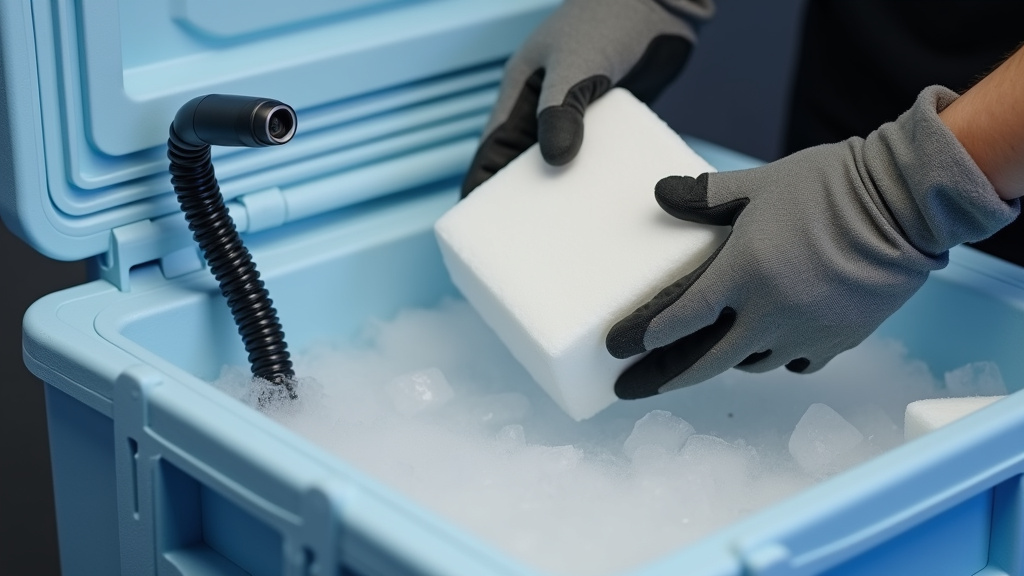
- DIY Chiller: The most common is a modified ice chest. You run a length of flexible tubing from the fog machine into the chest, coil it inside among ice or dry ice, and run the outlet tube out the other side.
The choice depends on scale. For a home Halloween setup, the ice compartment on a machine like the Chauvet Hurricane 1102 is sufficient. For a club or large stage, you’re looking at a DIY fog chiller built from a 50-quart cooler.
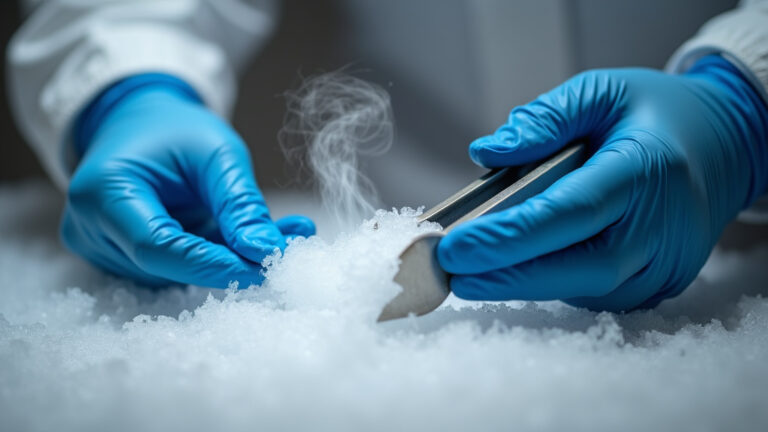
Before you start: Dry ice (solid CO2) is -78°C (-109°F). Always use insulated gloves when handling it. Never seal dry ice in an airtight container, the buildup of CO2 gas can cause an explosion. Use a cooler with a loosely fitting lid.
I once tried to shortcut this by pointing a box fan at the fog output. It just spread the warm fog around faster. The fog has to lose thermal energy, not just get pushed.
TL;DR: The fog must be physically cooled after it leaves the heating element. Use ice or a chiller. There is no workaround.
Mixing, Testing, and Storage Protocol
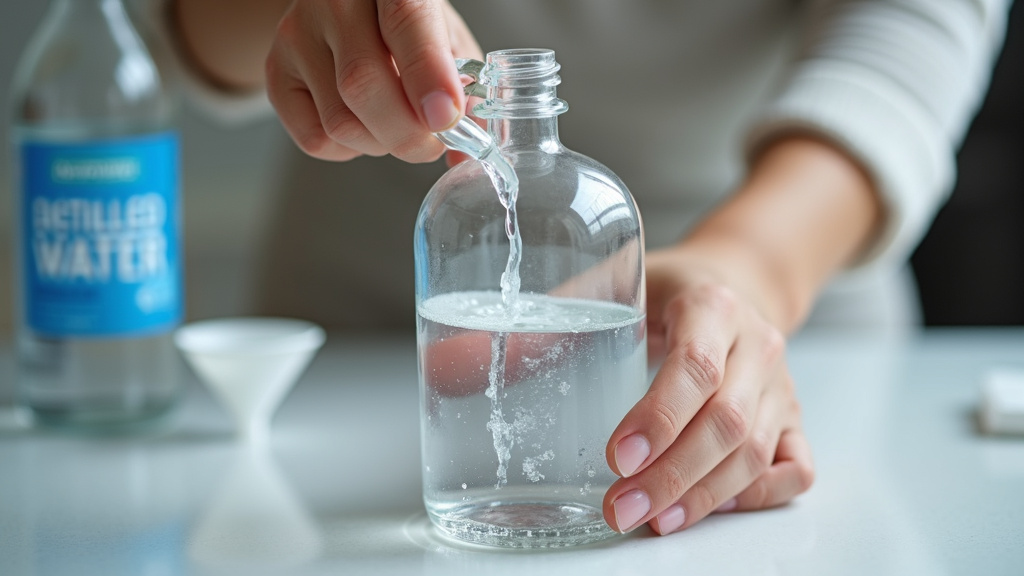
Mixing is simple, but the order matters. Always add the glycerin to your container first, then the water. If you pour water first, the thicker glycerin will stick to the bottom and sides, making it harder to dissolve completely.
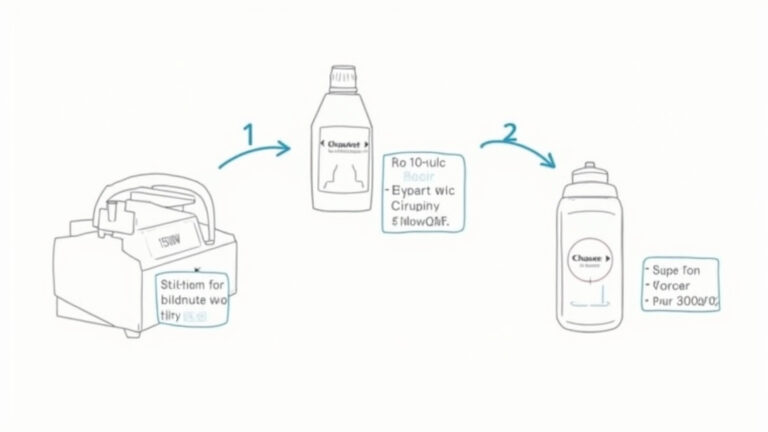
Step 1: Combine in a clean container. Use a sealable bottle that once held distilled water or a new chemical mixing bottle. Rinse it with a bit of distilled water first to remove dust.
Step 2: Agitate thoroughly. Seal the lid and shake the living daylights out of it for a full minute. You can also use a small hand mixer or milk frother for 20 seconds. The goal is no streaks or separated globs of glycerin.
Step 3: The mandatory test batch. Never fill your main reservoir with an untested gallon. Pour about 100ml of your mix into the machine. Run it with your chilling method active. Watch the fog:
* Does it crawl along the floor?
* How long does it linger (hang time)?
* Is there any oily residue on a glass plate held in the output?
If it rises, your ratio is too thin or it’s not chilled enough. If it leaves residue, your glycerin may have impurities or you’ve exceeded a 40% mix.
Step 4: Storage. Store your mixed juice in a sealed, opaque container away from heat and sunlight. Glycerin is hygroscopic and will absorb moisture from the air if left open, diluting your mix over weeks. A stable mix is good for about 6 months.
What Breaks Your Fog Machine
This is the cautionary tale. Homemade fluid is cheaper, but it comes with risks your machine’s warranty likely doesn’t cover.
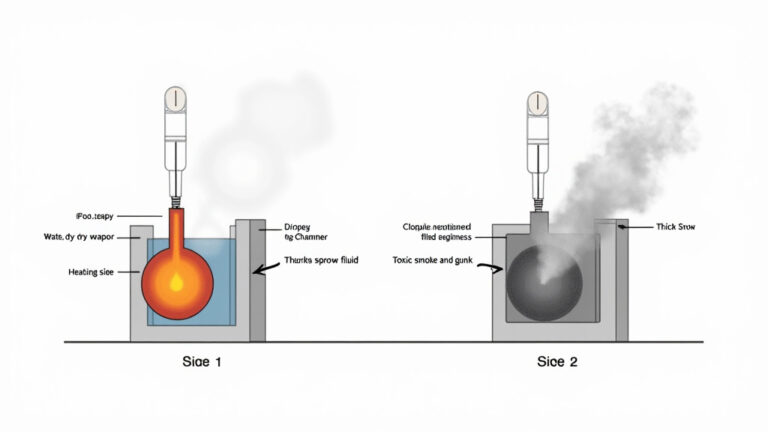
Tap Water: This is the number one killer. The calcium, magnesium, and other minerals in tap water don’t vaporize. They bake onto the 300+ degree Fahrenheit heating element like scale in a kettle. After a few uses, the layer of insulation causes the element to overheat and fail. The pump can also clog with mineral grit. It’s a slow, expensive death.
Food Coloring or Scents: It’s tempting to add a drop of red dye for “blood fog.” Don’t. The coloring agents and oils in scents carbonize on the heating element, creating a gunk that’s harder to remove than mineral scale. It also clogs the tiny nozzle. If you need colored fog, use a colored gel light pointed at white fog.
Wrong Glycerin: As mentioned, avoid glycerin products with additives. Also, never use automotive or industrial glycerin. The purity isn’t guaranteed and contaminants can release unpleasant or harmful fumes when heated.
Ignoring Residue: All fog juice leaves some residue over time, it’s mostly water vapor and a trace of glycerin. In a well-ventilated area, it’s negligible. In a sealed room with daily use, it can create a fine, slippery film on floors and surfaces. Plan for cleanup.
I ran a glycerin-heavy mix in a small basement venue for a weekend event. By Sunday night, the concrete floor had a barely perceptible slickness. A guest in socks nearly took a tumble. Now I always lay down tarps and warn the crew. The residue wipes up with water, but you have to know it’s there.
Frequently Asked Questions
Can I make fog juice without glycerin?
Yes, but not for low-lying fog. You can create a glycerin-free fog juice using propylene glycol as the primary fluid, but it will produce a fine haze that rises and hangs in the air. It won’t settle on the ground.
What’s the best store-bought low lying fog juice?
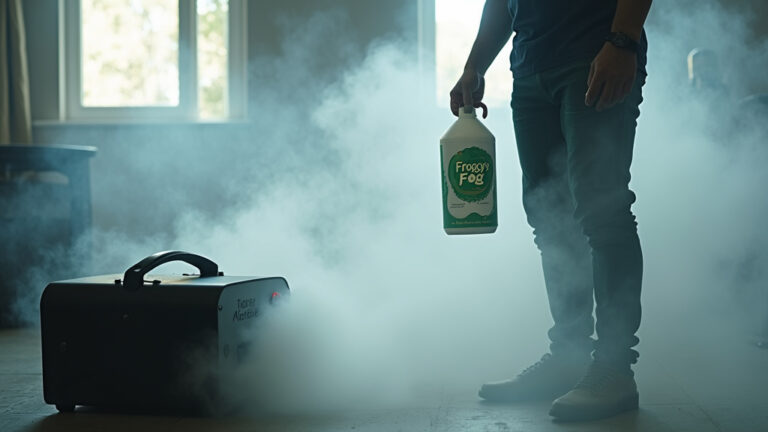
For consistency and machine warranty safety, pre-made fluids like Froggy’s Fog Swamp Juice or Chauvet Low Lying Fog Fluid are excellent. We maintain a list of the best low-lying fog juices based on density, hang time, and pump compatibility.
How cold does the fog need to be?
The fog needs to be cooler than the ambient air to sink. A temperature drop of 10-15 degrees Celsius (18-27 degrees Fahrenheit) is usually sufficient. This is why ice (0°C/32°F) works well in a typical 20°C (68°F) room.
Is homemade fog juice safe to breathe?
The fog from a proper distilled water and USP-grade glycerin mix is generally considered safe for occasional use in well-ventilated areas. It’s similar to the vapor from an e-cigarette (which also uses glycerin and PG). However, individuals with asthma or severe respiratory sensitivities should avoid prolonged, direct exposure. Always prioritize ventilation.
The Bottom Line
Making your own low lying fog juice cuts the cost to a few dollars per gallon. The recipe is simple: precise ratios of pure glycerin and distilled water. The real magic, and the step you can’t skip, is chilling the output. Whether you use a machine’s ice bin or a homemade chiller, that cold shock is what turns a rising cloud into a creeping ground effect.
Start with the 25% glycerin mix. Test it. If it doesn’t hug the floor, check your chilling method before you tweak the ratio. And for the sake of your machine’s heating element, that distilled water is non-negotiable. Get those two things right, and you’ve got a reliable, affordable supply of atmosphere for any spooky, or spectacular, scene.