Fog Machine vs Smoke Machine: How to Choose the Right One
This post contains affiliate links. As an Amazon Associate, we earn from qualifying purchases.
Choose a fog machine for safe, fast-dissipating haze using water-based fluid. Choose a smoke machine for dense, lingering clouds using oil-based fluid, but expect oily residue and potential indoor safety issues. The core difference is the fluid chemistry, which dictates the output’s density, duration, and cleanup.
The difference between a fog machine and a smoke machine is the fluid. A standard fog machine uses a water and glycol-based fluid heated to create a visible vapor. A true smoke machine uses a concentrated oil-based fluid, producing a denser, longer-lasting cloud that leaves an oily residue. The terms are used interchangeably in marketing, but the fluid chemistry changes the output, cleanup, and indoor safety.
People get this wrong because they buy the machine labeled “fogger” and pour in the thick, cheap fluid meant for a different type of device. The result is a clogged heating element within a month and a sticky film on every surface that smells like burnt plastic for weeks. The machine isn’t broken. You used the wrong chemistry.
This guide cuts through the marketing. You’ll learn how to read a spec sheet for the truth, match fluid to machine type, and pick the right device based on your actual room size and tolerance for cleanup.
Key Takeaways
- The core difference is fluid: glycol/water-based for fog (cleaner, less residue), oil-based for smoke (denser, leaves oily film).
- “Smoke machine” in a product description usually means a high-output fogger; true oil-burning smoke machines are rarer for consumer use.
- Residue is inevitable but manageable. Glycol-based fog leaves a light, sugary film. Oil-based smoke leaves a greasy residue that damages electronics and fabrics.
- Wattage dictates coverage, not quality. A 400W machine fills a garage. A 1500W machine fills a gym. Buy for your largest expected space.
- Always test your machine and fluid combo in the actual venue at least 24 hours before the event. Odor and hang time change with humidity and temperature.
What’s the Actual, Physical Difference?
Forget the labels on the box. Look at the fluid bottle. The chemical composition of the liquid you pour into the tank dictates whether you get fog or smoke, regardless of the machine’s brand name.
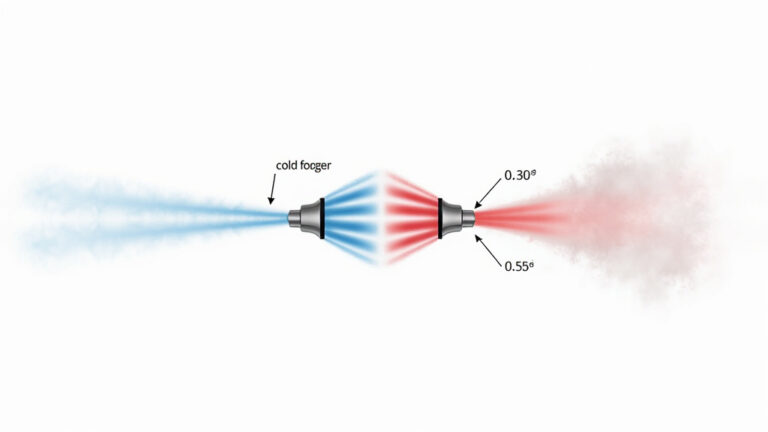
A standard fog machine, like a Chauvet Hurricane 700 or an ADJ Fog Fury, uses a pump to push a mixture of distilled water and glycol (or glycerin) over a metal heating element. The element runs between 300°C and 400°C. This flash-heats the fluid, creating a vapor that condenses into a visible cloud when it hits the cooler room air. The output is a white, opaque cloud that disperses in 5 to 15 minutes depending on air circulation.
A 1000W fog machine vaporizes a glycol-water fluid at approximately 350°C, producing a cloud with a particle size between 0.1 and 1 micron. This particle size allows the fog to hang in the air, enhancing light beams without immediately falling to the floor.
A true smoke machine, in the technical sense, uses a different process. It vaporizes a mineral oil or hydrocarbon-based fluid. This often requires a higher operating temperature and produces a cloud with a different particulate composition. The smoke is denser, hangs longer, and leaves a distinct oily residue. These are less common in the consumer and prosumer market; what’s often sold as a “smoke machine” is just a powerful fog machine.
TL;DR: Check the fluid spec, not the machine name. Glycol/water equals fog. Oil equals smoke and a big cleanup job.
Fog Machine vs Smoke Machine: A Side-by-Side Breakdown
This table shows what happens when you follow the manufacturer’s intended fluid. Using oil-based fluid in a glycol-designed machine voids the warranty and causes permanent damage.
| Aspect | Fog Machine (Glycol/Water Fluid) | Smoke Machine (Oil-Based Fluid) |
|---|---|---|
| Primary Fluid | Propylene Glycol or Glycerin + Distilled Water | Mineral Oil or Hydrocarbon-based fluid |
| Output Density | Dense, opaque cloud | Extremely dense, thick, long-lasting cloud |
| Residue | Light, hydrophilic film (feels slightly tacky, cleans with water) | Oily, hydrophobic film (requires solvent-based cleaners) |
| Typical Hang Time | 5–15 minutes in still air | 15–30 minutes or more |
| Best For | Indoor parties, theaters, enhancing light beams, Halloween | Outdoor events, industrial simulations, dramatic film shoots |
| Machine Maintenance | Monthly cleaning with vinegar solution to prevent clogs | More frequent, thorough cleaning required to prevent oil buildup in the pump |
The oil-based smoke machine’s advantage in density comes with a real cost. That oily residue coats everything. It’s the reason most venues have clauses in their contracts about fog and smoke effects. I learned this after a small club gig. We used a high-output machine with the wrong fluid. The next day, the DJ’s mixer faders were gummy, and the venue charged us for a professional cleaning of the fabric wall panels. The fluid was twenty percent cheaper than the name-brand stuff. The cleaning bill was forty times the savings.
How to Choose Based on Your Venue and Event
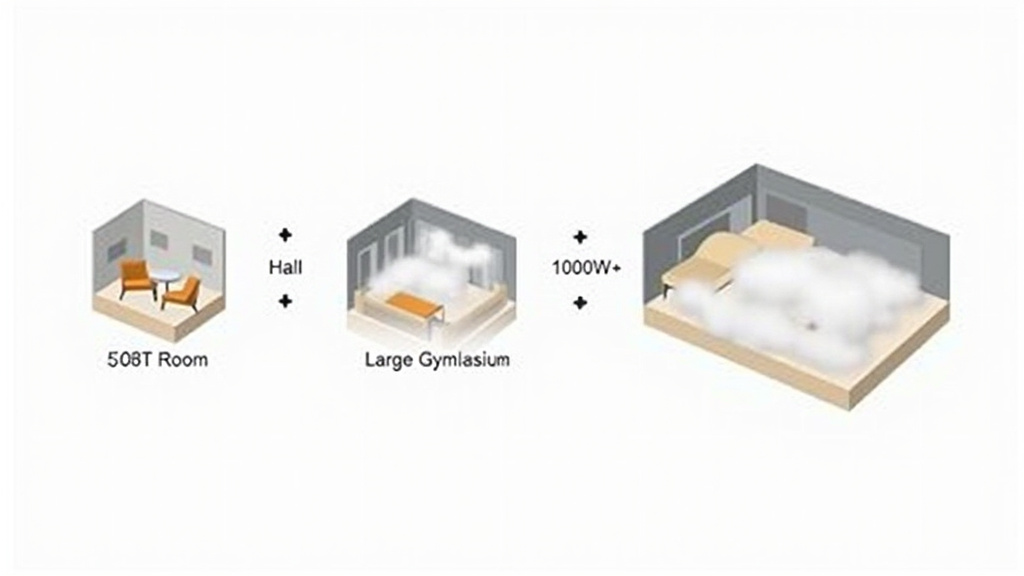
Wattage is your first filter. It’s a rough proxy for how much air the machine can fill. A 400W to 700W unit is for a living room, basement, or small classroom. A 1000W to 1500W machine handles a large garage, school cafeteria, or mid-size hall. For a full-size gymnasium, auditorium, or outdoor area, you need 2000W or more.
- Small Indoor Parties (Basement, Living Room): Use a low-wattage (400-700W) fog machine with standard glycol fluid. Avoid oil-based fluids entirely. The residue in a confined space is overwhelming and a pain to clean off home electronics and furniture.
- Theatrical Productions or Church Stages: You need control. Look for a machine with a DMX control input, like the Chauvet Hurricane 1800 Flex. This lets you tie the fog output to lighting cues for precise effects. Use haze fluid (a specialized, slower-dissipating fog fluid) to make light beams visible without obscuring the actors.
- Outdoor Halloween Displays or Festivals: Power and density win. A high-wattage (1500W+) fog machine is mandatory to combat wind. While oil-based smoke would be denser, glycol-based is safer and easier to manage. For ground effects, pair it with a low-lying fog machine that uses a chiller.
- Concerts or Club Nights: This is where professional haze machines (a subtype of fog machine) shine. They output a fine, non-opaque mist that hangs in the air for an hour, making laser and moving light beams dramatic without choking the audience with thick clouds.
Common mistake: Buying a machine just powerful enough for your space, you lose output over time as the heating element wears. Buy the next wattage tier up. A 1500W machine running at 70% capacity lasts years longer than a 1000W machine running at 100% and struggling.
The Fluids: Your Most Important Choice
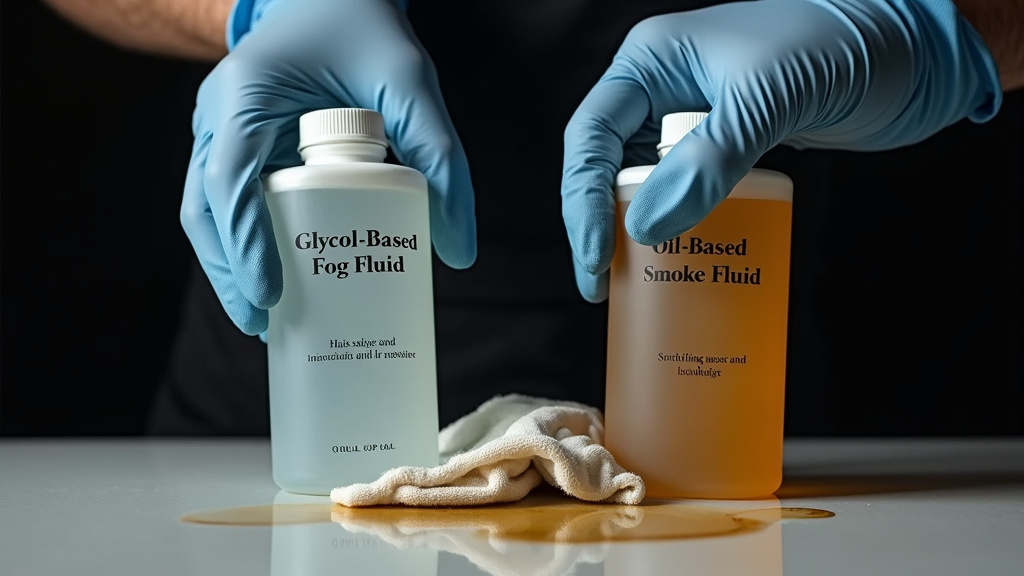
The machine is just a heater and a fan. The fluid creates the effect. Using the wrong fluid is the fastest way to ruin your equipment and your event.
Glycol-Based Fog Fluids: These are the standard. They come in various “densities”, a higher glycol concentration produces a thicker cloud that hangs longer. They are water-soluble. Cleanup involves wiping surfaces with a damp cloth. They can leave a faint, sweet-smelling film on glass and smooth surfaces if overused. For most users, starting with a reputable brand of fog machine fluids is the safe play.
Oil-Based Smoke Fluids: These produce the classic, dense “Hollywood smoke.” They are not water-soluble. The residue is oily and attracts dust. It can damage speaker cones, gum up electronic contacts, and stain fabrics. Their use is often prohibited in public venues with sensitive equipment. They are more common in film production or dedicated industrial spaces.
Haze Fluids: A specialized type of fog fluid with additives to make the microscopic particles repel each other. This causes the haze to hang almost motionless in the air for extended periods without becoming opaque. It’s the choice for lighting effects in theaters and concerts.
You cannot mix fluid types. Do not top off glycol fluid with oil fluid. Do not use “homemade” mixtures of distilled water and glycerin from the pharmacy in a professional machine. The pump and heating element are calibrated for specific viscosity and purity. Off-spec fluid leads to clogs, inconsistent output, and that burnt smell.
Safety, Residue, and Real Talk
All atmospheric effects come with trade-offs. Acknowledging them saves you headaches.
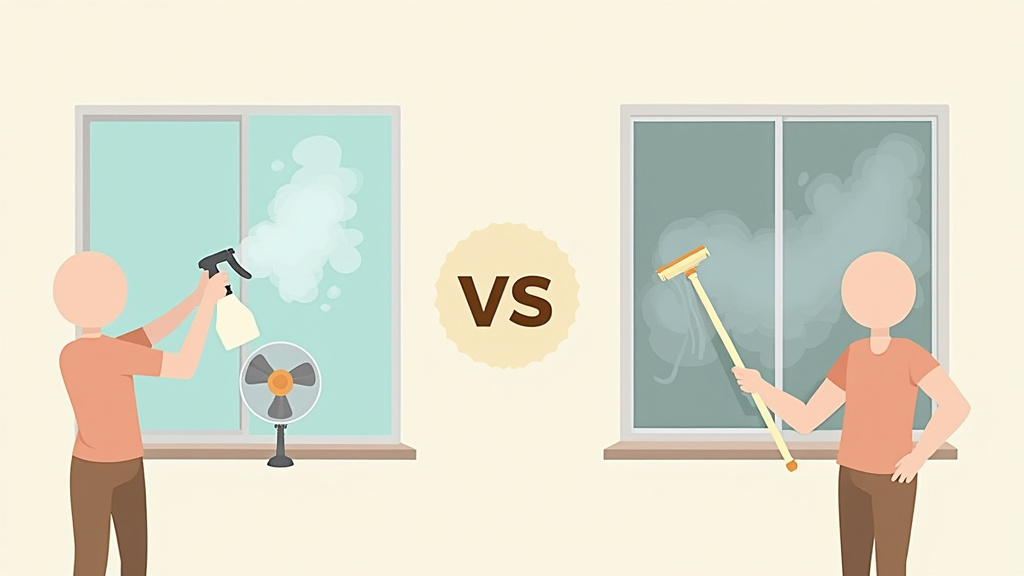
Ventilation and Health: Any particulate in the air can irritate respiratory systems. People with asthma or sensitivities may react. It’s not the “chemicals” in standard, name-brand glycol fluids, they are generally non-toxic. It’s the particulate matter itself. Always ensure the space is well-ventilated. Have a fan ready to direct fog away from audience seating or DJ booths. Our article on health effects of fog covers this in detail.
Residue is Inevitable: Even the cleanest glycol fog will leave a fine film on surfaces over time. The higher the glycol content, the more residue. Oil-based smoke is far worse.
* To minimize fog residue: Use the machine intermittently, not continuously. Run a fan to disperse the fog evenly, preventing it from settling in one spot. Wipe down glass and metal surfaces at the end of the night with a mixture of water and white vinegar.
* You cannot prevent oil-based residue. You can only plan for a major cleanup.
Indoor vs. Outdoor: Fog behaves differently outside. Wind dissipates it instantly. Cold air can cause it to fall to the ground. For reliable outdoor fog machine use, you need a high-output machine and should place it upwind of your target area. Consider a dry ice fogger for a wind-resistant ground-hugging effect.
Before you start: Unplug the machine before filling fluid to prevent accidental activation. Always use fluid from a sealed container, old or contaminated fluid can harbor bacteria that gets aerosolized. Never point the output nozzle directly at people or open flames.
Frequently Asked Questions
Can I use a fog machine as a smoke machine?
No, not in the technical sense. You can use a fog machine with thick fluid to create a dense cloud, but it will not replicate the specific density and hang time of true oil-based smoke, and you risk clogging the machine. Use the fluid type specified in your machine’s manual.
Which is worse for residue, fog or smoke?
Smoke machine residue is objectively worse. Oil-based residue is greasy, attracts dust, and requires chemical solvents to clean. Glycol-based fog residue is water-soluble and wipes away easily, though it can still be noticeable on glass and smooth surfaces after heavy use.
Are fog machines safe to breathe?
When used with standard, name-brand glycol-based fluids in a well-ventilated area, fog machines are considered safe for general use. The primary risk is irritation from the particulate matter, not toxicity from the fluid itself. Individuals with respiratory conditions should exercise caution.
Why does my fog machine smell bad?
burnt chemical smell usually means one of three things: the heating element is coated with burnt fluid from using the wrong type, the fluid is old and degraded, or the machine is running while nearly empty, causing the element to overheat. Use the correct, fresh fog machine liquids and never run the pump dry.
How long does a gallon of fog juice last?
It depends entirely on your machine’s wattage and how you use it. A 400W machine running short bursts might use a gallon in 6-8 hours of runtime. A 1500W machine running continuously might use a gallon in 2-3 hours. For a standard party, a one-liter bottle is often enough.
Can I use haze fluid in any fog machine?
Most modern fog machines can use haze fluid, but you should check your manual. Haze fluid is thinner and may require a different pump setting. Using it will not damage a machine designed for standard fog fluid. It simply produces a different, longer-lasting effect perfect for lighting.
The Bottom Line
Stop looking at the machine name. Look at the fluid bottle. Your choice between a fog effect and a smoke effect is made at the store when you buy the liquid, not the hardware. For 95% of users, home Halloween parties, school dances, club nights, theater groups, a standard fog machine with quality glycol-based fluid is the correct, safe, and manageable tool.
Invest in a machine with more wattage than you think you need. Buy name-brand fluid from a reputable supplier. Test your setup in the actual space before the audience arrives. That last step is the one professionals never skip. It reveals airflow dead zones, residue patterns, and odor issues you can’t predict on paper. Get that right, and the difference between fog and smoke becomes an artistic choice, not a cleaning nightmare.