Is Dry Ice Toxic? The Real Dangers You Can’t See
This post contains affiliate links. As an Amazon Associate, we earn from qualifying purchases.
Dry ice is toxic because it sublimates into carbon dioxide (CO2) gas, which displaces oxygen and acts as a direct poison at high concentrations. The immediate frostbite hazard is severe, but the invisible, odorless gas buildup in enclosed spaces is the deadliest risk, leading to asphyxiation and CO2 poisoning within minutes.
Most people fixate on the cold. They worry about gloves and burns. That concern is correct, but it’s the secondary threat. The primary danger is a gas you cannot see or smell filling a room, a vehicle, or a walk-in freezer. You pass out before you realize you’re in trouble.
This guide breaks down the two-pronged toxicity of dry ice: the direct chemical hazard of CO2 and the physical damage from extreme cold. We’ll cover the specific exposure limits, the real-world incidents that prove the risk, and the non-negotiable safety steps that prevent disaster.
Key Takeaways
- Dry ice’s toxicity stems from CO2 gas, not the solid itself. One pound of dry ice expands into about 250 liters of gas, silently displacing breathable air.
- CO2 is a toxicant, not just an asphyxiant. Concentrations above 1000 ppm cause headaches and impaired cognition; levels above 40,000 ppm (4%) can cause convulsions and coma within minutes, even if some oxygen remains.
- No standard glove protects indefinitely. Use insulated cryo-gloves or heavy leather for brief handling, and always use tongs. Skin contact for more than 2–3 seconds causes frostbite.
- Never store dry ice in airtight containers. Sublimating CO2 can generate pressures exceeding 20,000 psi, causing explosive ruptures of bottles, coolers, or freezers.
- Always dispose of dry ice by passive sublimation in a well-ventilated area. Never dump it in sinks, toilets, or trash cans, where it can damage plumbing or create localized gas traps.
The Two Faces of Dry Ice Toxicity
Dry ice isn’t toxic in the way arsenic is. You don’t ingest it and get poisoned. Its toxicity is a mechanical and chemical process. The solid carbon dioxide at -109°F (-79°C) will freeze your cells on contact. That’s a cryogenic injury. The real systemic toxicity, however, happens when it transforms from solid to gas. This sublimation is constant and unavoidable at room temperature. Every pellet is a ticking gas generator.
The gas it produces is the same carbon dioxide you exhale. But in a confined space, concentration is everything. The ambient CO2 level outdoors is about 400 parts per million. In a poorly ventilated room with a block of dry ice, that number can climb to lethal levels in under an hour. The gas doesn’t just suffocate you by pushing oxygen out. At high enough concentrations, it directly interferes with your nervous system.
A standard block of dry ice sublimating on a lab bench can elevate the CO2 concentration in a small, closed office to over 30,000 ppm (3%) within 30 minutes. At that level, according to the CDC carbon dioxide hazards guide, rapid onset of dizziness, increased heart rate, and shortness of breath occurs. Unconsciousness follows soon after.
TL;DR: The solid burns you; the gas it becomes can kill you by both suffocation and direct poisoning. Managing both risks is non-negotiable.
How Dry Ice Actually Poisons You
Forget the idea that dry ice only kills by replacing oxygen. That’s part of the story. Carbon dioxide has a direct toxic effect on the human body that kicks in before oxygen levels become critically low.
The mechanism is physiological. High concentrations of CO2 in your blood lead to a condition called hypercapnia. Your blood becomes acidic. This acidity disrupts enzyme function and electrolyte balance. Your brainstem, which regulates breathing, gets overloaded with the very signal it uses to tell you to breathe. The result can be paradoxical: you might stop breathing even if there’s still oxygen available. The NCBI dry ice lessons learned case study details an incident where a researcher was found unconscious in a cold room. Oxygen monitors showed adequate O2, but CO2 levels from sublimating dry ice had spiked to toxic concentrations.
The exposure limits set by OSHA tell this two-part story:
– Permissible Exposure Limit (PEL): 5,000 ppm (0.5%) averaged over an 8-hour workday. Prolonged exposure above this causes headaches, fatigue, and difficulty concentrating.
– Immediately Dangerous to Life and Health (IDLH): 40,000 ppm (4%). Exposure at this level leads to swift intoxication—dizziness, confusion, increased blood pressure, and unconsciousness within minutes.
| CO2 Concentration | Physiological Effect | Timeline of Onset |
|---|---|---|
| 1,000 – 2,000 ppm | Headaches, drowsiness, poor concentration | 1–2 hours of continuous exposure |
| 5,000 – 10,000 ppm | Labored breathing, increased heart rate, nausea | 30 minutes to 1 hour |
| 30,000 – 40,000 ppm | Dizziness, confusion, visual disturbance | 5–10 minutes |
| > 40,000 ppm (IDLH) | Unconsciousness, convulsions, coma, death | 1–5 minutes |
These numbers aren’t abstract. They explain why someone can walk into a walk-in freezer containing dry ice, feel dizzy almost immediately, and collapse before they can turn around to leave. The gas is heavier than air. It pools at floor level, creating an invisible, lethal layer.
The Two-Second Burn Rule and Inadequate Gloves

The thermal hazard is straightforward and brutal. Dry ice contacts skin. Skin freezes. Water in your cells crystallizes, rupturing tissue. What starts as a sharp sting—a “thermal pinch”—blossoms into a white, waxy frostbite wound that looks and heals like a severe burn.
The common mistake is glove choice. People reach for latex, nitrile, or cloth gardening gloves. These are useless. They provide no meaningful thermal insulation against -109°F. The cold transfers through them in seconds. The correct tools are thermally insulated gloves, often called cryo-gloves, or very thick, dry leather gloves. And even these are not for prolonged handling.
Common mistake: Using thin chemical-resistant gloves for handling — the cold penetrates in under 5 seconds, causing frostbite on fingertips before you can react. The injury presents as a deep, painful blister 12–24 hours later.
Here is the only safe handling protocol:
1. Don insulated gloves. Slip on cryo-gloves or heavy leather work gloves.
2. Pick up tools. Use metal tongs, a plastic scoop, or even a thick cloth to move pieces. Your goal is to have zero direct glove-to-ice contact time.
3. Keep it moving. If you must touch it with a gloved hand, do not grasp. Use a brushing or rolling motion. No single spot on the glove should be in contact for more than two seconds.
Your eyes are at risk, too. Chipping or cutting dry ice can send tiny, super-cooled shards flying. Safety glasses are a minimum. A full face shield is better. I learned this the hard way years ago, chiseling a block for a Halloween effect. A rice-sized piece ricocheted off the table and landed on my cheekbone, just below my glasses. It felt like a hot poker. It left a small, white scar for months. Now the face shield goes on before the chisel comes out.
Storage and Disposal: Where Explosions Happen
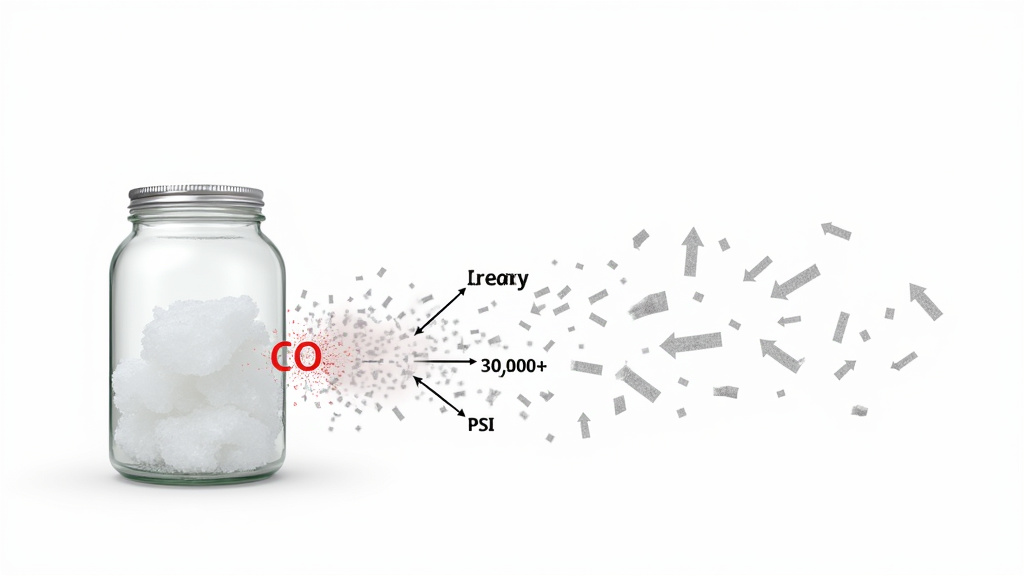
This is where complacency meets physics. Dry ice sublimates. The gas has to go somewhere. If you trap it, pressure builds. Rapidly.
The math is intimidating. One pound of dry ice becomes roughly 8.5 cubic feet of CO2 gas at room temperature. Seal that in a one-gallon glass jar, and the pressure can exceed 20,000 pounds per square inch. No household container is rated for that. The failure is violent and explosive. Screw-top plastic bottles, glass mason jars, and sealed coolers have all become fragmentation grenades in garages and labs.
| Container Type | Risk Level | Why It Fails | Safe Alternative |
|---|---|---|---|
| Glass Jar / Bottle | Extreme | No pressure relief; glass shatters into sharp shards. | Never use. |
| Plastic Screw-Top Container | High | Threads fail or lid blows off; plastic shrapnel. | Never use. |
| Sealed Hard Cooler | High | Latches or hinges fail under pressure; lid rockets off. | Use only with latches disengaged or lid cracked open. |
| Sealed Freezer / Fridge | Extreme | Gas pools inside; door seals tightly; asphyxiation hazard for next person who opens it. | Never use. |
| Styrofoam Cooler with Lid Ajar | Low | Allows gas to vent while retaining cold. The only recommended short-term storage. | Lid placed loosely on top, not snapped shut. |
The same principle governs disposal. You might think tossing leftover pellets down the drain is fine. It is not. The extreme cold can crack PVC or porcelain sinks. The massive gas release in your pipes can force CO2 back up through other drains, creating a pocket of gas in your bathroom or kitchen. The only correct method for safe dry ice disposal is to let it sublimate away in a well-ventilated, unoccupied area. Put it in its open cooler in the garage with the door open, or outside on a patio. Let nature do the work.
TL;DR: Storage requires pressure relief. Disposal requires ventilation and patience. Sealing dry ice in anything is constructing an explosive device.
Dry Ice in Entertainment: Fog Machines and Special Effects
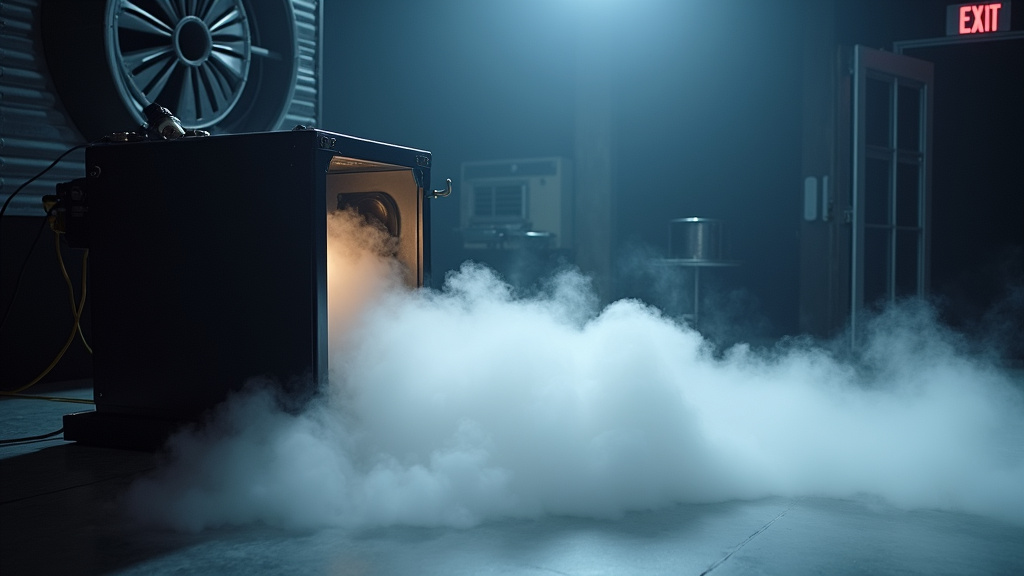
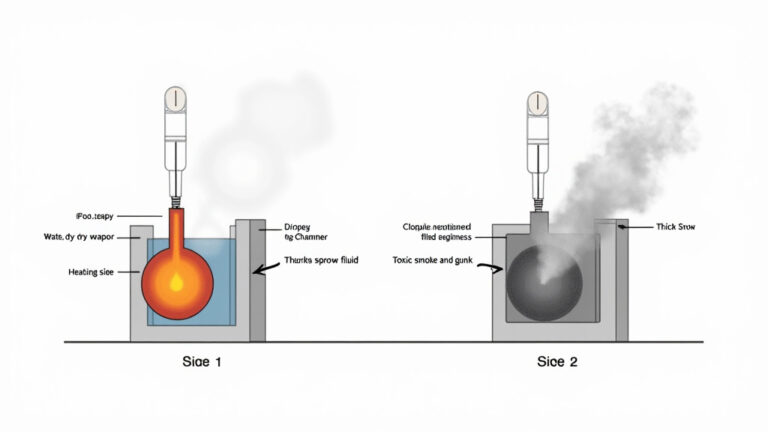
In my world of fog machines and special effects, dry ice holds a particular fascination. It creates that perfect, low-lying, creeping ground fog that water-based fog fluids cannot replicate. But using it directly in a standard dry ice in a fog machine is a sure way to destroy the pump and heater. Those machines are designed for glycol-based fluids, not for chilling and thermal shock.
The proper way to harness it is with a dedicated commercial dry ice fog machine. These units have insulated chambers and often a separate heat exchanger to safely create the fog effect. Even then, all the toxicity rules apply tenfold. You are generating vast amounts of CO2 fog in a venue filled with people. Ventilation is not a suggestion; it’s a legal requirement. I’ve shut down more than one club gig where the manager wanted to pack the dance floor and then seal the doors to “keep the fog in.” That’s a recipe for mass asphyxiation.
The dry ice versus fog fluid debate often centers on effect versus safety. Fog fluid, while potentially irritating (a topic covered in our guide on fog machine health effects), doesn’t displace oxygen. Dry ice does. For any indoor use, you must have active airflow—industrial fans, open doors, or a professional HVAC system that exchanges the entire room’s air multiple times per hour. The LBL Dry Ice Safety guide from Lawrence Berkeley Lab stresses this for labs; it’s doubly critical for a crowded theater.
Recognizing and Responding to CO2 Exposure
You need to know the symptoms because they escalate quickly. This isn’t like carbon monoxide, where you feel fine until you don’t. CO2 poisoning announces itself, but you must listen.
Early signs mirror anxiety or a panic attack: headache, dizziness, shortness of breath, restlessness, and a tingling sensation in the hands and feet (paresthesia). Your heart rate climbs. If you’re in a space where dry ice is present and you feel this, assume it’s CO2 until proven otherwise. Do not try to “tough it out.”
The emergency response is simple and must be immediate:
1. Get out. Evacuate the affected person (and yourself) to fresh air immediately. Do not stop to turn off equipment.
2. Call for help. Dial emergency services. Report a possible carbon dioxide poisoning.
3. Administer oxygen. If available and you are trained, give 100% oxygen. It helps clear CO2 from the bloodstream faster.
4. Do not re-enter. The area must be ventilated by professionals with gas meters before anyone goes back in.
The aftermath can be more than physical. The asphyxiation hazard case study notes that a student who survived a dry ice incident in a cold room later developed post-traumatic stress disorder (PTSD). The psychological trauma of nearly dying, combined with the helpless feeling of asphyxiation, is a real, long-term consequence that most safety sheets never mention.
Frequently Asked Questions
Can the fog from dry ice hurt you?
Yes. The fog itself is primarily water vapor condensed by the cold CO2 gas, but it is suspended in and carried by that same concentrated CO2. Inhaling the fog means inhaling high levels of carbon dioxide. In an enclosed space, this fog is a visible warning sign of dangerous gas accumulation.
Is it safe to put dry ice in a drink?
No. It is a terrible idea. While it creates a dramatic bubbling effect, it poses multiple risks. A piece could be accidentally swallowed, causing internal frostbite. More insidiously, the sublimating CO2 in your stomach can cause rapid bloating and discomfort. Professionally, it’s banned in drinks by health codes in most jurisdictions.
How long does dry ice last in a cooler?
This depends on the cooler’s insulation, the amount of dry ice, and the ambient temperature. A general rule is that a standard Styrofoam cooler will sublimate 5 to 10 pounds of dry ice every 24 hours. It does not “melt”; it simply shrinks as it turns to gas. Always plan for more ventilation as time passes, not less.
Can dry ice damage a sink or toilet?
Absolutely. The thermal shock from -109°F material hitting room-temperature porcelain or PVC can cause cracks or outright failure. The massive gas release can also blow water out of P-traps, allowing sewer gas into your home, or pressurize the pipes. Never dispose of it this way.
What should I do if I touch dry ice?
If it was a brief, glancing contact, run the affected skin under lukewarm (not hot) water. Do not rub it. If the skin has turned white, waxy, and numb, you have frostbite. Seek immediate medical attention. Do not pop any blisters that form later.
Before You Go
Dry ice is a tool, not a toy. Its toxicity is a function of its fundamental physics—a solid that relentlessly becomes a heavy, suffocating gas. Respect the cold, but fear the invisible gas it creates. The rules are not complicated: ventilate aggressively, never seal it, handle with insulated tools, and dispose of it with intention. Whether you’re a hobbyist creating a spooky fog or a lab technician shipping samples, the principles in the Berkeley Lab safety procedures are your lifeline. Ignoring them has cost people their health, their peace of mind, and their lives. Your next step should be to review our specific guide on dry ice handling and disposal for detailed, step-by-step instructions that keep the drama on the stage and out of your safety log.