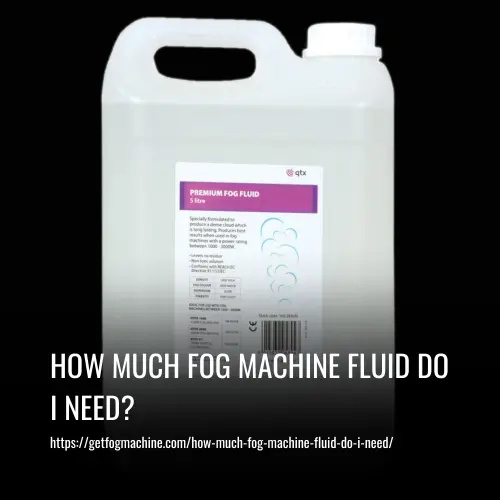
The amount of fog machine fluid you need depends on various factors such as the size of the fog machine, the desired thickness of the fog, and the duration of the desired effect. Generally, for small compact fog machines, you will need around 0.5 to 1 ounce of fluid per minute of continuous operation.
For larger professional-grade fog machines, you may need 1 to 2 ounces of fluid per minute. It is important to carefully read the instructions provided with your particular fog machine model as it may have specific guidelines for fluid usage.
Additionally, keep in mind that different types of fluid (water-based or oil-based) may require different quantities for the desired effect. It is recommended to start with a smaller amount and adjust as needed to achieve the desired fog density and duration.
Factors to Consider When Calculating Fluid Needs
When determining how much fog machine fluid you need, there are several factors to consider.
1. Determining the Size of the Area to Be Covered
To determine the amount of fog machine fluid needed for your desired fog effect, you must first determine the size of the area that needs to be covered. This will help you calculate the amount of fog solution required to achieve the desired density.
Start by measuring the dimensions of the room or space where you want to create the fog effect. Multiply the length of the space by the width to calculate the total square footage. For example, if the room is 20 feet long and 15 feet wide, the total square footage would be 300 square feet.
As a general guideline, you will need approximately 1 gallon of fog solution for every 1,000 square feet of space. In our example above, if the room is 300 square feet, you would need approximately 0.3 gallons of fog machine fluid.
It’s important to adjust the amount of fluid based on the desired fog density. If you want a thicker fog, you may need to increase the amount of fluid slightly. Similarly, if you prefer a lighter fog, you can decrease the amount of fluid used.
Consider these factors when determining the size of the area to be covered and calculating the amount of fog machine fluid needed. By doing so, you can achieve the desired fog effect for your space or event.
2. Size of the Fog Machine
When determining the size of a fog machine, there are several factors to consider. First, think about the space you need to fill with fog. If you have a small room, a compact fog machine will suffice. However, larger spaces like auditoriums or outdoor events may require a professional-grade fog machine.
Different types of fog machines consume fog machine fluid differently. Standard fog machines produce thick fog and typically use more fog juice compared to haze machines, which create a lighter, longer-lasting haze effect.
There are various types of fog machines available, including those with timers, remote controls, and adjustable hang time. Additionally, some fog machines are designed for specific applications, such as industrial use or special effects in theme parks.
To determine the amount of fog machine fluid needed, check the consumption rate of the fog machine. This rate indicates how much fog the machine produces per minute. Multiply the consumption rate by the desired operating time to calculate the amount of fluid required.
3. Considering the Duration of the Event
When calculating how much fog machine fluid you need, it’s important to consider the duration of your event. The running time of the fog machine directly affects the amount of fluid used.
The duration of the event can be influenced by several factors. First, consider how long the fog machine will be running. If it will only be used for short bursts or intermittent periods, you may not need as much fluid. On the other hand, if the fog machine will be running continuously for an extended period, you will likely need more fluid.
Additionally, the desired intensity of the fog also plays a role in determining the duration and amount of fluid needed. If you want a thick, dense fog, the machine will use more fluid compared to a lighter mist or haze effect.
By considering the duration of your event and the running time of the fog machine, you can more accurately calculate the amount of fluid needed to achieve your desired fog effect. Don’t forget to consider the intensity of the fog as well.
4. Checking the Consumption Rate of the Fog Machine
When determining how much fog machine fluid you need, it is important to check its consumption rate. This refers to the amount of fluid used by the fog machine per minute or per hour. The consumption rate can vary depending on the size and type of the fog machine.
To check the consumption rate, start by filling the fog machine’s fluid container with the appropriate type of fog machine fluid. Then, set the machine to the desired intensity setting and start the fog effect. Keep track of the time it takes for the fluid container to empty or the fluid level to significantly decrease.
Factors that can affect the consumption rate include the intensity settings of the fog machine. Higher intensity settings will typically use more fluid. Additionally, the duration of the fog effects will also impact the consumption rate.
By monitoring the consumption rate, you can determine how much fluid you need for your specific application. This information is especially useful for planning events or performances where fog effects play a significant role.
5. Determine the Intensity of the Fog
The intensity of the fog produced by a fog machine can be influenced by several factors. One of the key factors is the type and concentration of the fog machine fluid being used. Fog fluids typically contain either glycol or glycerin as their main ingredient.
The amount of glycol or glycerin in the fog fluid can affect the opacity and dissipation rate of the fog. A higher concentration of glycol or glycerin will result in a thicker and more opaque fog, while a lower concentration will produce a thinner and less opaque fog.
Different types of glycols or glycerine can also produce different effects. For example, some fog fluids may contain a particular glycol that provides a longer hang time for the fog, allowing it to linger in the air for extended periods. Others may contain a glycerin variant that produces a denser fog, creating a more dramatic visual effect.
It’s important to consider the desired effect and the intended usage when selecting the appropriate fog fluid. Factors such as the size of the space, the intensity of the desired effect, and the length of time the fog needs to last should all be taken into account.
Tips for Efficiently Using Fog Machine Fluid
To efficiently use fog machine fluid, follow these tips:
1. Adjust the output level
Most fog machines have a control knob or switch to adjust the output level. Experiment with different settings to achieve the desired fog density and coverage. Lower settings can help conserve fluid usage.
2. Use a timer
Many fog machines have built-in timers or can be connected to external timers. Set the timer to control the duration of fog production. This can prevent excessive fog usage and ensure fog is released at desired intervals.
3. Adjust the hang time
Fog machines typically have a hang time control, allowing you to adjust how long the fog lingers in the air. This is especially useful for creating specific effects or maintaining a consistent fog presence. Adjusting the hang time can help optimize fog fluid usage.
4. Use the correct type of fluid
Ensure you are using the fog machine fluid recommended for your specific machine. Different machines may require different types of fog fluids, such as water-based or mineral oil-based. Using the correct fluid ensures optimal performance and prolongs the life of your machine.
5. Consider the size and ventilation of the area
Before using your fog machine, take into account the size and ventilation of the area where the fog will be used. Larger areas may require more fluid to achieve the desired effect. Adequate ventilation can help disperse the fog and prevent it from lingering too long.
By following these tips, you can efficiently use fog machine fluid, prolonging its usage and creating captivating fog effects for various applications.
FAQs
The amount of fog machine fluid you need depends on the size and type of fog machine you have, as well as the desired fog density and duration. As a general rule, a 1,000-watt machine can usually consume around 1 ounce of fluid per minute. For smaller machines (around 400 watts), it may be closer to 0.5 ounces per minute. Keep in mind that external factors, such as airflow and temperature, can affect fog density and hang time.
The type of fog machine fluid you should use depends on your specific machine. Most fog machines can take water-based fog fluids or haze fluids. Water-based fog fluid is the most common type and can produce a thick white smoke effect. Haze fluids produce a finer mist and are often used for more subtle effects. Consult your fog machine’s user manual for the correct fluid recommendation.
Using distilled water is generally recommended for fog machines, as it helps extend the lifespan of your machine and reduces the risk of clogging. Tap water can contain impurities that may affect the functionality and lifespan of your fog machine. However, if you’re in a pinch and distilled water is not available, you can use hot water from the tap.
The duration of fog machine fluid depends on the size and output of your machine and the desired fog density. Typically, a gallon of fog solution can last for a couple of hours of continuous use in standard fog machines. Higher-end professional machines may require more fluid. Consider the size of your space and the desired fog effect when calculating how much fluid you need.
To create denser fog effects, increase the concentration of fog machine fluid in your machine. Experiment with different fluid-to-water ratios and adjust the output settings on your fog machine to achieve the desired density. Be cautious not to overdo it, as excessively dense fog can reduce visibility and create safety hazards.
Conclusion
When it comes to how much fog machine fluid you need, it’s better to have too much than too little. Don’t be afraid to experiment and have fun with your fog effects. Whether you’re setting the stage for a spooky Halloween party or creating a mesmerizing atmosphere for a concert, the right amount of fog can truly elevate your event.
So go ahead, let the fog roll in, and create a magical experience that will leave everyone in awe.