Why Does My Fog Machine Keep Turning Off? 7 Proven Fixes
This post contains affiliate links. As an Amazon Associate, we earn from qualifying purchases.
Your fog machine keeps turning off because of one of seven core failures: a clogged pump, a blown fuse, an overheating thermal cutoff, a faulty power connection, an empty fluid reservoir, a damaged internal pump, or incorrect DMX control settings. Isolate the cause by listening for the pump hum, checking for heat, and verifying fluid flow.
Most people assume the machine is broken when it shuts down. They unplug it, wait, plug it back in, and hope. That works exactly once. If the shutdown repeats, you have a physical problem, a clog, a failing component, or a safety system doing its job. Ignoring it kills the machine.
This guide walks through the diagnostic sequence I use on location. We’ll cover how to tell a clog from a dead pump, why thermal fuses blow, and the one cleaning trick that fixes 80 percent of “dead” machines without opening the case. You need a 5ml syringe, some white vinegar, and ten minutes.
Key Takeaways
- A silent pump during operation points to an electrical fault, check fuses and wiring before condemning the pump.
- Overheating shutdowns happen when vents are blocked; cleaning them adds years to the heating element’s life.
- The vinegar flush method clears mineral clogs in the pump without disassembly, but it won’t fix a mechanically seized pump.
- Using the wrong fog fluid or leaving old fluid in the tank creates a sticky residue that jams the pump head within a dozen uses.
- DMX issues mimic power failures; always test the machine in manual mode before digging into control wiring.
The 7 Most Common Causes (and How to Test Them)
Headline lists don’t help if you can’t match the symptom to the fix. Start here. Your machine’s specific behavior, a click followed by silence, a gradual power loss, or an instant shutdown, points to a different subsystem.
A Rosco Vapour Fog Machine service manual lists “unit shuts off during operation” with three probable causes: insufficient ventilation triggering the thermal protector, a low fluid condition, or a faulty remote control connection. The manual specifies a 15-minute cooldown period after a thermal shutdown before attempting restart.
The first test is always auditory. Power on the machine and trigger the fog output. Your ear tells you more than any light.
| Symptom | Most Likely Cause | Immediate Test |
|---|---|---|
| No power, no lights | Blown fuse / faulty power cable | Check outlet with another device; inspect fuse visually. |
| Clicks off after 2–3 minutes | Overheating thermal cutoff | Feel for hot air from vents; check for dust blockage. |
| Pump hums, no fog | Clogged fluid line or pump | Disconnect fluid line, try to draw fluid with syringe. |
| No pump sound at all | Pump motor failure / bad wiring | Listen for buzz; if silent, check pump voltage with multimeter. |
| Works manual, not on DMX | DMX addressing / cable fault | Switch to manual mode on machine; test with known-good DMX cable. |
| Weak, sputtering fog | Air lock in pump / low fluid | Check fluid level; tip machine slightly to purge air from pump head. |
| Grinding or squealing noise | Worn pump bearings / impeller | Sound is unmistakable; pump requires replacement. |
TL;DR: Listen first. A humming pump means electricity is getting through, focus on fluid clogs. Silence means chase the power path from the wall to the pump motor.
1. Clogged Pump or Fluid Lines
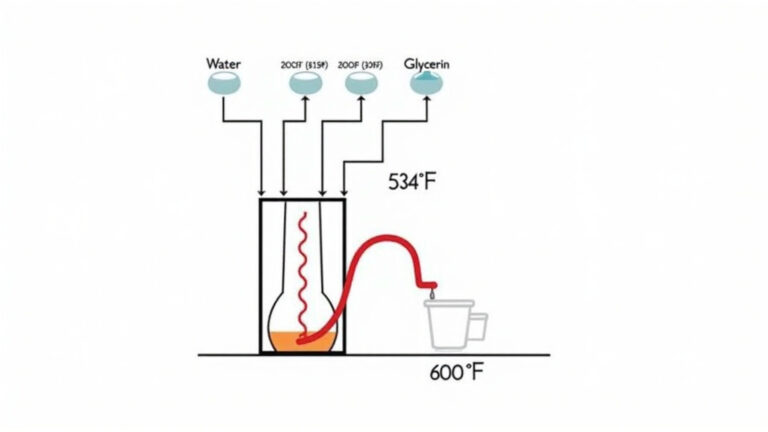
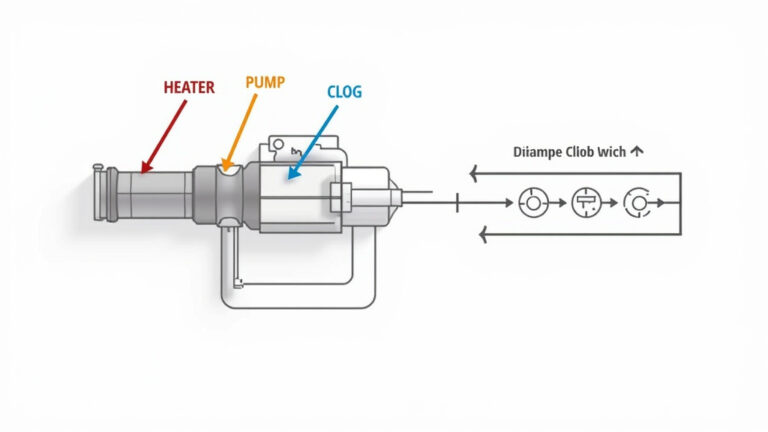
This is the champion. Fog fluid leaves a glycol-based residue as it vaporizes. Over time, that residue mixes with dust and hardens inside the pump’s tiny fluid channels and the output nozzle. The pump strains against the blockage, overheats, and the thermal protector kills the power.
You’ll hear the pump buzz or hum when you press the fog button, but little or no fog emerges. The machine might run for a few seconds then shut down. I’ve pulled pumps apart where the impeller chamber looked like it was coated in amber sap.
The fix isn’t force. It’s chemistry. A routine fog machine maintenance schedule that includes a vinegar flush prevents this.
2. Blown Fuse or Faulty Power
Machines have at least one fuse, sometimes two. An external fuse sits on the power inlet or cable; an internal fuse protects the control board. A power surge, a short, or a failing component pops it.
The machine will show zero signs of life, no lights, no pump hum, no heater glow. It’s dead. Check the obvious: is the outlet live? Is the power cable firmly seated at both ends? If yes, locate the fuse.
Common mistake: Replacing a blown fuse with a higher-amp rating, the next failure point becomes the wiring or the control board, a repair that costs ten times the fuse.
Most consumer machines use a standard 5x20mm glass fuse. Hold it to the light. The thin metal filament inside should be intact. A black smudge or a broken gap means it’s blown. Replace it with an identical amperage fuse, printed on the metal end cap.
3. Overheating and Thermal Cutoff
Fog machines are basically kettles with a pump. The heating element boils the fluid into vapor. If it can’t shed heat, the internal temperature soars. A thermal fuse, a one-time safety device, or a resettable thermal protector will open the circuit, killing all power.
This shutdown usually happens after several minutes of operation. The machine gets hot to the touch, especially near the exhaust. Let it cool for at least fifteen minutes. It might restart, only to shut down again later.
The cause is almost always blocked ventilation. Lint and dust clog the intake grilles. I once pulled a mat of pet hair from a machine used in a carpeted theater storage room. The owner thought the heater was dying. Clean the vents with compressed air or a soft brush. Make sure you’re not operating it in an enclosed space or against a curtain.
This is a direct link to machine overheating failures. Respect the thermal shutdown. It’s saving your machine from a melted wiring harness.
4. Fluid Reservoir Issues
An empty tank seems too simple, but it happens. More insidious is a tank that isn’t seated correctly on the pump’s intake valve. The pump draws air instead of fluid, creating a vapor lock. The heater runs dry, overheats, and the machine shuts off.
Some machines have a fluid level sensor that prevents operation when empty. Others don’t. Always check the fluid level first. Also, ensure you’re using fresh, recommended fog juices. Old or degraded fluid can form sludge that blocks the intake filter inside the tank.
5. Pump Motor Failure
The pump is a small DC motor with a magnetic or gear-driven impeller. The motor coils can short out, the bearings can seize, or the commutator can wear out. When this happens, the pump receives power but cannot turn.
The symptom is a silent pump when the fog button is pressed. No hum, no buzz. You might hear a faint click from the relay trying to engage. This is a distinct failure from a clog. A clogged pump still tries, you hear it strain.
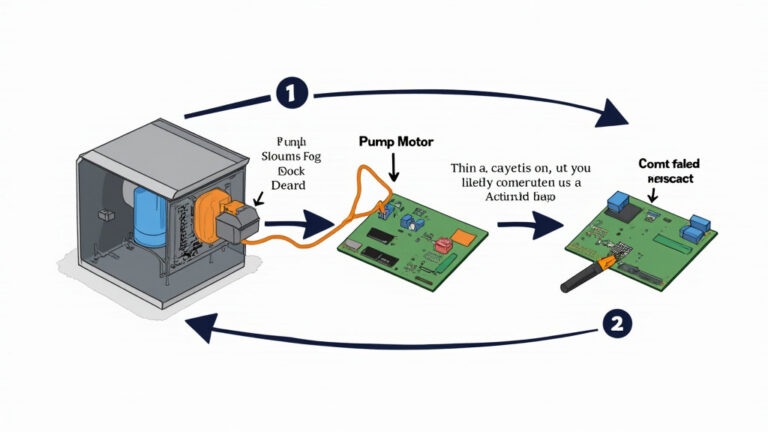
Diagnosing this requires a multimeter to check for voltage at the pump terminals when activated. If voltage is present but the pump is silent, the pump is dead. Replacing it is usually straightforward, but sourcing the exact model matters.
6. DMX or Control Board Problems
If your machine works perfectly in manual “standalone” mode but dies when connected to a DMX controller, the problem is in the control signal. The machine isn’t turning off, it’s never being told to turn on.
Check three things:
1. DMX Address: The machine’s address must match the controller’s channel.
2. DMX Cable: Use a proper 3-pin or 5-pin XLR cable, not a microphone cable.
3. Termination: On long DMX runs, a terminator plug on the last device prevents signal reflection.
A faulty DMX receiver chip on the machine’s internal board can also cause this. It’s less common, but I’ve seen it on units that endured a voltage spike.
7. Internal Wiring or Board Fault
Loose wire connectors, cracked solder joints, or a failed capacitor on the main control board can cause intermittent operation and sudden shutdowns. This is a last-resort diagnosis.
You might see flickering lights, or the machine might work only when the cable is wiggled in a certain position. This requires opening the chassis and inspecting the wiring with the power disconnected, a job for someone comfortable with live electronics.
If you’ve ruled out everything else and the machine is still unreliable, this is likely the culprit. Consider professional repair.
The Step-by-Step Diagnostic Flowchart
Don’t guess. Follow this sequence. It’s the same one I run through when a machine goes down mid-event.
Before you start: Unplug the machine and let it cool completely. The heating element and fluid nozzle can cause severe burns. Do not open the chassis if you are unsure about electrical safety.
- Verify Power Source. Plug a lamp or phone charger into the same outlet. If the outlet is dead, reset the circuit breaker. If the outlet is live, proceed.
- Check External Fuse. Locate the fuse holder on the power cord or machine body. Remove and inspect the fuse. Replace if blown. Try powering on.
- Listen for Pump Activation. Turn the machine on. Let it heat up (most have a ready light). Press and hold the fog button. Do you hear a distinct buzzing or humming from the pump area?
- If YES (Pump hums): The electrical path to the pump is good. Your problem is fluid delivery (clog, air lock, empty tank). Skip to Step 5.
- If NO (Pump is silent): The pump is not getting power. Proceed to Step 4.
- Check Internal Fuse & Wiring. Unplug the machine. Open the chassis (consult your manual). Visually inspect the internal fuse on the control board. Check for loose wire connectors leading to the pump. If you have a multimeter, you can check for continuity. If the internal fuse is blown, replace it with the exact same type. Reassemble and test.
- Inspect Fluid System. Ensure the tank has fresh fluid. Check that the tank is fully seated. Look for kinks in the fluid line. Examine the small filter screen inside the tank or at the pump intake for residue buildup.
- Test for Clogs with Vinegar Flush. This is the most effective field fix. We’ll detail it in the next section.
- Evaluate Heat and Ventilation. Run the machine. Before it shuts down, feel for airflow from the cooling vents. Are they hot and strong, or weak? Clean any blocked vents with compressed air.
TL;DR: Power → Fuse → Pump Sound. That three-step filter tells you which half of the machine is failing.
The Vinegar Flush Method for Clogged Pumps
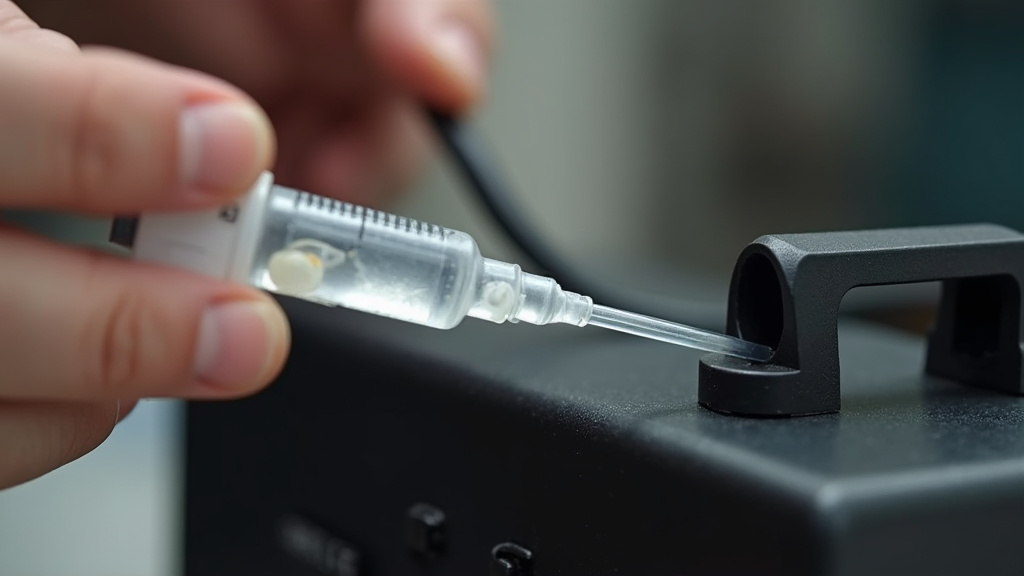
When the pump hums but no fog comes out, you have a clog. The YouTube fix with white vinegar works because the acetic acid dissolves the mineral and glycol scale. Here’s the professional method, refined from doing it a hundred times.
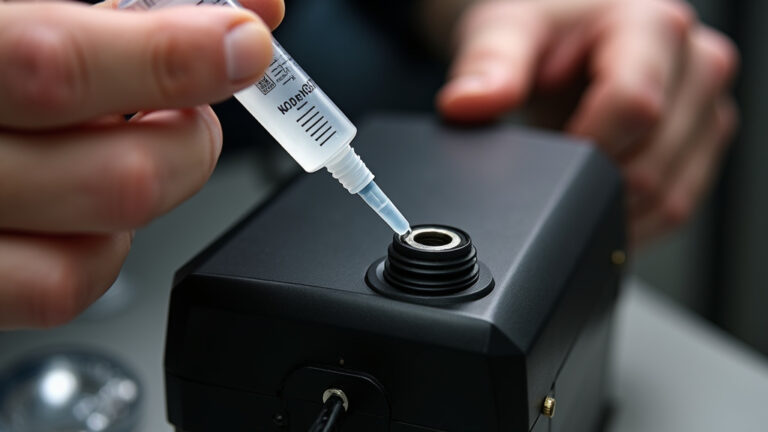
You need a 5ml plastic syringe (no needle) and distilled white vinegar. Don’t use apple cider or cleaning vinegar, the additives can gunk things up further.
I flooded a Chauvet Hurricane 1302 pump with straight vinegar after a thick clog. It took three syringe loads and letting it soak for five minutes. When it finally broke free, the pump spat out a black, tar-like plug. The machine ran for two more seasons before the pump bearings finally wore out.
- Unplug the machine and let it cool.
- Locate the fluid line where it connects to the pump. This is usually a small plastic nipple. Gently pull the tube off.
- Draw 5ml of white vinegar into the syringe.
- Attach the syringe tip firmly to the pump’s fluid intake nipple. You might need to hold it tight to form a seal.
- Gently depress the plunger. You’ll feel resistance. Do not force it. The goal is to let the vinegar soak into the clog.
- Wait 60 seconds. Press the plunger again. You should feel slightly less resistance.
- Repeat this press-and-wait cycle until you can push the vinegar through smoothly. This might take 5-10 minutes for a severe clog.
- Once clear, reconnect the fluid line to the pump. Fill the tank with proper fog machine fluid.
- Plug in the machine, let it heat, and test. The first few bursts may smell like vinegar, that’s normal.
This method fixes clogs in the pump head and the immediate fluid path. It won’t clear a clog in the final heating nozzle. For that, you need a dedicated fog machine cleaner run through a full heat cycle.
How to Prevent Your Fog Machine from Shutting Off
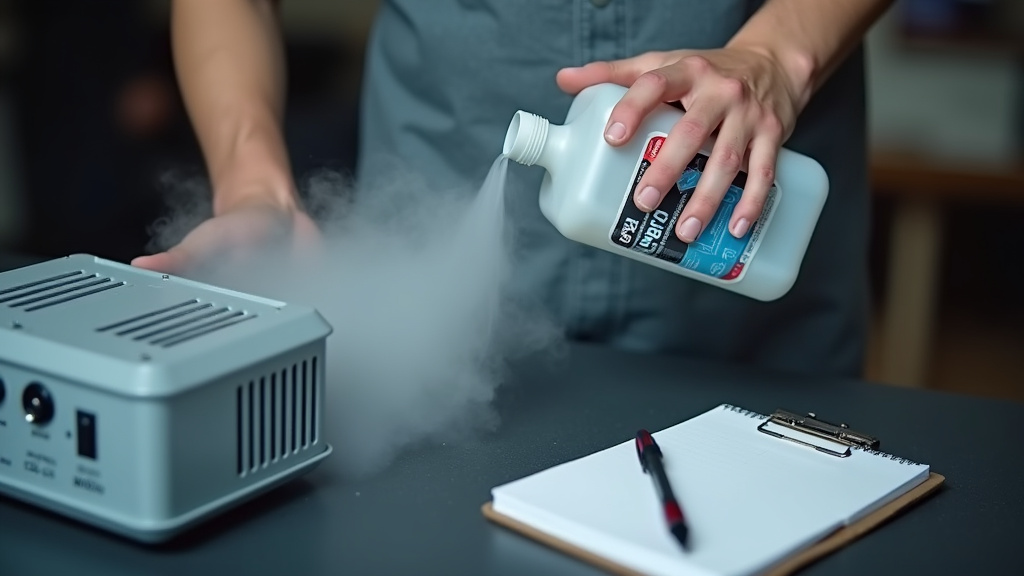
Reactive fixes are fine. Not needing them is better. A little habit change prevents most of these headaches.
- Use Quality Fluid and Store It Right. Cheap, oily fluids leave more residue. Use fluids from top fog fluid brands like Froggys or Jem. Never leave fluid in the machine for long-term storage. After your last use, run the machine until the tank is empty or switch to cleaner fluid.
- Clean the Nozzle Quarterly. Once every few months, especially after heavy use, run a tank of fog machine cleaner through a full heat cycle. This clears the vaporization chamber.
- Mind the Vents. Keep the machine on a hard surface, not carpet. Before every gig, wipe the intake and exhaust grilles with a dry cloth.
- Check Your Power. Use a dedicated outlet. Avoid long, thin extension cords that cause voltage drop, which makes the pump and heater work harder.
- Log Your Usage and Maintenance. Keep a simple notepad log with dates: fluid used, hours run, cleanings performed. When a problem starts, the log tells you what changed.
TL;DR: Good fluid, clean vents, and dry storage stop 90% of shutdowns before they begin. The log tells you why the other 10% happened.
Frequently Asked Questions
Why does my fog machine turn off after 30 seconds?
This is a classic thermal overload symptom. The machine heats up, but blocked vents prevent cooling. The internal temperature sensor hits its limit and cuts power. Unplug the machine, let it cool for 20 minutes, and thoroughly clean all air vents with compressed air before trying again.
Can a bad remote cause my fog machine to shut off?
Yes, but indirectly. A faulty wireless remote or a short in its cable can send erratic signals that confuse the control board, making it reset or enter a fault state. Test by operating the machine with its manual buttons only. If it works fine manually, replace the remote or its cable.
Is it safe to open my fog machine to check the fuse?
It can be, if you are meticulous. First, always unplug the machine and wait 15 minutes for capacitors to discharge. Only open panels as indicated in your user manual for fuse access. Do not touch any large capacitors or the heating element block. If you see complex wiring, stop and consult a technician.
How do I know if my fog machine pump is broken?
The definitive sign is silence. When you command the machine to produce fog, you should hear a clear buzzing or humming from the pump area. If you hear nothing, and you’ve confirmed power is reaching the pump (fuses are good, wiring is connected), the pump motor has likely failed and needs replacement.
Why does my fog machine work sometimes and not others?
Intermittent failures point to a loose connection or a component on the brink of failure. Check the power cord connection at both ends. Inside the machine, look for wires that are barely plugged in or solder joints that look cracked. A failing thermal fuse can also act intermittently before dying completely.
Does the type of fog fluid affect shutdowns?
Absolutely. Using water incorrectly or substandard fluid leaves mineral deposits and sticky residue that clogs the pump and nozzle. This forces the pump to overwork and the heater to overheat, triggering shutdowns. Always use the fluid type specified in your manual.
Before You Go
A fog machine that keeps turning off is telling you a story. It’s not lazy. It’s protecting itself from a clog, a power fault, or meltdown. Your job is to listen, literally, for the pump’s hum, and then methodically check the plot points: power, fluid, and airflow.
Start with the vinegar flush for any machine that hums but doesn’t fog. Check and clean the vents on any machine that dies after a few minutes. And never assume a silent machine is dead until you’ve pulled and inspected its fuse. These three actions solve the vast majority of show-stopping shutdowns on the spot. Keep a syringe and a spare fuse in your kit. They cost less than a single bottle of fog fluid and have saved more shows than I can count.