The Mechanics of Fog Machines: How They Create Mist & Fog
This post contains affiliate links. As an Amazon Associate, we earn from qualifying purchases.
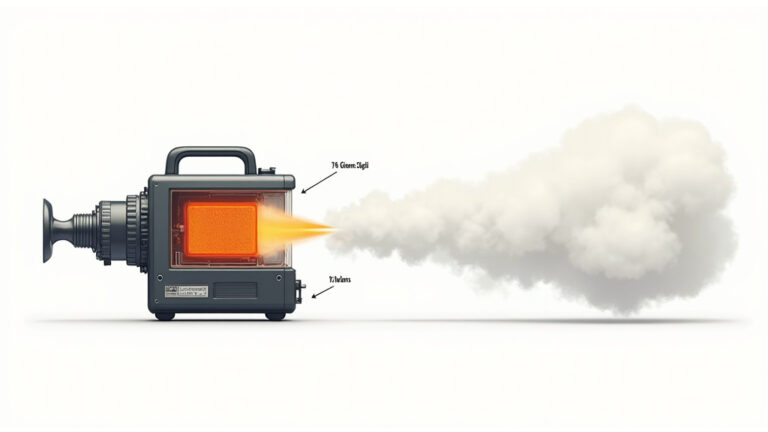
Fog machines work by pumping a specialized fluid into a heated metal block called a heat exchanger. The fluid instantly vaporizes upon contact, and this superheated vapor is forced out a nozzle. When the vapor hits the cooler ambient air, it condenses into the visible fog you see on stage or at an event.
Most people think a fog machine just heats up liquid and spits out smoke. They plug in a cheap unit, pour in whatever fluid is handy, and wonder why the output is thin, smells like burning plastic, or leaves a sticky film on every surface in the room. The machine isn’t broken. They’ve misunderstood the integrated system, the specific chemistry of the fluid, the precision engineering of the pump and heater, and the critical need for ventilation.
This guide walks through the actual mechanics. You’ll learn what happens inside the box, why professional-grade fluids matter, and how to avoid the common mistakes that kill machines or create health hazards.
Key Takeaways
- The core action is flash vaporization: fluid hits a 300–400°F heat exchanger and turns to vapor in milliseconds, not a slow boil.
- Pump and heater must be matched. A high-output piston pump paired with an undersized heat exchanger will cause fluid to “burn” instead of vaporize cleanly, creating harmful byproducts.
- Fog fluid is not interchangeable. Using water, low-grade fluid, or the wrong type for your machine leaves residue, damages components, and can release irritants into the air.
- Ventilation is non-negotiable, especially indoors. Without it, fog pools at head height, reduces visibility to zero in minutes, and can set off smoke alarms.
- Post-show flushing with distilled water prevents glycol crystallization inside the pump and heat exchanger channels, which is the leading cause of catastrophic failure in professional units.
What’s Actually Inside the Box?
Open up a fog machine and you won’t find magic. You’ll find a precisely arranged set of components that have to work in a tight sequence. Get one part wrong and the whole effect fails.
The three non-negotiable parts are the fluid reservoir, the pump, and the heat exchanger. Forget the fancy casings and LED lights, these are the organs.
The heat exchanger is a machined aluminum block with an embedded heating element and a thermostat. Industrial-grade machines, like those from Rosco or Chauvet, use a continuous-feedback loop where the pump speed adjusts based on the block’s real-time temperature to maintain optimal vaporization pressure.
The pump’s job is simple: move fluid. But it’s not just any pump. Cheap consumer machines might use a peristaltic or diaphragm pump. They’re fine for a Halloween porch. For a stage running eight shows a week, you need a piston pump. It delivers a consistent, high-pressure stream of fluid to the heat exchanger regardless of fluid viscosity or tank level. Inconsistency here means uneven fog output, a burst, then a wisp, then another burst. That looks amateurish under stage lights.
The reservoir seems straightforward. It’s a plastic tank. The mistake is treating it like a gas can. You must use the fluid specified by the machine’s manufacturer. The chemistry is formulated to vaporize cleanly at that specific machine’s operating temperature. Dump in a generic brand or, worse, try to make your own mix without knowing the exact ratios, and you’ll gunk up the works. The first sign is often a sweet, acrid smell from the nozzle, that’s the glycol breaking down into aldehydes instead of vaporizing.
The nozzle is the exit point. It’s usually brass because brass dissipates heat quickly, helping to begin the condensation process the moment vapor exits. The shroud around it gets dangerously hot, you can burn your hand on a machine that’s been off for five minutes. I learned that the hard way during a teardown of an old JEM Hazer. I powered it down, waited what felt like long enough, and went to unscrew the nozzle. The brass transferred enough residual heat to leave a blister the size of a dime. Now I wait fifteen minutes and use a cloth.
| Component | Primary Function | What Breaks If It’s Wrong |
|---|---|---|
| Heat Exchanger | Flash-vaporizes fluid | Low-quality fluid carbonizes on contact, insulating the block and causing overheating shutdowns |
| Pump | Delivers fluid under pressure | A weak pump starves the heater; a too-strong pump floods it, causing sputtering and fluid waste |
| Fluid Reservoir | Holds the fog juice | Incompatible fluid chemistry leaves viscous residue that clogs the pump inlet within 10–15 uses |
| Nozzle / Shroud | Directs vapor and protects users | A cracked or corroded nozzle disturbs the vapor stream, creating a weak, dispersed fog plume |
TL;DR: The machine is a pressurized thermal system: pump moves fluid, heater vaporizes it, nozzle directs it. Every part must match.
The 3-Step Process: How Fog is Made
The transformation from liquid to fog isn’t a gentle simmer. It’s a violent phase change called flashing. Understanding this three-step sequence explains why timing and temperature are everything.
Step 1: Pump Activation. When you hit the remote, the pump engages. It draws fluid from the reservoir and forces it into a small tube that feeds directly into the heat exchanger block. The pressure here is critical. Too low, and the fluid dribbles onto the heater, burning instead of vaporizing. Too high, and it can actually damage the internal channels. Professional machines with DMX control let you adjust this pump speed for effect density.
Step 2: Flash Vaporization. This is the core moment. The fluid, a mix of water, glycol, and/or glycerin, hits the heat exchanger surface, which is typically held between 300°F and 400°F (149–204°C). The water content instantly turns to steam, and the glycol aerosolizes. This entire change from liquid to vapor happens in milliseconds. The resulting mixture is a superheated, high-pressure vapor.
Common mistake: Using a machine before the “ready” light illuminates, the heat exchanger is below optimal temperature, so the fluid boils unevenly. The output will be a wet, sputtering mist that stains floors and fabrics, and the machine’s internal thermostat will cycle on and off trying to catch up, shortening its lifespan.
Step 3: Condensation into Fog. The high-pressure vapor blasts out of the brass nozzle. Upon hitting the cooler, ambient air, it rapidly condenses. The water vapor turns back into microscopic droplets, and the aerosolized glycol particles give these droplets enough mass to hang in the air, creating the visible fog effect. The Upstage Review fog machine guide details how the droplet size, dictated by the fluid’s exact glycerin ratio, determines whether you get a fast-dissipating haze or a dense, rolling fog.
If the ambient air is too warm or dry, this condensation happens poorly or not at all. You’ll get a transparent vapor that rises quickly and disappears. That’s why low-lying fog effects require a secondary chilling step, passing the vapor over ice or through a cooled chamber before it exits.
TL;DR: Pump pushes fluid onto a hot plate → instant vapor → vapor meets cool air and condenses into fog. Miss the temperature, miss the effect.
Fluid Chemistry: It’s Not Just “Smoke Juice”
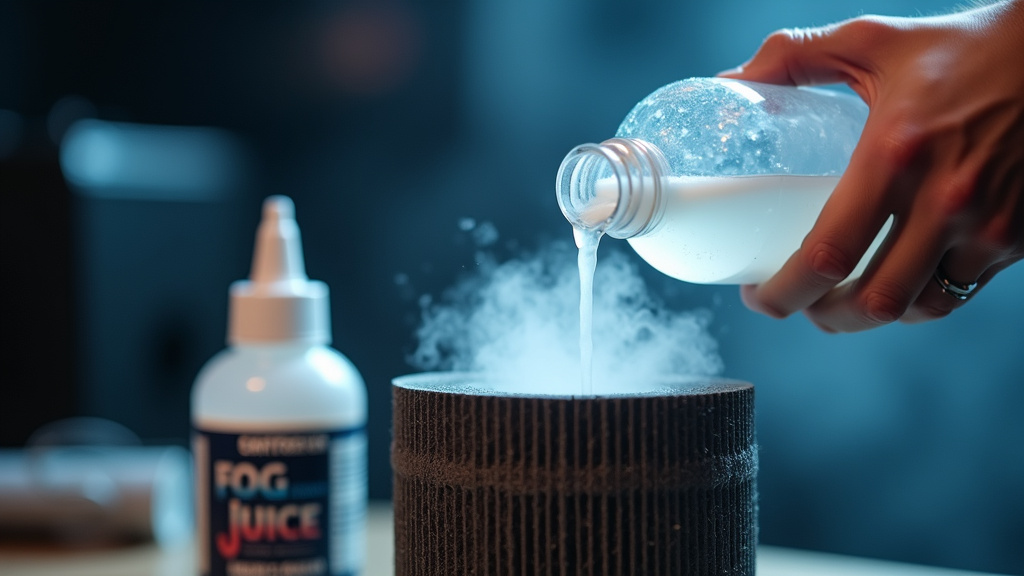
Calling fog fluid “smoke juice” is like calling gasoline “car juice.” It’s technically true but misses the entire point. The fluid’s chemical composition is the recipe for the effect.
The base is deionized or distilled water. Tap water contains minerals that scale up the heat exchanger like a kettle, reducing efficiency and eventually clogging passages. The active ingredients are glycols (like triethylene glycol) or glycerin. These are hygroscopic, they attract and hold water molecules. This property is what gives fog its body and hang time.
- Glycol-based fluids: Common in professional theatrical machines. They produce a dense, opaque fog with excellent dispersion. They also tend to have a longer fluid shelf life if stored properly.
- Glycerin-based fluids: Often used in consumer machines. Can produce a slightly sweeter-smelling fog and are sometimes marketed as “non-toxic.” However, glycerin leaves a more noticeable residue on surfaces if used heavily without proper ventilation.
The ratio of water to glycol/glycerin is proprietary and varies by brand and effect type. A fluid designed for a fast-dissipating haze might have a lower glycol concentration. A fluid for a dense, ground-hugging effect in a haunted house will have a higher concentration and specific additives. This is why buying a quality, name-brand fluid from a top fog machines manufacturer matters. The fluid is engineered for a specific vaporization point.
I won’t run a show with off-brand fluid. Early in my tech work, a venue manager bought a generic “fog juice” to save money. We used it in a Chauvet 1200. By the third night, the fog had a sharp, chemical odor that made dancers cough. The machine started sputtering. After the run, I opened it up. The heat exchanger channels were coated in a brown, caramel-like sludge. The repair bill was triple the “savings” on fluid. Now I only use fluids from recommended fog juice lists.
Attempting a DIY fog fluid recipe without a lab-grade understanding of chemical interactions and flash points is a great way to void your machine’s warranty and create a potential health hazard. The Wikipedia entry on fog machines notes that thermal decomposition of unsuitable fluids can release harmful compounds like formaldehyde.
Machine Types: Picking the Right Tool for the Effect
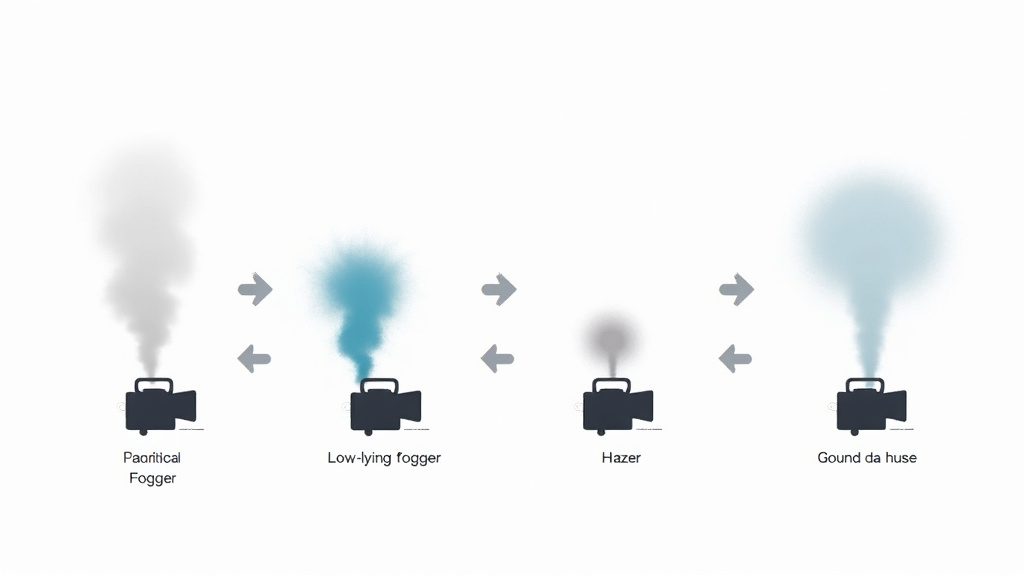
Not all fog is the same. Using a haze machine when you need dense fog is like using a spray bottle to put out a house fire. The effect will be pathetic. Here’s how the core technology branches out.
Traditional Fluid-Based Fog Machines: These are the workhorses. They use the heated-fluid process described above. They’re versatile, ranging from small 400-watt units for home use to industrial machines with multiple heating elements for concert tours. Their output is a dense, opaque fog perfect for atmosphere, obscuring, and special effects.
Low-Lying Fog Machines: These are traditional fog machines with an added chilling stage. The hot vapor is routed through a chamber cooled by dry ice, liquid CO2, or a refrigeration unit before it exits the nozzle. This drastic cooling increases condensation, creating a fog that is denser and colder than the surrounding air, causing it to sink and roll along the floor. Ideal for haunted houses or stage effects where fog needs to stay low.
Haze Machines: Hazers work on a similar principle but are designed to produce a fine, translucent mist of microscopic particles. The effect is not to obscure but to make light beams visible in the air. They use a different fluid formulation and often a more precise pump to generate a constant, low-volume output. They are the choice for concerts and theatrical lighting.
CO2 Jet Machines (Cryo Fog): These bypass the heater entirely. They use compressed liquid carbon dioxide. When the liquid CO2 is released at high pressure, it expands and cools rapidly, freezing water vapor in the air into a thick, white cloud. The effect is instantaneous, dramatic, and very cold. Used for quick bursts or “cryo” effects.
| Machine Type | Best For | Limitation / Risk |
|---|---|---|
| Traditional Fogger | General atmosphere, Halloween, stage obscurity | Can overwhelm small spaces; requires ventilation to avoid alarm triggers |
| Low-Lying Fogger | Ground-hugging effects, haunted houses | Requires dry ice or chilling mechanism; effect is highly sensitive to room temperature and airflow |
| Hazer | Enhancing lighting effects, concerts, clubs | Effect is subtle; not for “foggy” scenes; requires precise DMX control for consistency |
| CO2 Jet (Cryo) | Dramatic burst effects, music cues | Very high cost per effect; uses compressed gas cylinders; creates extreme cold near the output |
TL;DR: Dense atmosphere? Traditional fogger. Light beams? Hazer. Floor rolls? Low-lying fogger. Instant blast? CO2 jet. Match the machine to the visual goal.
The Non-Negotiable Rules of Operation and Safety

You can understand every component and still ruin a machine or a venue if you ignore the operational rules. This isn’t just about performance; it’s about safety and longevity.
Before you start:
Before you start: The nozzle and shroud reach temperatures that can cause severe burns. Assume they are hot for at least 15 minutes after power-off. Also, fog accumulation in unventilated spaces can reduce visibility to zero in under a minute, creating a tripping/panic hazard. Always have a ventilation plan.
- Preheat Fully. Turn the machine on and wait for the ready indicator. This usually takes 3–5 minutes, depending on wattage. Activating the pump early forces cold fluid onto a partially heated block. The fluid won’t vaporize fully, leading to sputtering and residue buildup inside the machine. This residue carbonizes on the next cycle, creating an insulating layer that makes the heater work harder and eventually fail.
- Use Manufacturer Fluid. This cannot be overstated. The machine’s thermal profile is calibrated for a specific fluid’s vaporization point. Substituting fluid alters this point, leading to poor vaporization or thermal decomposition. Never use plain water. For a deep dive on the risks, see our article on using water in a fog machine.
- Provide Active Ventilation. Fog is an aerosol. It hangs in the air. In a sealed room, it will fill the space from the floor up, eventually reaching smoke alarm sensors (especially optical alarms). Use fans to move air, open doors, or use exhaust systems. In a residential setting, point a fan out a window to create negative pressure.
- Post-Use Flushing is Mandatory. After your final use, especially if the machine will be stored, run distilled water through it. Many machines have a “flush” mode. If not, fill the reservoir with distilled water and run the machine until it expels clear vapor. This removes any residual glycol from the pump and heat exchanger channels. Glycol left inside can crystallize as it dries, seizing the pump or clogging the heater, the most common cause of irreparable damage. Proper machine fluid storage means an empty, clean tank.
- Inspect and Maintain. Before each season or major event:
- Check the power cord for frays.
- Inspect the nozzle for cracks or corrosion.
- Ensure the fluid tank is clean and the filter (if present) is clear.
- Listen to the pump, it should have a consistent hum. Any grinding or clicking means it’s failing.
TL;DR: Heat fully, use right fluid, ventilate aggressively, flush after use, inspect before use. Skip any step and you risk a bad effect, a broken machine, or a dangerous space.
Troubleshooting Beyond the Obvious
When a fog machine acts up, the first checks are power, fluid, and a clogged nozzle. But sometimes the problem is subtler. Here’s a diagnostic guide for when the basics don’t fix it.
Symptom: Machine powers on, heats up, but produces only a weak wisp or nothing.
- Likely Cause: Pump failure or a severe internal clog.
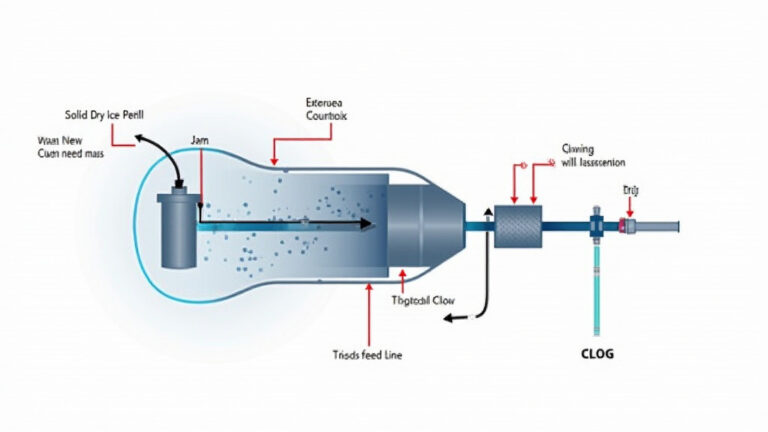
- Diagnostic: Listen closely when activating the fog output. You should hear a distinct pump motor sound over the heater’s fan. If you hear nothing, the pump motor or its control board is dead. If you hear a strained whine, the pump is jammed, likely from crystallized fluid residue.
- Fix: For a jam, a thorough flush with warm distilled water might free it. For a silent pump, it requires professional repair or replacement. This is why buying from reputable fog machine brands with serviceable parts matters.
Symptom: Fog output is inconsistent, strong burst, then weak, then strong again.
- Likely Cause: Air bubble in the fluid line or a failing pump diaphragm/piston seal.
- Diagnostic: Often happens after refilling the tank. The pump draws in an air pocket which compresses and expands, causing irregular fluid flow.
- Fix: Run the machine continuously for 30-60 seconds to purge the line. If inconsistency persists, the pump seals are likely worn and need replacement.
Symptom: Fog has a sharp, acrid, or sweet chemical smell (not the normal mild scent).
- Likely Cause: Fluid is thermally decomposing because the heat exchanger is too hot or the fluid is incompatible.
- Diagnostic: Immediately stop using the machine. The fluid is breaking down into aldehydes and other irritants. This is a health hazard and damages the machine.
- Fix: Let the machine cool completely. Drain the fluid. Flush thoroughly with distilled water. Refill with a known, high-quality fluid from a performance fog liquids manufacturer. If the smell returns with proper fluid, the machine’s thermostat may be faulty, causing overheating.
Symptom: Machine overheats and shuts off after short use.
- Likely Cause: Blocked ventilation fins on the heat exchanger, a failing cooling fan, or a severely scaled-up heat exchanger from mineral deposits.
- Diagnostic: Unplug the machine, let it cool fully, and inspect the air intake and exhaust vents. They are often coated in dust and fog residue. Also, listen to the internal cooling fan, it should spin freely and quietly.
- Fix: Carefully clean vents with compressed air. If the fan is noisy or stuck, it needs replacement. If scaling is the issue (you’ll see white mineral deposits), a professional descaling service is needed, don’t try to chip it off yourself.
Common mistake: Storing a machine with fluid in the tank over the off-season, the fluid degrades, separates, and can corrode the pump and tank. When you power up, you pump sludge into the heater. Always flush and store dry. Check the fluid degradation guidelines for your specific brand.
Frequently Asked Questions
What’s the difference between a fog machine and a haze machine?
fog machine produces a dense, opaque cloud designed to obscure and create atmosphere. A haze machine produces a fine, nearly invisible mist that hangs in the air to make light beams visible. They use different fluids and pump mechanisms. You can’t get a good haze from a fog machine, or dense fog from a hazer.
How long does the fog effect last?
It depends entirely on the fluid formula, air temperature, humidity, and ventilation. A standard glycol-based fog in a still, cool room can linger for several minutes. A fast-dissipating haze formula in a warm, ventilated space may disappear in 30 seconds. Low-lying fog, being colder, can persist on the floor for longer if undisturbed.
Are fog machines safe to breathe?
When used with high-quality, non-toxic fluids in a well-ventilated area, the fog is generally considered safe for brief exposure by most people. However, the aerosol can irritate the eyes, throat, or lungs of sensitive individuals, including those with asthma or respiratory conditions. Always provide adequate fresh air and avoid directing the output at people’s faces.
Can fog machines set off smoke alarms?
Yes, especially photoelectric (optical) smoke alarms, which detect particles in the air. Fog is an aerosol of particles. Ionization alarms are less sensitive but can still be triggered by very dense fog. It’s standard practice to disable or cover smoke alarms in performance areas during use, following venue safety protocols, and to ensure powerful ventilation.
Why does my fog machine keep clogging?
The most common causes are using low-quality or incompatible fluid, which leaves sticky residue, and failing to flush the machine with distilled water after use. This residue dries and hardens in the nozzle and the internal fluid pathways. Using distilled water in the fluid mix (or for flushing) also prevents mineral deposits from tap water from scaling up the heat exchanger.
Do I need a special machine for outdoor use?
Not specifically, but environmental factors dominate outdoors. Wind will disperse fog instantly. Sunlight and warm air will cause it to rise and vanish quickly. For outdoor effects, you often need a much higher-output machine to compensate for dispersion and may need a low-lying fogger with a chiller to combat the rising heat. Consider the warm-up time and output volume when planning for wind.
Before You Go
A fog machine is a simple thermal pump in theory, but a precision instrument in practice. Its job is to execute a violent phase change, liquid to vapor to aerosol, reliably and safely. That reliability hinges on three matched elements: a robust pump, a correctly calibrated heater, and a fluid chemically designed for that specific machine.
Choose your fluid as carefully as you choose the machine itself. Operate with ventilation as a mandatory part of the setup, not an afterthought. And clean the thing, a five-minute flush with distilled water after each use is the cheapest insurance policy you can buy. It prevents the crystallized glycol that destroys pumps and the carbonized residue that kills heat exchangers.
When it all clicks, the effect is magic. But the magic is just physics and chemistry, done right.