Perfect Teen Birthday Party Tips to Avoid Common Mistakes
This post contains affiliate links. As an Amazon Associate, we earn from qualifying purchases.
A perfect teen birthday party matches three things: the teen’s current social interests, a guest list size the location can handle, and a vibe built from music and one standout visual element. The goal is a relaxed environment where their friends can connect, not a schedule of forced games.
Most parents plan the party they remember from childhood, character themes, structured games, a cake at a set time. Teens see that as a chore. Their metric is whether their friends had fun and whether they got photos worth posting. If those two boxes aren’t checked, the party fails in their eyes, even if the cake was perfect.
This guide covers the seven shifts that move a party from a parental checklist to a teen-approved event. We’ll start with the non-negotiable collaboration step, break down budget tiers for different ideas, and explain why a single balloon arch beats a room full of streamers.
Key Takeaways
- The birthday teen must pick the guest list and theme. Your job is to execute their vision, not invent one.
- Digital invitations sent via group text or Instagram story get higher RSVP rates and set clear expectations upfront.
- One “Instagram-worthy” decor focal point, like a balloon arch or neon sign, provides all the photos guests want.
- Interactive food stations (DIY pizza, tacos, sundaes) keep teens engaged and away from awkward corner conversations.
- Curate a playlist collaboratively before the party, then let it run untouched, tinkering with the music kills the vibe.
- For pool or hotel parties, adult supervision ratios and clear rules are a safety requirement, not an option.
- A three- to four-hour runtime is ideal. Anything longer loses energy; anything shorter feels rushed.
The First Rule You Can’t Skip
You do not pick the theme. You do not guess the guest list. The entire planning process starts with a thirty-minute conversation where the teen names their top three friends and describes the atmosphere they want. A “glow-in-the-dark party” means black lights and neon bracelets, not just a dark room. A “chill hang” means board games and a movie, not a silent library.
Common mistake: Planning a retro 90s party because you think it’s cool, the teen’s friends have never seen Friends and the theme feels like a history lesson. The party dies in the first hour because the references don’t connect.
If they want a hotel sleepover, you book the room. If they want a paintball afternoon, you confirm the RSVPs because you pay for no-shows. Your role is facilitator. Their role is vision. That division prevents the most common collapse: a parent-driven party that the teen feels obligated to enjoy.
TL;DR: Sit down with your teen. Get their guest list and theme in concrete terms. Execute their vision, not yours.
Why “Instagram-Worthy” Decor Actually Works
A room covered in streamers, themed plates, and coordinated napkins reads as childish effort to a teen. They want one visual anchor, a place to take a photo that looks good on a phone screen. A balloon arch, a neon sign backdrop, or a simple garland of string lights serves that purpose. It becomes the natural gathering point for group pictures, which is the entire social currency of the event.
The psychology is straightforward. Teens document their lives visually. A party without a designated photo spot feels incomplete, like a concert without a stage. The decor isn’t about transforming the space; it’s about providing a stage. Spend your decoration budget on that one element. Use the rest of the room for functional lighting and seating.
| Decor Element | Why It Works for Teens | Budget Tier |
|---|---|---|
| Balloon arch or garland | Creates a clear, colorful backdrop for group photos; kits available online. | $50–$150 |
| Neon sign or LED backdrop | Provides a cool, custom-looking focal point; can be rented or DIY with tape. | $30–$200 |
| String light canopy | Sets a relaxed, ambient mood without feeling over-designed; reusable. | $20–$80 |
| Themed photo booth with props | Feels interactive and gives a reason to gather; props can be cheap and silly. | $40–$120 |
A single balloon arch built against a plain wall outperforms a room full of themed tableware. The arch gives every guest the same photo background, which becomes the shared visual memory of the party. Streamers scatter attention.
The first time I tried a full thematic room for a 14-year-old’s “space party,” I covered every surface with planets and stars. The kids took one photo in the corner where a black curtain accidentally made a clean backdrop. They ignored the elaborate table settings. Now I build one thing well.
TL;DR: Build one standout visual element for photos. Ignore the rest of the room’s decor. The photo spot is the party’s landmark.
Guest Lists and Digital Invites: The Numbers That Matter

A small, well-matched group beats a large, awkward crowd every time. For a home hangout, six to eight friends is the sweet spot. For a hotel sleepover, four is the practical max unless you book a suite. For a paintball or trampoline park outing, you need exact RSVPs because venues charge per head.
Digital invitations solve two problems: they reach teens where they live (their phones), and they allow you to embed the rules in the same message. A text or Instagram story invite with “Pool party at our house, 2–5 PM, no diving, parents picking up at 5” sets expectations in one swipe. Evite or Paperless Post feels like a parent’s tool to them, they’ll miss it.
- Group text: Fast, direct, and allows quick questions. Use it for small, tight friend groups.
- Instagram story: Visual, casual, and shows the vibe. Best for parties where the decor or theme is a selling point.
- Venue-specific RSVP apps: Some paintball parks or trampoline venues have their own booking links. Use those for accuracy.
Send the invite two weeks out. Follow up with a reminder text three days before the party. One-third of teens will forget or assume it’s flexible unless you restate the time.
TL;DR: Keep the guest list small and matched to the venue capacity. Send invites via phone-native methods and include the rules in the same message.
The Food That Doesn’t Get Stuck in a Corner

Teens eat when they’re comfortable. A formal sit-down meal pins them to a table and forces conversation. A DIY station lets them move, choose, and eat while standing. It’s activity disguised as food. A pizza station with pre-made dough balls, sauce, and toppings turns eating into a five-minute project. A taco bar with fillings and a sundae bar with toppings work the same way.
Place the station slightly away from the main activity area, not in the corner, but in a pass-through zone like a kitchen counter. This prevents a food clique forming in isolation. Keep the options simple: three choices for each component. More than five toppings overwhelms and slows the line.
- Pizza station: pre-rolled dough balls, marinara sauce, shredded mozzarella, pepperoni, chopped veggies.
- Taco bar: seasoned ground beef or chicken, shredded cheese, lettuce, salsa, soft tortillas.
- Sundae bar: vanilla and chocolate ice cream, chocolate and caramel sauce, sprinkles, chopped nuts.
Mocktails are a better drink option than soda. They feel special without the complexity of alcohol. A “party punch” with fruit juice, soda water, and sliced fruit in a dispenser looks intentional. Provide cups with lids to cut spill risk.
Common mistake: Putting the food in a distant corner, the shy guests congregate there for the whole party and miss the main event. The station should be a pit stop, not a destination.
TL;DR: Set up a DIY food station with three options per component. Put it in a pass-through zone. Serve mocktails in lidded cups.
Music and Playlists: The Unseen Vibe Machine

Music is the atmosphere. A killer playlist running untouched from a portable speaker beats a parent fiddling with the volume or skipping songs. The playlist should be collaborative, let the teen and two friends build it in the week before the party. That guarantees the songs are current and represent the group’s taste, not just the birthday teen’s.
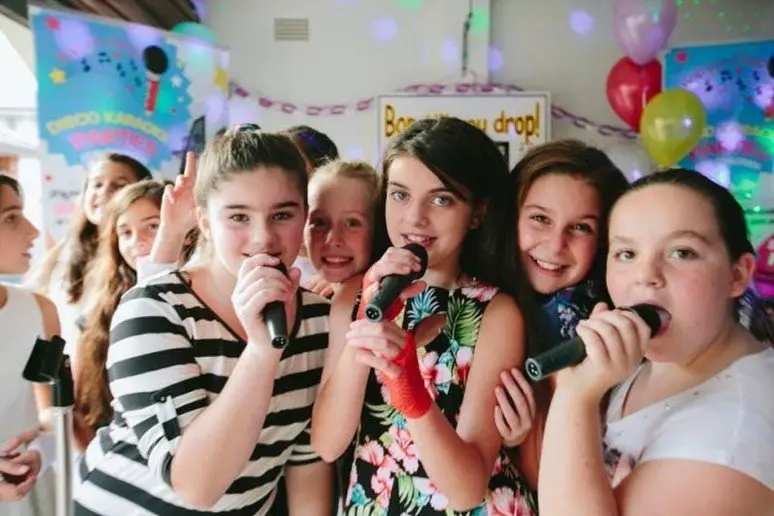
If you’re using a larger system, consider adding a karaoke machine for part of the event. It turns background music into an interactive activity without feeling like a forced game. A good home karaoke experience relies on a deep song library and clear speaker placement, crowd around the screen, not the speakers.
- Start the playlist as guests arrive. Don’t wait for a “moment.”
- Set the volume at a level where conversation is possible but the silence isn’t obvious.
- If you use a karaoke machine, limit it to a 30-minute block so it doesn’t dominate.
- Never change the playlist mid-party unless the teen asks. Your edits break the flow.
A Bluetooth speaker placed centrally is enough for most home parties. For outdoor events, a more robust portable PA system keeps the sound even. The goal is consistent, unobtrusive background sound that feels curated, not random.
TL;DR: Make a collaborative playlist beforehand. Start it at arrival and don’t touch it. If you add karaoke, keep it to a short block.
Activity Ideas That Aren’t Games
Teens reject organized games. They want optional activities that they can join or ignore without pressure. A board game left on a table, a video game console set up in a corner, or a movie playing without required viewing are all better than a scheduled round of charades.
For larger parties, consider splitting the group into two optional tracks. One group might watch a movie, another might play a video game. This accommodates different energy levels without forcing everyone into the same activity. The split works only if both options are genuinely appealing, don’t offer “movie or puzzles” if puzzles are an obvious dead end.
Here’s a breakdown of activity types by guest count and budget.
| Activity Type | Best For Guest Count | Budget Range | Why It Works |
|---|---|---|---|
| Movie night (outdoor projector) | 8–12 | $100–$300 (rental) | Passive, social, feels like an event. |
| Video game tournament (2 consoles) | 6–10 | $0–$200 (if borrowing) | Competitive but self-organizing. |
| Board game collection | 4–8 | $0–$50 | Low-energy, conversational. |
| DIY craft station (t-shirt decorating) | 6–12 | $30–$80 | Creative, yields a tangible takeaway. |
| Karaoke session | 8–15 | $100–$400 (machine) | Interactive, high-energy, photo-friendly. |
I borrowed a friend’s PlayStation for a 16-year-old’s party. I set it up in a side room with two controllers. The key was leaving it there, not announcing it. Half the group migrated there naturally over an hour. The other half stayed in the main room with the movie. Both groups felt they chose their spot.
If your party is at a venue like a pool, paintball park, or trampoline arena, the activity is built-in. Your job is to manage the logistics: transportation, payment for no-shows, and safety rules. For a hosting a house party scenario, the activity is the atmosphere itself, music, food, and space to roam.
TL;DR: Provide two or three optional activities without scheduling them. Let guests migrate naturally. For venue parties, manage the logistics, not the fun.
Budget Tiers and What You Actually Get
Party costs scale with the location and activity. A home hangout with DIY food and a borrowed speaker can run under $100. A hotel sleepover with room rental, food delivery, and decor can hit $500. A paintball outing with per-person fees and transportation can exceed $300 for a small group. Break your budget by category, not by a single total.
- Under $100: Home party. DIY food station ingredients, a balloon garland kit, and a borrowed speaker. Focus on one visual element.
- $100–$300: Home party with rented equipment. Add a karaoke machine or an outdoor projector. Upgrade the food to include a few premium toppings.
- $300–$500: Venue party. Hotel room rental, paintball park fees, or trampoline arena passes. Food is often extra. This tier requires exact RSVP counts.
- $500+: Full-service venue or elaborate theme. Includes professional decor, catering, and possibly a professional fog machines for atmosphere. This is for large groups or milestone birthdays.
The budget mistake is allocating equally across categories. Put 60% into the core activity (venue, food, music), 30% into the single visual decor element, and 10% into extras like party favors. Favors are optional, a custom t-shirt from the DIY station or a photo print from the party are better than generic trinkets.
Common mistake: Spending $200 on a room full of themed decor and $50 on food, the teens remember the dry pizza and ignore the streamers. Shift the budget to the food and music, then spend on one photo backdrop.
TL;DR: Budget 60% for the core activity (venue/food/music), 30% for one standout decor piece, 10% for extras. Party favors are optional, a tangible takeaway from the party beats a bought gift.
Safety, Supervision, and the Exit Plan
Teen parties need clear rules and adult presence, but not hovering. For a home party, be present in a separate room, available but not intrusive. For a pool party, the American Red Cross recommends a minimum of one adult supervisor for every ten swimmers, but for a teen party, I use one for every five. That ratio lets you watch without crowding.
For a hotel sleepover, communicate the rules to the attendees and the hotel staff. Tell the front desk to hold room service calls to the room. Set a check-in time where you text the teen at midnight. The goal is remote oversight, not in-room patrol.
- Home party: Adults in a separate room. Establish a “no leaving the property” rule upfront.
- Pool party: One adult supervisor per five swimmers. No diving rule stated in the invite.
- Hotel sleepover: Text check-in at midnight. Instruct hotel to block room service.
- Venue outing (paintball, trampoline): Provide transportation or coordinate parent drop-offs. Have a first-aid kit.
The exit plan matters as much as the entry. For home parties, have a clear end time and a parent pick-up arrangement. For hotel parties, schedule a morning checkout and breakfast meet-up. Cleanup starts as the party winds down, designate a trash station and have bags ready. Leaving a mess for the next day guarantees a grumpy teen and a longer recovery.
TL;DR: Set supervision ratios for pool parties. For hotel sleepovers, text check-ins and block room service. Plan the exit and start cleanup before the last guest leaves.
Frequently Asked Questions
What if my teen doesn’t want a party at all?
That’s common around ages 15-17. Offer alternatives: a dinner out with two close friends, a weekend trip to a concert, or a shopping day with a gift card. The celebration doesn’t need to be a party, it needs to feel like a special, teen-controlled event.
How do I handle friends from different groups clashing?
Split the activities as mentioned earlier. Offer two distinct options in different spaces. Often, groups will self-segregate. If tension arises, redirect to the food station, it’s a neutral, task-focused zone that diffuses conflict.
What’s a good party favor for teens?
Skip the generic trinket. If you have a DIY craft station, the item they make is the favor. If you have a photo backdrop, print a group photo for each guest. A custom Spotify playlist shared after the party also works. Tangible, personal takeaways beat bought items.
What if the weather ruins our outdoor plan?
Have a backup location ready. If the outdoor movie night gets rained out, move it indoors with a TV and the same playlist. If a pool party gets cold, shift to a board game and movie setup inside. Communicate the change via a quick group text update.
How do I deal with a teen who is introverted and overwhelmed?
Scale down. A movie night with three friends, a board game afternoon, or a themed dinner at home can feel special without the crowd pressure. The key is still a visual focal point and curated music, just for a smaller audience.
Before You Go
The metric for a teen party isn’t your checklist. It’s whether the teen felt ownership of the event and whether their friends left with good photos. Collaborate on the guest list and theme first. Build one visual anchor for pictures. Set up a DIY food station away from the main area. Curate a playlist and let it run. Provide optional activities without a schedule. Budget for the core experience, not the decor. Set clear safety rules and an exit plan.
That sequence avoids the parental party trap. It yields a relaxed, documented, teen-approved three hours. The cake is just dessert.