How to Plan a Stag Do: The Ultimate Step-by-Step Guide
This post contains affiliate links. As an Amazon Associate, we earn from qualifying purchases.
To plan the best stag party, you need a tight guest list, a realistic budget set 6-12 months out, one booked anchor activity, and a rule that everyone books their own travel. The groom’s costs are split by the group, and the itinerary must balance structure with ample downtime for pubs and chaos.
Most stag dos fail because the best man tries to herd thirty lads through a military-precision schedule via a WhatsApp group that explodes with 500 messages. The stress burns you out before the first pint is poured.
This guide walks through the real process, from that first chat with the groom to the messy, perfect morning after. We’ll cover budget hacks, how to handle flaky mates, and why booking everything yourself is a financial trap.
Key Takeaways
- Form a planning committee of 2-3 people max. A giant group chat for decision-making is a guaranteed disaster.
- Set the budget and date 6-12 months in advance. For a UK weekend, plan for £120-£400 per person, excluding the groom’s share.
- Book one solid daytime “anchor” activity. Leave the rest of the schedule loose for pubs, dinners, and spontaneous fun.
- Never front the money for everyone’s travel. Book for yourself and the groom, share the details, and let others book their own.
- The groom’s costs for travel, accommodation, and the main activity are traditionally split among the attending guests.
The 7-Step Stag Do Planning Process
Forget the generic checklists. This is the sequence that actually works, distilled from organizing more last-minute rescues and triumphant weekends than I care to count.
Step 1: The Committee Meeting (Not the Group Chat)
Sit down with the groom, in person, with a beer, and hash out the non-negotiables. Who are the 8-20 must-have people? Any absolute no-gos? Does he want a surprise or full involvement? Then, pick one or two reliable friends to form your planning committee. This trio is your brain trust. The moment you add the whole list to a WhatsApp group for planning, you get 47 conflicting opinions on Budapest versus Blackpool and the thread dies in a week. The committee decides; the group chat gets announcements.
Step 2: Budget and Date Lockdown
This is where stag dos unravel. You must set a per-person budget that’s realistic for the whole group, not just your inner circle. If three lads are also getting married that year, a £500 weekend is a hard ask. UK stag companies like StagWeb peg a typical weekend at £120-£400+. Once you have a number, multiply it by the guest count and add 15% for the inevitable “groom’s round” that you’ll end up covering. Now, lock the date. The sweet spot is 1-2 months before the wedding. Book it 6-12 months out, especially for summer or abroad.
Step 3: Location and Vibe
Location flows from budget and groom. A quiet craft beer fanatic needs a different setting than an adrenaline junkie. The goal isn’t to cram in 12 activities; it’s to pick a place that enables a great 48 hours. A central city apartment or a rural house with a large garden often beats a fragmented hotel block. Choose a loose theme, “Classic Pub Crawl,” “Outdoor Adventure,” “Gourmet Weekend”, to focus your house party planning guide energy on decorations and activity choices.
Step 4: The Travel Booking Rule
Here is the single best financial advice: book the travel and core accommodation for yourself and the groom only. Then, create the main stag group chat, drop the exact details (“Johnny’s Stag, May 6-8. We’re on Ryanair FR123 to Bratislava, staying at The Central Hotel. Link here.”), and step back. Let every other adult book their own flights and beds. Playing travel agent for 15 people means you’ll be £2,000 out of pocket chasing three who cancel. They won’t think you’re disorganized. They’ll thank you.
Step 5: The Anchor Activity
Book exactly one solid, paid, group activity for the daytime. Go-karting, a brewery tour, clay pigeon shooting. This gives the weekend a focal point and justifies the trip. It’s your anchor. Everything else. Friday night pub crawl, Saturday dinner, Sunday recovery fry-up, should be loosely scheduled but not pre-paid. Over-scheduling is the fastest way to exhaust everyone. The magic happens in the downtime between plans.
Step 6: Payment and Itinerary Distribution
Use a group payment app like Monzo Pots or Splitwise. One link for everyone to pay their share for the groom’s costs and the anchor activity. For communication, share a simple, one-page itinerary in the chat a week before: travel details, accommodation address, anchor activity time and meeting point, and a couple of dinner reservations. That’s it. No minute-by-minute breakdowns. For larger, more complex events, the logistical principles behind renting a fog machine for a big venue apply: confirm the big details early and leave room for on-the-day adjustments.
Step 7: Execution and Contingency
Your job on the day is not to be a drill sergeant. It’s to be a facilitator. Have a printed copy of the itinerary and key addresses. Have the taxi numbers saved. When the rain cancels the hiking trip, be ready with the backup pub quiz you booked “just in case.” The measure of success is the groom’s face at 2 a.m., not checking off every item on a list.
The initial planning stage requires a tight, third-person focus. Secure the date 6-12 months prior to the wedding, establish a per-person budget covering accommodation, one core activity, and a contingency fund, and confirm a central location accessible to the entire guest list. All communication flows from a single source to avoid fragmentation.
TL;DR: Plan with a committee of three, set a budget early, book one main activity, let everyone sort their own travel, and keep the schedule loose.
Budget Breakdown and Financial Etiquette
Money talk is awkward. Not having it ruins weekends. The golden rule: the groom pays for nothing. His travel, bed, meals, and activity costs are split evenly among the attendees. This isn’t a suggestion; it’s the standard.
Build your budget from the bottom up. Start with the non-negotiable fixed costs:
* Groom’s share of accommodation and travel.
* The one booked anchor activity for the whole group.
* A contingency fund of 10-15% for unexpected taxis, a round of shots, or a lost deposit.
Then, communicate the number clearly. “Lads, all-in for the weekend, flights, hotel, and karting, is looking like £280 each. That covers Johnny’s bit too.” Put it in writing in the group chat. This transparency stops the “I didn’t know it was that much” dropouts two weeks before.
| Budget Item | Who Pays? | Pro Tip |
|---|---|---|
| Groom’s Costs | Split among all attendees | Collect this via payment app first |
| Accommodation | Each attendee books own | Book a block of rooms with a free cancellation policy |
| Anchor Activity | Split among all attendees | Book this early; groups of 10+ often need deposits |
| Food & Drink | Individual rounds | Nominate a “kitty master” for group bar tabs to avoid chaos |
| Travel | Each attendee books own | Share flight/train details, but don’t book for others |
| Contingency Fund | Split among all attendees | Covers lost keys, emergency pizzas, and legendary rounds |
Common mistake: Fronting £2,000 for group flights to save £10 a ticket, you become an unpaid debt collector for six months when two lads pull out. Book your own. Share the link.
For managing shared décor or atmosphere costs, like sourcing specialty lighting, the same group-payment principle applies. Agree on a spend for items that benefit everyone, like a set of dynamic party lighting, and split the cost fairly through the kitty.
Stag Do Activity Ideas for Every Groom

The activity should mirror the man, not a lads’ mag stereotype. The goal is a shared experience he’ll remember, not just a checkbox for “something extreme.”
For the Competitive Groom: Go-karting, paintball, or a private football match. These have clear winners and losers and fuel the evening’s banter. Book a session for late morning to leave the afternoon for recovery pints.
For the Foodie Groom: A brewery or distillery tour, followed by a booked table at a top steakhouse or a messy barbecue cook-off at the rental house. The focus is on quality and taste, not volume.
For the Adventurous Groom: White water rafting, off-road driving, or a high-ropes course. These require a bit more planning and insurance checks but deliver the adrenaline spike.
For the Relaxed Groom: A round of golf, a pub crawl with a curated list of proper alehouses, or a day at the races. The pace is slower, the dress code might exist, and the focus is on conversation.
The key is to book just one of these as the official activity. The rest of the time is for the unofficial activities: the long lunch, the terrible casino, the search for the perfect late-night kebab. If your groom is the type who loves to be the center of attention with a mic, consider incorporating a karaoke machine for parties into your rental house for some unforgettable, tone-deaf memories.
Managing the Guest List and Group Dynamics
You have the groom’s school friends, his work mates, his future brothers-in-law, and his crazy cousin Dave. This powder keg of personalities is your biggest challenge.
First, the guest list is the groom’s call, but you can advise. A list of 30 means 30 opinions, 30 payment chases, and a logistically nightmare for dinner. Gently suggest a core group of 8-15. Anyone on the fringe can be invited to the “night before” local send-off instead.
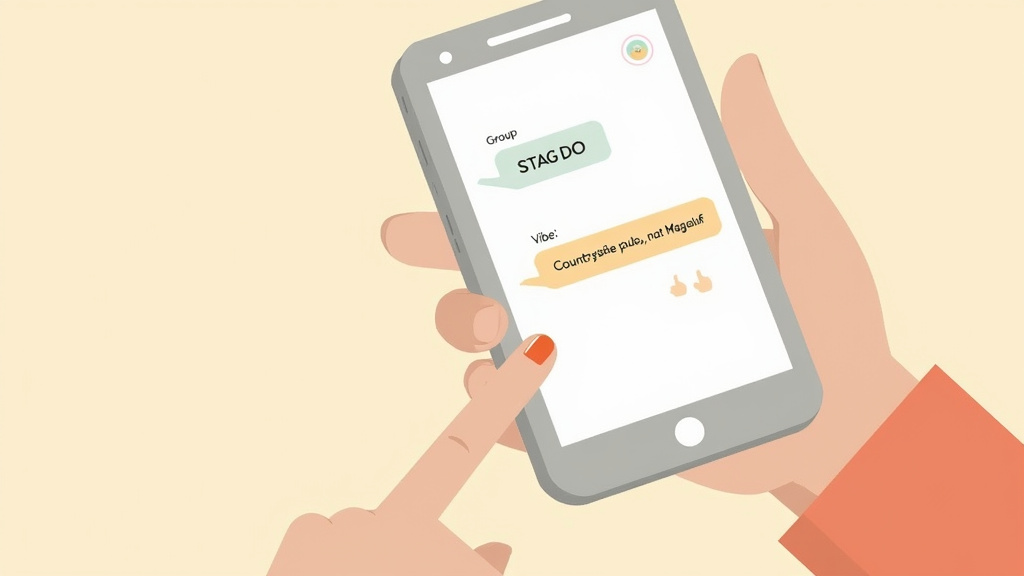
Second, manage expectations early. In the first group message, state the vibe: “This is a countryside pub weekend, not a Magaluf marathon.” Or vice versa. This lets the quiet lads prepare and the wild ones dial it up.
Third, appoint lieutenants. Is there a sensible friend who can handle the kitty? A local who knows the best bars? Delegate. You cannot be everywhere. For large outdoor events, the same delegation principle applies, someone should be responsible for managing equipment, just as you’d designate a person to handle an outdoor fog machine model to ensure it’s used safely and effectively.
I once tried to merge a groom’s conservative rugby team with his university art-school friends for a Brighton weekend. I didn’t set the tone. By Saturday dinner, the artists were debating post-modernism in a wine bar while the rugby lads were doing shirtless shots on the pier. The lesson? A fragmented group needs a strong, simple, unifying plan, like a booked table at a loud, casual pizza place, to force interaction.
Contingency Planning: When Things Go Wrong

Something will go wrong. A flight gets cancelled. Twelve lads get caught in a thunderstorm. Someone loses the keys to the house. Your planning isn’t about preventing these moments; it’s about surviving them.
Have a backup plan for the main activity. Know the nearest indoor pub or bowling alley. Save the local taxi numbers to your phone before you arrive. Travel insurance is non-negotiable for trips abroad. Carry a printed list of everyone’s mobile numbers, phones die. Most importantly, build slack into the budget. That 15% contingency fund is for the £200 in emergency taxis when the last train is missed, or for replacing the top fog juice fluids when a bottle gets kicked over back at the house. If you’ve planned a complex event with special effects, understanding fog machine safety procedures is part of smart contingency planning.
TL;DR: Expect one major hiccup. Your job is to solve it quickly with the contingency fund and a calm head, so the groom never feels the stress.
The Week Before and The Morning After
The final stretch is about reducing friction. Three days out, send the finalized itinerary: addresses, times, booking references. Designate a meeting point at the airport or station. Charge your power bank.
On the day, your role shifts from planner to host. Carry the printed details. Have the kitty cash. Make sure the groom eats something vaguely nutritious. Your energy sets the tone, if you’re stressed, everyone feels it.
Afterwards, the work isn’t done. In the group chat, share a Google Photos album for everyone to dump their pictures. Settle the final kitty debts within a week. Consider a small, tangible memento: a framed photo from the weekend, or a silly trophy from the go-karting race. It’s a closing gesture that bookends the experience. For the next party, you’ll be better prepared, whether it’s choosing the best fog machines for atmosphere or mastering your party atmosphere tips.
Frequently Asked Questions
What’s a realistic budget for a UK stag do?
For a standard two-night weekend in a major UK city like Manchester or Bristol, plan for £250-£400 per person. This covers a decent hotel, the groom’s share, one big activity, and a decent amount of food and drink. A simpler one-night local do can be done for £120-£200.
How far in advance should you book a stag do?
Book the date and location 6 to 12 months in advance, especially if you’re traveling abroad or going during peak season (May-August). This secures the best prices for flights and accommodation and guarantees availability for popular group activities.
Who traditionally pays for the groom on a stag do?
The attending guests split the groom’s costs equally. This includes his travel, accommodation, food, and his share of any group activities. It’s standard practice and should be factored into the initial per-person budget you communicate.
What’s the best way to collect money from the group?
Use a dedicated group payment app like Monzo Pots, Splitwise, or even a PayPal pool. Create one link for the groom’s fund and the booked activity deposit. It’s transparent, reduces admin, and provides a record. Never rely on verbal promises or bank transfers to five different people.
How do you handle someone who drops out last minute?
If they’ve already paid for a non-refundable shared cost (like the groom’s portion or a group activity), they forfeit that money unless they find their own replacement. This is why you never book non-refundable travel for others. Have this policy clear from the start to avoid awkward conversations.
What is the best man’s main responsibility during the stag do?
Your primary responsibility is the groom’s safety and enjoyment. You are the point person for logistics and problem-solving, but not a prison warden. Ensure he gets home safe, has a great time, and doesn’t do anything that would prevent him from making his own wedding.
The Bottom Line
A legendary stag do isn’t about the most expensive trip or the most packed itinerary. It’s about the right people, in the right place, with just enough structure to enable the chaos. Plan early with a small team, set a clear budget, book one solid activity, and then get out of the way. Let the lads book their own flights, let the schedule breathe, and focus on the groom’s face when he walks into a pub full of his best mates. That’s the moment you’re planning for. Everything else is just logistics. And for your next celebration, whether it’s a Halloween bash needing spooky atmosphere machines or a garden party, the same principles of early planning and clear communication always apply.